
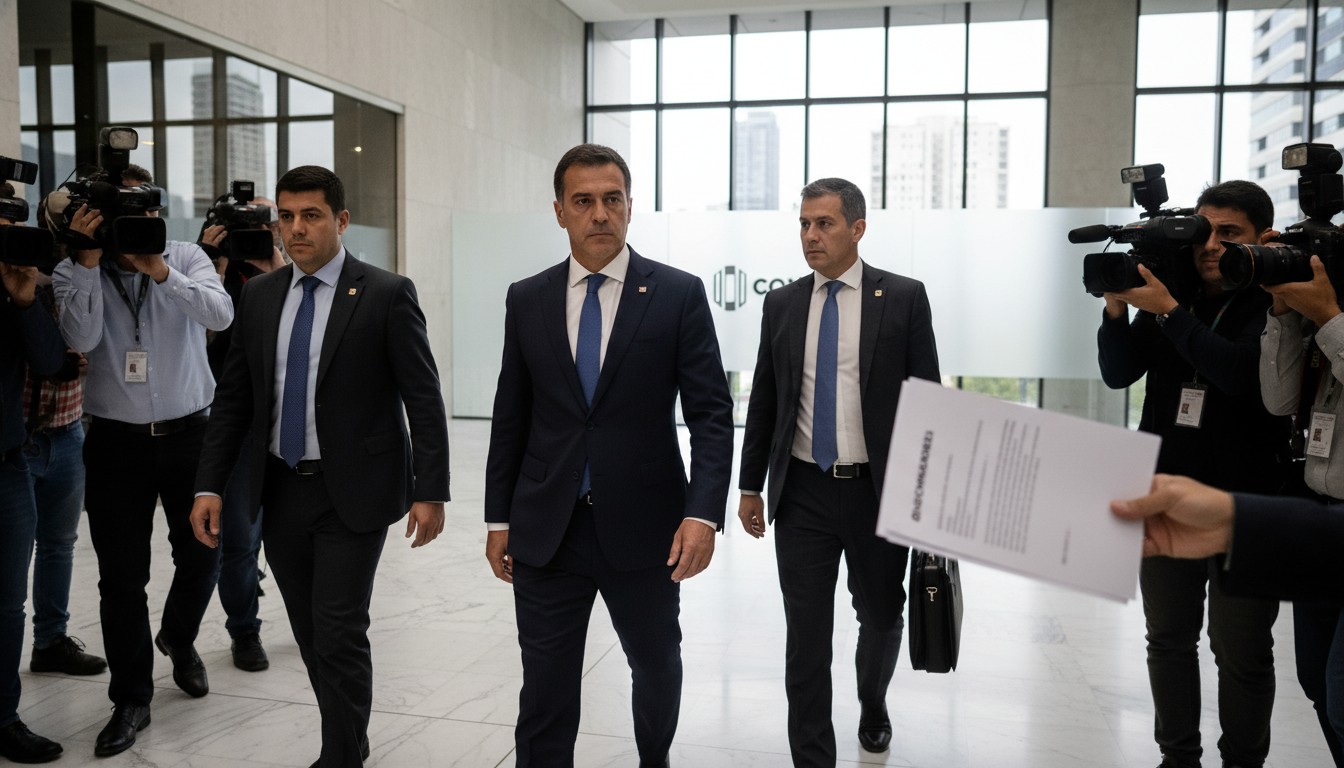
Alejandro Dominguez ethics complaint alleges millions taken from recovered Conmebol funds ahead of World Cup
A whistle‑blower alleges Alejandro Dominguez received more than $5 million from funds recovered by Conmebol, triggering an ethics complaint as the 2026 World Cup approaches in June.
Alejandro Dominguez, the president of Conmebol and a FIFA vice‑president, is the subject of a formal ethics complaint alleging he and another senior confederation official accepted millions from funds recovered after the region’s 2015 corruption scandal. The complaint, filed by a person who says they have direct knowledge of the payments, contends that more than $5 million was diverted as secret bonuses or commissions from money returned to the federation. Senior FIFA figures have reportedly known of the complaint for over a year, though its current status remains unclear.
Complaint Details and Allegations
The complaint claims the disputed sums originated from bank accounts once controlled by officials indicted in the 2015 probe that exposed systemic bribery across South and Central America. It alleges specific transfers and payments were made after Conmebol secured settlements and repatriated funds from accounts in Paraguay and Switzerland. The whistle‑blower describes transactions they say were not recorded as public reimbursements but rather retained by individuals inside the confederation.
Those who have seen the complaint say it names Dominguez alongside another high‑ranking Conmebol official and links the alleged payments to the confederation’s post‑scandal recovery efforts. Conmebol has said it is unaware of the complaint when asked for comment, while FIFA and Dominguez did not respond to requests for immediate explanation.
Timing Raises World Cup Concerns
The arrival of the complaint days before the 2026 FIFA World Cup adds political sensitivity to the allegations, with the tournament due to begin in June 2026 in Mexico, Canada and the United States. The complaint’s timing has heightened scrutiny on football governance at a moment when global attention is fixed on the sport’s leadership and its public image. Observers say unresolved ethics matters involving senior officials can distract federations and sponsors as the game’s marquee event unfolds.
Fears about reputational damage are amplified because Dominguez is not only the head of Conmebol but also one of FIFA’s vice‑presidents, a position that places him at the center of major decisions in world football. Critics argue that any perception of impropriety among senior figures risks undermining trust in governance ahead of the sport’s most visible competition.
Recovered Funds and the 2015 Scandal
The allegations trace back to the U.S. Department of Justice investigation that exposed decades of bribery involving more than $150 million in illicit payments tied to broadcast and marketing contracts. That probe led to indictments of officials connected to Conmebol and Concacaf and a series of legal and financial settlements intended to return stolen assets to the sport. Documents reviewed by investigators showed agreements that resulted in the return of more than $50 million from accounts linked to former Conmebol officials.
Conmebol publicly confirmed in 2020 that it had secured recovered funds and framed the restitution as part of rebuilding trust in the confederation’s finances. The Department of Justice also established a World Football Remission Fund that made up to $201 million available as compensation to victimized parties, a mechanism hailed at the time as a way to remedy past losses to the game.
FIFA’s Ethics Process Under Scrutiny
The complaint arrives amid criticism of how FIFA handles internal investigations and ethics matters, with former governance officials and outside observers pointing to a lack of transparency. Under current leadership, critics say fewer public details about ongoing cases are released and many matters can remain unresolved for years. Past reform advocates contend that anonymized annual summaries do not replace the need for clearer timetables and outcomes for high‑profile allegations.
Past heads of FIFA governance have expressed frustration with what they describe as opaque procedures that allow cases to linger. The ethics committee’s adjudicatory and investigatory arms operate under separate structures, and defenders argue the approach protects due process while opponents call for greater public accountability, especially when accusations involve senior officials.
Dominguez’s Influence in Global Football
Since taking office at Conmebol in 2016, Dominguez has accumulated influence across world football, chairing finance committees at FIFA and serving on panels that have helped determine executive compensation and event awards. He has also been instrumental in securing major events and representation for South American nations, including a role in hosting arrangements for matches connected to the 2030 centennial fixtures. Supporters credit him with modernizing aspects of Conmebol’s administration and public communications.
Dominguez has publicly touted recovery of lost funds and pledged stricter controls over confederation accounts, framing such measures as part of a broader effort to restore integrity. Yet the new ethics complaint directly challenges those assertions and raises questions about the implementation and oversight of the very safeguards he promoted.
Conmebol Settlements and Institutional Implications
Legal documents related to previous settlements show that Conmebol reached agreements with families of implicated former officials, resolving litigation and securing the return of significant sums without admitting wrongdoing. Those settlements, and the subsequent accounting of recovered money, are central to the complaint’s claims that portions of the funds did not reach the public or football programs as intended. If proven, the allegations could prompt internal reviews, independent probes or disciplinary measures from FIFA’s ethics apparatus.
How FIFA will respond is uncertain given the committee’s track record of lengthy proceedings and limited public disclosure. The confederation and FIFA’s handling of the case will be watched closely by member associations, sponsors and governments that have invested in football governance reforms since the 2015 revelations.
The ethics complaint against Alejandro Dominguez adds a new chapter to a long‑running effort to clean up corruption in international football, and it presents a direct test of whether governance structures now in place can resolve allegations involving top officials quickly and transparently.
