
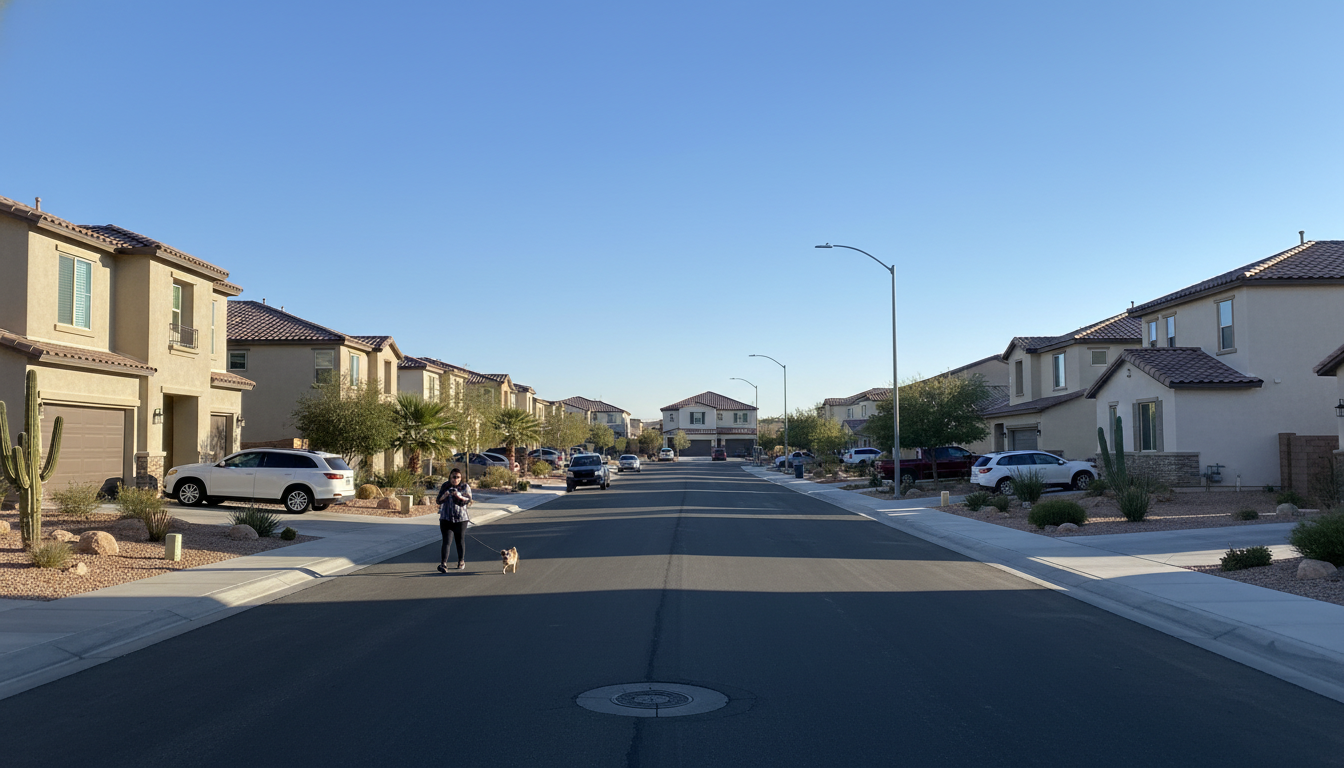
Nevada earthquake of magnitude 3.8 jolts Summerlin South; no major damage reported
A 3.8-magnitude Nevada earthquake rattled neighborhoods near Summerlin South on June 4, 2026, according to the United States Geological Survey, prompting local reports of shaking but no widespread damage. The Nevada earthquake, recorded at 1:47 p.m. Pacific Time, was felt across parts of the Las Vegas area and generated a stream of social media reaction as officials reviewed the event.
Epicenter and official measurement
The United States Geological Survey placed the quake’s epicenter roughly seven miles northwest of Summerlin South, Nevada, with initial data logged at 1:47 p.m. Pacific Time on June 4, 2026. The agency noted the preliminary magnitude at 3.8 and cautioned that seismologists may revise the figure as additional readings are analyzed. Timing and shake-intensity maps published by the USGS showed the strongest shaking concentrated closest to the epicenter but indicated that the event was generally weak by standard intensity scales.
Residents describe sudden jolt and loud boom
Residents across the western Las Vegas suburbs reported being startled by a sharp, short-lived jolt and, in some cases, a boom-like sound consistent with shallow seismic activity. One longtime local, Brian Cohen of Lone Mountain, said the house “felt like it was lifting up” during a three-second rumble and that neighbors who stepped outside also reported the disturbance. Others posted that they either heard a thud or felt only a faint tremor, underscoring the varied perceptions of the same Nevada earthquake.
Damage assessment and emergency response
Local emergency services and structural inspectors reported no immediate, widespread damage following the quake, and there were no confirmed injuries in the first hours after the event. Minor reports of rattled windows and doors were consistent with a shallow, low-magnitude temblor, and authorities advised residents to check for any localized issues such as fallen items, cracked plaster or displaced objects. Utility companies monitored service lines but did not report outages directly attributed to the quake.
Aftershock probabilities and monitoring
USGS statistical models provided a probabilistic forecast for aftershocks following the mainshock, indicating a non-negligible chance of additional small tremors. For the day following the June 4 event, analysts placed roughly a one-in-four chance of another magnitude 3.0 or stronger aftershock, while the likelihood of a magnitude 4.0 or greater event remained low. Seismologists emphasized that aftershock rates typically decline over time, but they can occur in the hours, days or even longer following a primary quake.
Seismological context and possible updates
Seismologists reviewing the Nevada earthquake cautioned that initial measurements are often refined as more sensor data are incorporated and quality-checked. The USGS and regional seismic networks routinely update magnitudes, depths and shaking maps as they process additional seismic waveforms. Experts also noted that shallow quakes near populated areas can produce strong perceptible shaking even at modest magnitudes, which helps explain the vivid local accounts despite the quake’s small numerical value.
Guidance for residents and preparedness reminders
Officials used the incident to remind residents of basic preparedness actions, including securing heavy furniture, keeping emergency supplies accessible and knowing how to “Drop, Cover and Hold On” during shaking. Homeowners were advised to inspect their properties for minor structural issues that can worsen over time, and to report any significant damage to local authorities. Public information officers urged calm and recommended that residents consult authoritative sources such as the USGS for verified updates rather than relying solely on social media.
The Nevada earthquake on June 4 served as a reminder that seismic activity can produce noticeable effects even at lower magnitudes, and that local response systems and public awareness play key roles in managing the aftermath.
