
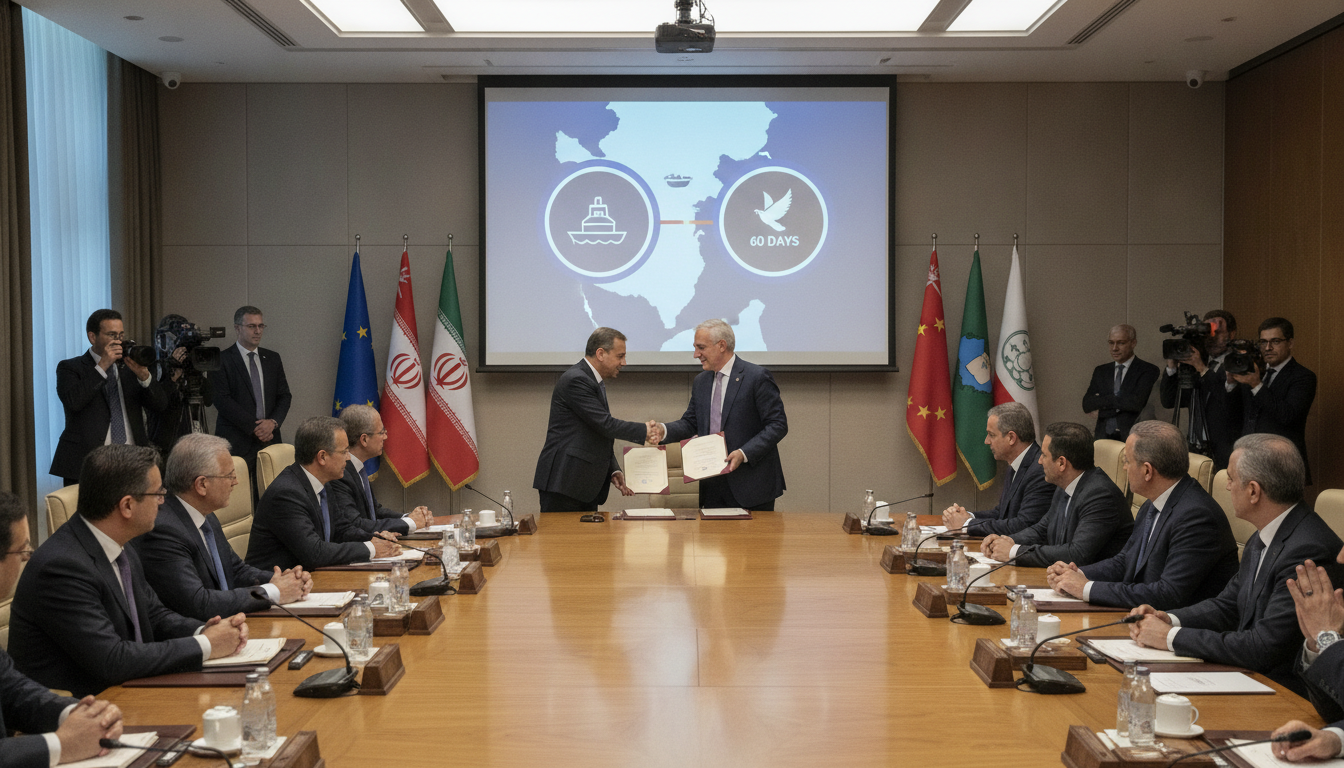
Preliminary Iran deal would halt fighting, reopen Strait of Hormuz and trigger 60-day nuclear talks
Preliminary Iran deal would pause hostilities, reopen the Strait of Hormuz and launch a 60-day negotiation on Iran’s nuclear program, officials say for now.
The United States and Iran are reported to have reached a preliminary Iran deal that would halt active hostilities, lift a U.S. naval blockade of Iranian ports and reopen the Strait of Hormuz as negotiators prepare a time‑limited window for deeper nuclear talks. The framework, described by officials briefed on the terms, sets a 60‑day period for negotiations on Iran’s nuclear programme while combat is paused across multiple fronts.
President Trump pushed back against media accounts of the pact, saying leaked details did not match the written terms, and Iranian officials offered mixed descriptions in state and hard‑line outlets. Foreign Minister Abbas Araghchi urged restraint in public speculation even as he said a deal had rarely been so close, according to officials familiar with the talks.
Deal framework and core provisions
Officials briefed on the agreement described it as a memorandum of understanding rather than a final treaty, establishing immediate steps to reduce violence while leaving complex issues for later talks. Under the proposed framework, active fighting would stop and both sides would enter a structured negotiation period on nuclear issues.
The memorandum reportedly contains assurances that Iran would reiterate a commitment not to pursue a nuclear weapon, but it does not resolve questions about Tehran’s existing stockpile of enriched material. Key elements on verification, enrichment limits and inspections are left to the next phase of discussions.
Strait of Hormuz and naval blockade
A central provision of the reported Iran deal would reopen the Strait of Hormuz to commercial traffic and end the U.S. naval blockade of certain Iranian ports in the Persian Gulf. Reopening the waterway is presented as a confidence‑building measure intended to restore regional trade flows and reduce the risk of maritime incidents.
Officials say the parties would also discuss future management of transit through the strait during the negotiation window, with regional states to be consulted. Previous proposals — including reported ideas for fee arrangements under third‑party management — have drawn warnings and mixed reactions from Gulf capitals.
60‑day negotiation timeline
The agreement would institute a maximum 60‑day period for talks on Iran’s nuclear programme, during which the wartime cessation would remain in force across multiple theatres, including Lebanon. The arrangement leaves open the question of what happens if negotiators are unable to reach a comprehensive deal within that timeframe.
Sources familiar with the draft say the fixed timetable is designed to create pressure for swift progress while offering a predictable window for diplomacy. Observers caution that a short calendar can produce either rapid compromise or renewed tensions if parties fail to bridge substantive gaps.
Planned signing and delegations
If finalized, a signing ceremony was expected in the coming days in Geneva, where U.S. and Iranian negotiators previously met before hostilities escalated. The city’s long history as a diplomatic venue for Middle East talks has made it a logical choice for formalizing a preliminary accord.
According to regional officials, Vice President JD Vance is slated to lead the U.S. delegation to the signing, while Iran’s chief negotiator would be Gen. Mohammad Bagher Ghalibaf, the speaker of parliament. Final arrangements, including participants from other regional governments or international bodies, remained under discussion.
Regional and Israeli reactions
Reactions in the region were cautious, with some Gulf states and Israel voicing concerns about whether the Iran deal would secure meaningful limits on Tehran’s nuclear activities. Israeli officials in particular warned that a pause in hostilities should not become an opportunity for Iran to avoid substantive concessions on its nuclear programme.
Regional diplomats urged restraint and emphasized the need for transparent verification mechanisms if the accord proceeds. Several governments said they would seek clarity on arrangements for the strait and guarantees against future destabilizing activity.
Unresolved nuclear and sanctions questions
The memorandum leaves the most technically and politically difficult issues to the next negotiating stage, including the status of Iran’s highly enriched uranium and the timing and scope of sanctions relief. Officials said talks after the 60‑day window would address sanctions on oil sales, international banking and other economic measures that Washington has used as leverage.
That sequencing — an immediate pause followed by phased bargaining over sanctions and nuclear limits — aims to divide the dispute into manageable steps. Yet analysts warn that postponing resolution of core nuclear matters risks undermining long‑term stability if follow‑on talks stall.
Diplomacy in the coming days will test whether the reported Iran deal can survive intense scrutiny and divergent expectations from regional actors, Israel and domestic audiences on both sides. The agreement’s value will depend on whether negotiators can translate a brief cessation of violence into concrete, verifiable progress on nuclear restraints and lasting arrangements for maritime security.
