
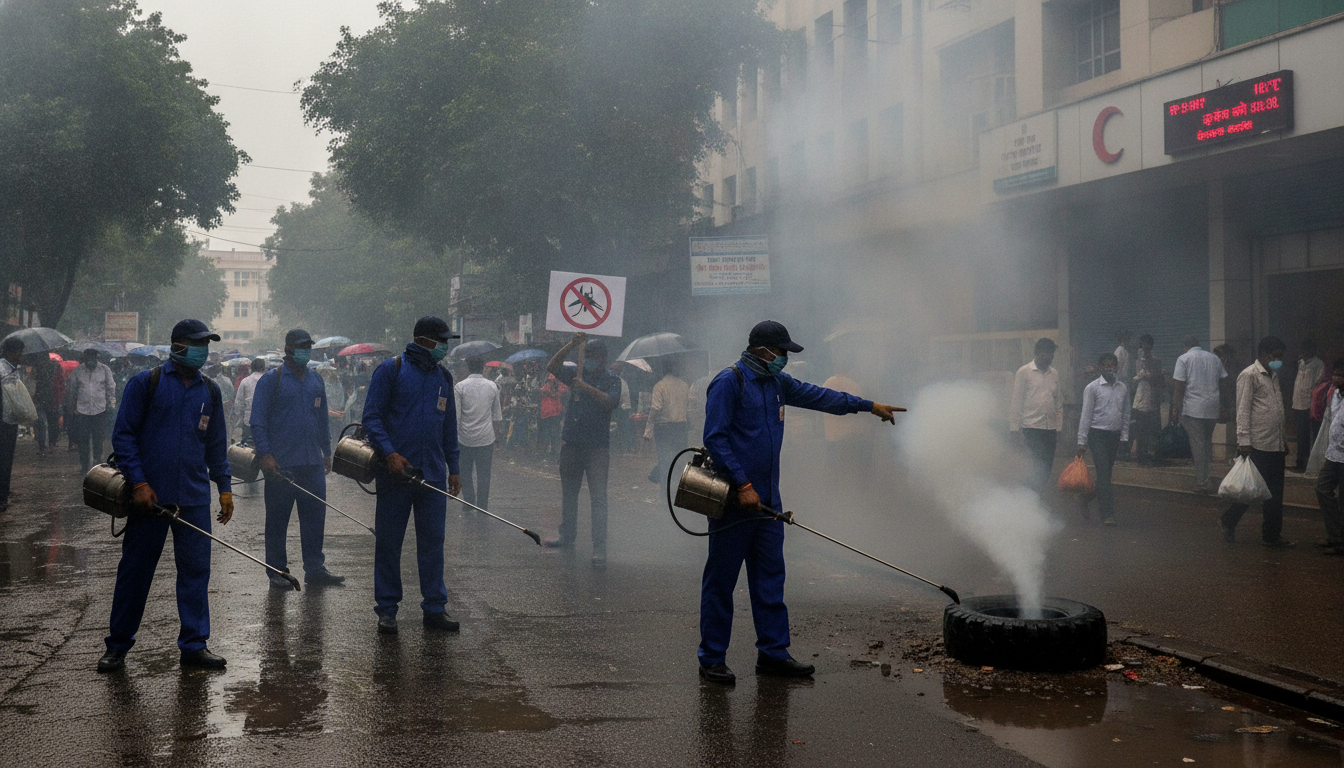
Dengue cases rise before monsoon in India, signalling year‑round threat
Early reports show dengue transmission shifting earlier in the year, with 2026 cases outpacing previous early-season totals and public health systems urged to act.
India is recording an unusually early rise in dengue infections this year, with the National Center for Vector Borne Diseases Control reporting 6,927 cases by the end of February 2026, a tally that has prompted warnings the mosquito-borne disease is extending beyond its traditional monsoon season. Patients and clinicians say dengue is appearing months earlier than expected, shifting the window of risk and challenging long-standing seasonal preparedness plans.
Early-season surge recorded in multiple states
Across several states, hospitals began seeing suspected dengue cases weeks before the monsoon arrived in Kerala, a departure from the historic pattern of post-monsoon peaks. Southern states have reported the largest early burdens, with Tamil Nadu registering 2,873 cases, followed by Maharashtra, Kerala and Karnataka among the highest tallies. Clinicians describe patients presenting with typical dengue symptoms — high fever, severe body pain and fatigue — outside the period when public awareness usually spikes.
Public health specialists note this early surge is not uniform but reflects a broader change in transmission timing that has been building over recent years. Data comparisons indicate this year’s early total has already exceeded the full January–May counts from some earlier seasons, underscoring an expanded transmission window that could translate into higher annual caseloads if trends continue.
Surveillance and hospital readiness pushed earlier
Health officials and hospital leaders say surveillance programmes and clinical preparedness must begin before the rains now, rather than waiting for monsoon onset. Former surveillance officers and community medicine heads warn that routine vector-control schedules and diagnostic vigilance must shift to year-round postures to detect and manage cases promptly. Doctors report longer patient recovery times and a steady stream of admissions that strain outpatient capacity in affected districts.
Public health consultants caution against interpreting short-term declines as permanent relief, explaining that dengue cycles fluctuate due to changing serotypes, population immunity and local environmental factors. They stress that surveillance systems, laboratory diagnostics and community outreach need calibrated, continuous funding and mobilisation to respond to an elongated transmission season.
Climate, urbanisation and mosquito ecology behind the shift
Researchers and clinicians point to rising temperatures, irregular rainfall patterns and rapid urban growth as central drivers allowing Aedes mosquitoes to breed and transmit dengue for more months each year. Warmer winters and prolonged humid conditions extend mosquito survival and the virus’ replication window, reducing the strict seasonality that historically confined outbreaks to the rainy period. Urban water storage practices and construction-related standing water in cities further create persistent breeding sites.
Epidemiological models and local studies from Indian cities show temperature and humidity ranges above certain thresholds correlate strongly with increased dengue transmission. Experts say the interaction of climate variability with densely populated urban environments is reshaping disease ecology, making predictable seasonal cycles less reliable for planning.
Air pollution linked to higher dengue mortality in studies
Recent research highlights another factor that may worsen dengue outcomes: long-term exposure to fine particulate air pollution (PM2.5). A 2026 analysis published in Environmental Pollution found higher dengue death rates in countries with elevated PM2.5, even after accounting for income, population density and climate variables. Authors propose that chronic air-pollution exposure could impair immune and vascular responses, increasing the likelihood of severe disease when infections occur.
Public health researchers caution that pollution-driven vulnerability compounds the public health challenge in cities where air quality is poor and population density is high. They argue mitigation of air pollution should be viewed alongside vector control and clinical preparedness as part of an integrated strategy to reduce dengue mortality.
Vaccine approvals and trials add tools but not a silver bullet
India has accelerated vaccine efforts in parallel with surveillance reforms. The government approved Takeda’s Qdenga earlier this year and local production is planned in partnership with an Indian manufacturer. Domestic vaccine candidates are also advancing: an indigenous single-dose candidate, “DengiAll”, completed Phase III enrolment with more than 10,000 volunteers, and the Serum Institute is conducting Phase III trials of TetraVax-DV. Researchers aim for multi-serotype protection against all four dengue strains to prevent reinfection and severe disease.
Experts caution, however, that vaccines will complement but not replace vector control, sanitation and community engagement. Even with effective immunisation tools, sustained entomological surveillance, public education on eliminating breeding sites and strengthened clinical systems remain essential to control year-round transmission and reduce fatalities.
Communities and clinicians are already adapting to the new reality. Patients who previously associated dengue strictly with the monsoon are now taking preventive measures through the year, including removing stagnant water from homes and using repellents consistently. Health authorities say these behaviour changes, combined with earlier surveillance and integrated public health measures, will be critical to managing dengue as it shifts toward a perennial threat.
The evolving pattern of dengue in India underscores a broader public-health challenge: climate variability, urban growth and environmental degradation are altering the timing and severity of infectious diseases, demanding sustained, multi-sectoral responses that extend beyond traditional seasonal rhythms.
