
Beach Access in Jamaica Under Scrutiny as Five Lawsuits Target Coastal Developers
Five lawsuits challenge developers over beach access in Jamaica as locals protest loss of public shorelines from Mami Bay to the Blue Lagoon and court action.
Community memories and the fight for Mami Bay
Devon Taylor, a biochemist and environmental campaigner, recalls Mami Bay as a lifeline for generations of families who fished, sold crafts and taught children to swim. The campaign to restore beach access in Jamaica is rooted in those memories and in the economic reality that many local households rely on the coast for food and income. Taylor and other residents say the shore once served as a communal market, a playground and a spiritual place, all of which have been curtailed by development. Their case frames the dispute not as nostalgia but as a contest over livelihoods and public rights.
Fencing, security and confrontations since 2019
Residents report that from 2019 onwards sections of coastline were fenced off and guarded, making habitual access increasingly difficult. They say the barriers were enforced by a mix of government security and private guards hired by developers, and that restrictions hardened during and after pandemic lockdowns. Activists describe regular clashes when residents removed fencing to reclaim the beach, and they allege heavy-handed responses that at times included live ammunition. Those confrontations have hardened local resolve and fed the turn towards litigation.
Five legal claims test coastal rights
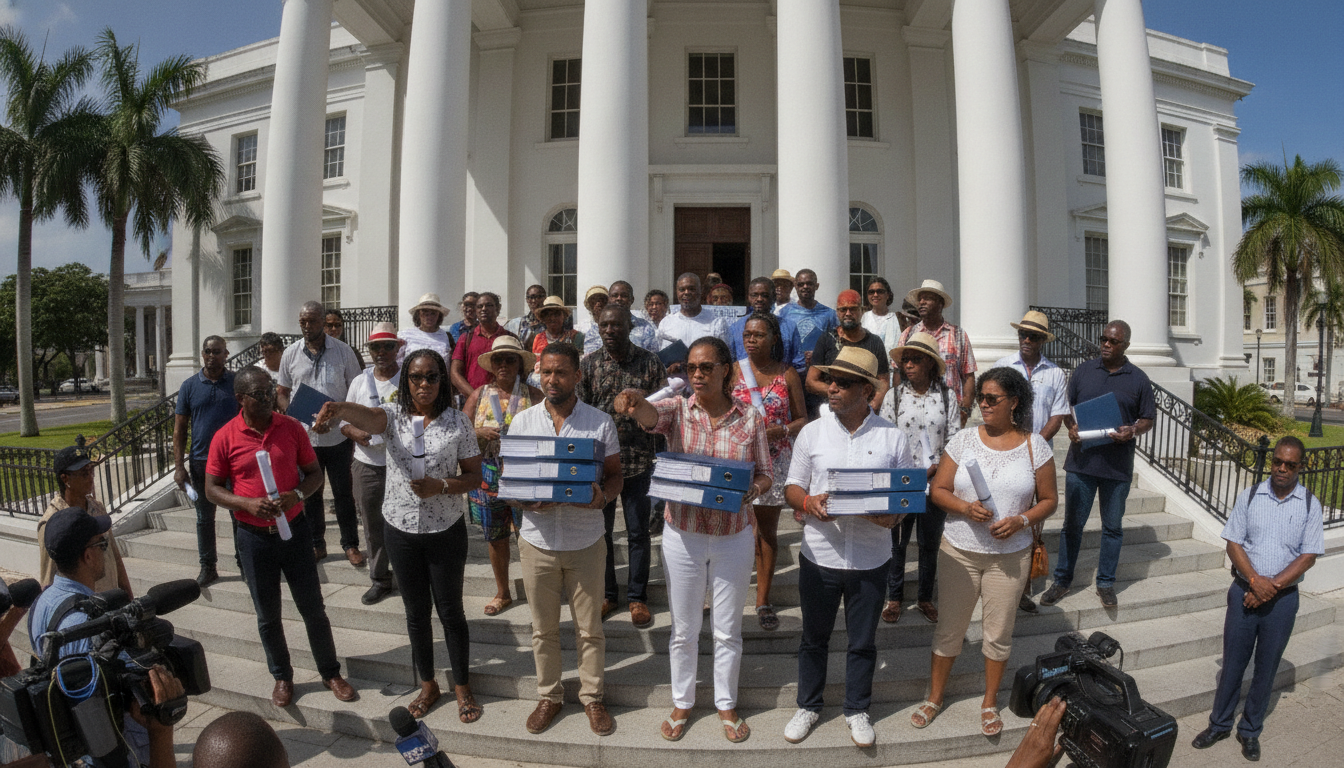
The dispute has expanded into a coordinated legal campaign with five separate lawsuits filed against developers and state actors. The cases cover Mami Bay, the Blue Lagoon in Portland, Little Dan River in St. Ann, Bob Marley Beach in St. Andrew and Flankers Providence in Montego Bay. Courtrooms are expected to hear the first of these claims before the end of the month, according to activists, setting the stage for a national legal examination of who controls Jamaica’s shorelines. Plaintiffs argue the claims raise constitutional and historical questions about public access and the legacy of colonial-era property law.
Blue Lagoon closure and local backlash
The Blue Lagoon, one of Jamaica’s best-known natural attractions, was closed in 2022 for what officials called improvement works, leaving nearby communities promised a brief closure that stretched into years. Local campaigners say initial assurances of temporary redevelopment and expanded employment for guides and vendors masked plans to restrict public approaches permanently. Residents and elders, some of whom rely on the lagoon’s springs for therapeutic and cultural uses, decried the loss of a generational income source and a communal space. The closure galvanized activists who view the move as emblematic of a broader pattern of privatizing public landscapes.
Policy proposals and the NARA law controversy
In March the prime minister set out proposals to update beach-management law and expand regulated public use, but measures intended to modernize oversight have drawn scepticism from campaigners. The creation of the National Agency for Reconstruction and Resilience (NARA) and related powers in recent legislation have alarmed groups who fear the new framework could centralize authority and weaken community protections. Activists involved with the environmental coalition Jabim and its Beach Birthright campaign say the policy still leaves open avenues for fees or permits that could bar ordinary Jamaicans from shorelines. They have called for robust, legally binding safeguards that enshrine free and permanent public access.
Government response and planned public parks
Ministry officials have pushed back on accusations that reform will erode public access, saying the state remains committed to enabling equitable use of natural resources. Minister of Environment and Climate Change Matthew Samuda pointed to efforts such as the planned Harmony beach park in Montego Bay and a proposed eastern St. James park as examples of public-minded development. Samuda also noted geographic constraints along Jamaica’s coastline, including rocky stretches, wetlands and protected biodiversity areas that complicate straightforward public access. Opposition figures say the rhetoric must be matched by enforceable rights on paper and in practice.
Local organizers stress that the dispute is not only legal but cultural and economic. Monique Christie, a Jabim coordinator in western Jamaica, told community meetings that beaches provide a low-cost recreational outlet for families and an immediate market for fishers and vendors. Damion Combs, Jabim’s community engagement director, said communities contribute to tourism revenues yet often see little of the benefits, a grievance that has driven sustained protest and legal action. For many residents the issue is existential: access to the sea is access to food, work and cultural continuity.
Environmental advocates also warn of the ecological risks posed by rapid, private development along fragile coastal ecosystems. Orlando Brown, a long-standing conservation activist, said decades of neglect followed by sudden, high-end projects threaten sandbanks, mangroves and coral that sustain both biodiversity and fishing livelihoods. Plaintiffs in the lawsuits seek not only restoration of access but stronger protections for the coastlines themselves, arguing that community stewardship and sustainable practices must form the basis of any redevelopment.
The coming weeks of hearings will test whether courts will side with communities seeking to reclaim traditional rights or with developers asserting ownership and investment prerogatives. The outcome could reshape how Jamaica balances tourism-driven growth with the public’s right to natural resources and the long-term health of coastal environments. Communities from Mami Bay to the Blue Lagoon are watching closely and say they will continue to pursue legal, political and grassroots avenues until shorelines are returned to collective use.
