
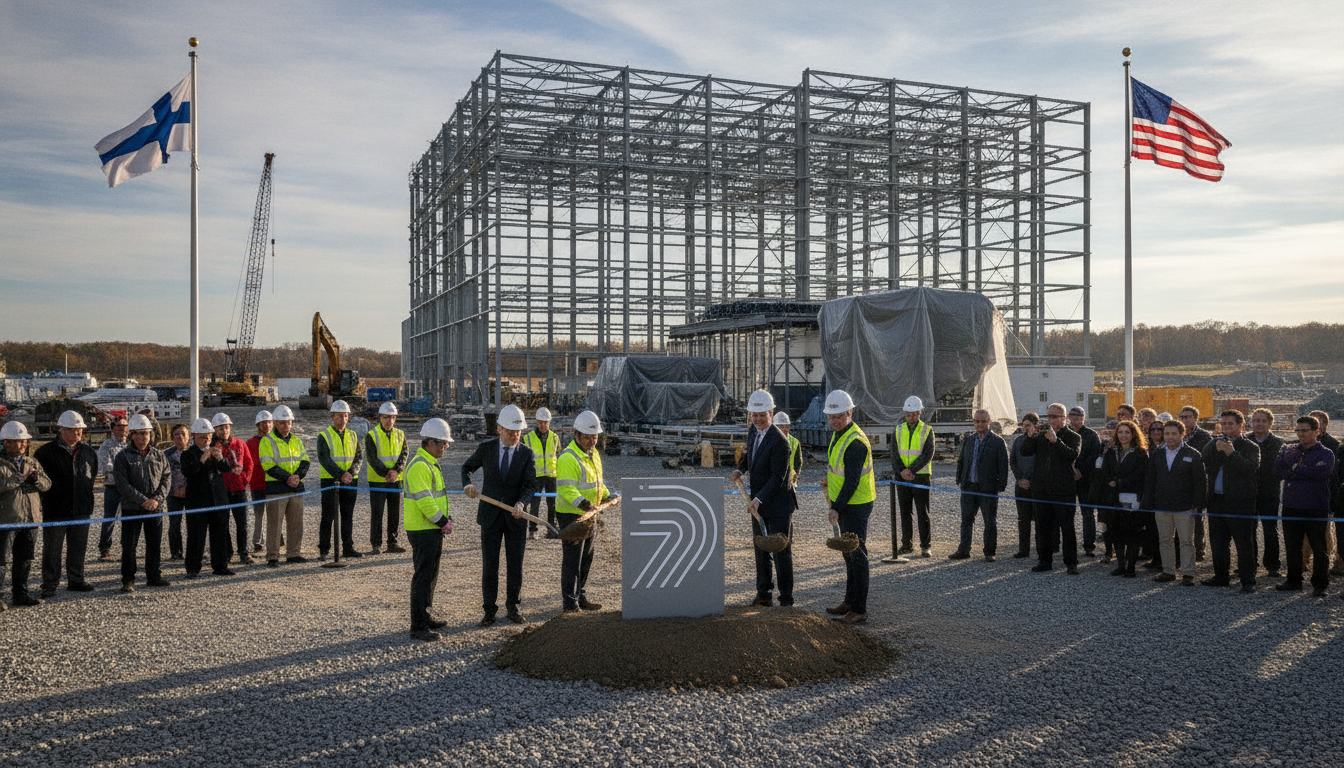
Nokia to invest $30 million to expand U.S. optical network chip production
Nokia investment in U.S. chip production will fund a $30 million expansion at its Allentown, Pennsylvania plant to scale optical network chip testing and advanced packaging for AI infrastructure.
Nokia said it will invest $30 million to expand testing and advanced packaging operations for optical network chips at its Allentown, Pennsylvania facility, a move the company links directly to rising demand from artificial intelligence applications. The company described the project as part of a wider multi-year strategy to strengthen domestic manufacturing of telecommunications components in the United States.
Expansion details at the Allentown plant
Nokia plans to enlarge its Allentown operations to handle increased volumes of optical transceivers and related components used in high-speed data transport. The investment will support testing, validation and advanced packaging processes that are critical for integrating chips into telecommunications equipment.
The company said the upgrade will enable new lines for finer assembly and quality control to meet the throughput requirements of AI-driven networks. Nokia expects the upgraded capacity to better align its supply chain with U.S. customers and hyperscale cloud operators.
Production capacity and timeline
Nokia projects the expansion will boost production capacity for its optical network chips by up to tenfold once fully operational. The company anticipates the new production capability to be commercially available by September 30, 2026, marking a rapid scale-up from current volumes.
The acceleration in capacity is intended to reduce lead times for domestic customers and to support anticipated growth in demand for high-bandwidth, low-latency network components. Nokia emphasized that the timeline is tied to equipment installation, certification and ramp-up testing at the Allentown site.
Jobs, workforce and local economic impact
The Allentown expansion will nearly double the plant’s workforce, with Nokia estimating more than 500 positions in engineering, manufacturing and research and development after the ramp-up. The company said roles will span production technicians, test engineers and design support staff to sustain higher output and quality standards.
Nokia forecasted that the project will generate an economic return exceeding $500 million in the region over the next five years. Officials highlighted the direct hiring and the expected multiplier effect across local suppliers and service providers.
Funding, incentives and federal support
The $30 million total includes approximately $4 million in state assistance from Pennsylvania and an estimated $10 million in tax incentives tied to federal semiconductor support programs. Nokia identified the federal incentives as part of benefits available under recent U.S. initiatives aimed at strengthening domestic chip manufacturing.
Nokia framed the support as complementary to its own capital commitment and said the mix of company funding and public incentives was decisive in accelerating the Allentown investment. The firm indicated it will continue to seek partnerships and program resources that align with broader U.S. industrial policy.
Alignment with Nokia’s broader U.S. strategy
The Allentown expansion is part of a multi-year plan in which Nokia has pledged roughly $4 billion for research, development and manufacturing across the United States. The company said those investments are targeted at developing AI-ready networks and advanced telecommunications equipment that require higher-performance optical components.
Nokia positioned the project as responding to both commercial demand from network operators and national priorities to bolster advanced manufacturing capacity. The company framed the move as an effort to localize supply for critical networking technologies and to support long-term competitiveness in next-generation communications.
Commercial and industry observers have pointed to increasing demand for high-bandwidth optical interconnects as a key driver for such investments. Hyperscale data centers and telecom operators are expanding fiber and optical switching deployments to support AI workloads, which in turn raises demand for the components Nokia will produce in Allentown.
Nokia said it will continue to coordinate with state and federal stakeholders as it brings the Allentown capacity online, and the company has scheduled a phased ramp that will match demand signals from customers. The expanded Allentown operations are intended to complement Nokia’s global supply footprint while reducing reliance on distant manufacturing for critical optical chips.
The project represents a significant step for Nokia’s U.S. manufacturing footprint and for Pennsylvania’s role in the domestic semiconductor and optical component ecosystem, with the company highlighting both economic and strategic benefits as production scales.
