
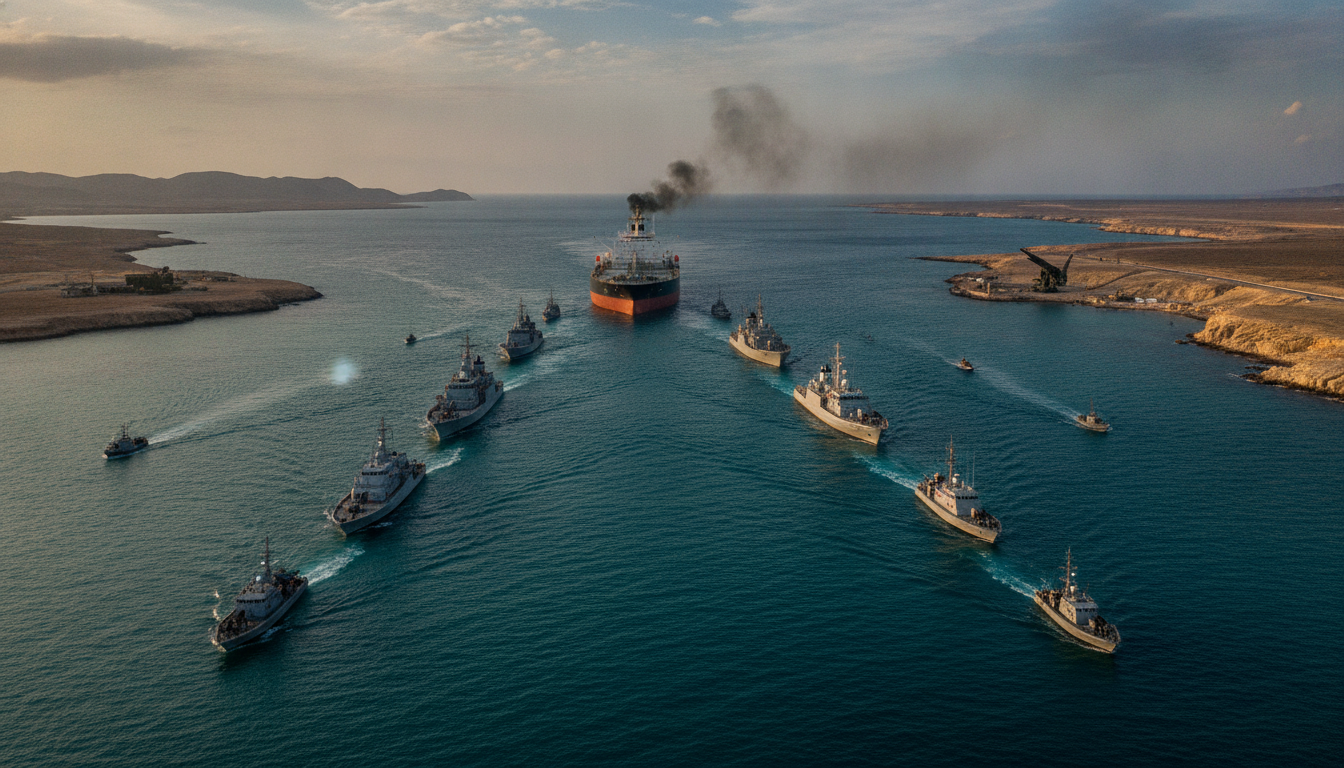
Iran Says Strait of Hormuz Closed After Israeli Strikes on Lebanon
Iranian forces say they have closed the Strait of Hormuz after Israeli attacks on Lebanon, triggering immediate global shipping and energy market disruption.
The Iranian armed forces announced on June 21, 2026 that they had closed the Strait of Hormuz, citing Israeli strikes on Lebanon as the precipitating action. The move came only days after an agreement with the United States to reopen the vital waterway, officials said, and has already produced significant disruption to global maritime traffic and energy markets. Shipping companies, insurers and regional governments are racing to assess the immediate operational and economic consequences.
Iranian forces announce closure
Iran’s military statement described the closure as a security measure in response to developments in Lebanon and to perceived threats in the region. The announcement did not provide detailed operational timelines or specify whether the closure covers all vessel traffic or is targeted at specific flag states and ship types. Officials in Tehran framed the action as a defensive step tied to regional military exchanges that intensified in the days before June 21, 2026.
The declaration came after a brief period during which access to the strait had been reported as reopening following talks with the United States. That earlier agreement to resume normal passage had raised expectations among shippers and energy traders that supply chains through the waterway would stabilize. The sudden reversal has undercut those expectations and produced immediate operational uncertainty for vessels transiting the area.
Immediate disruption to shipping and energy flows
The Strait of Hormuz is a strategic chokepoint for international trade and energy flows, and any closure reverberates across supply chains. Shipping operators reported delays and rerouting decisions as tankers and container vessels awaited clarification of the closure’s scope and duration. Ports and charterers face cascading scheduling impacts as vessels that would normally transit the strait seek alternative paths or hold position.
Energy markets reacted to the announcement with price volatility and heightened premiums for risk. Insurers and maritime security firms are already revising risk assessments for voyages in and near the Gulf, raising costs for operators and potentially passing those costs along to consumers. Freight rates and transit times are expected to rise while the closure remains in effect, compounding the economic impact beyond fuel markets to broader global trade.
Regional military and diplomatic fallout
The closure followed Israeli strikes on Lebanon that escalated tensions across the Levant and drew a clear response from Tehran. Regional capitals and international partners face a fraught choice between military posturing and urgent diplomacy to prevent wider conflict. Gulf states, many of which rely heavily on the strait for exports, are watching the situation closely and may press for de-escalatory measures.
The United States, which had recently been involved in talks to reopen the waterway, now faces fresh diplomatic and operational challenges. Naval forces and coalition partners will need to balance freedom of navigation operations with the risk of direct confrontation. The present circumstances increase the likelihood of emergency consultations at multinational forums and potential requests for protective measures for flagged vessels.
Legal and maritime implications
A formal or de facto closure of the Strait of Hormuz raises complex questions under international maritime law, including issues related to freedom of navigation and the rights of neutral shipping. Merchant vessels and flag states must navigate the legal and commercial risks of transiting a contested waterway, with shipowners weighing liability, insurance coverage and crew safety. The closure could prompt appeals to international bodies and heighten scrutiny of actions by military and state actors in maritime zones.
Ports, terminals and charter parties will also confront contractual and force majeure calculations if cargoes are delayed or rerouted. Legal disputes over responsibilities and damages could follow the disruption if the closure persists or if attacks on commercial shipping occur in the area.
Expert assessments and warnings
Maritime and regional experts warned that the situation could persist if diplomatic channels do not quickly produce a path to de-escalation. Ian Ralby, a senior fellow at the Center for Maritime Strategy and an associate fellow with Chatham House’s International Law Programme, highlighted the acute operational and legal challenges that a closure poses for merchant shipping. He said disruptions could become protracted without credible guarantees for safe passage.
Mehran Kamrava, who heads the Iranian Studies Unit at the Arab Center for Research and Policy Studies and serves as Professor of Government at Georgetown University in Qatar, framed the closure as part of a broader regional response cycle tied to cross-border military strikes and alliances. He cautioned that the political dynamics underpinning the action make a quick resolution uncertain.
Stavros Karamperidis, director of maritime transport research at the University of Plymouth, underlined the economic consequences for shipping networks and supply chains. He noted that carriers will consider longer southern routes around Africa and other contingency plans where contracts and cargo economics permit, but added that such options are costly and time-consuming.
International responses and next steps
Governments and industry bodies are expected to convene emergency meetings to coordinate responses and share guidance for vessels in the region. Naval presence and convoy arrangements could be proposed as temporary measures to protect flagged ships, while diplomatic backchannels may intensify to secure assurances for merchant passage. Multilateral organizations and trade groups are likely to issue advisories to help companies assess exposure and plan alternative logistics.
Commercial actors will simultaneously prepare contingency plans, including rerouting via the Cape of Good Hope for vessels where economics allow and adjusting chartering and scheduling strategies to minimize disruption. Market participants will monitor statements from Tehran and other capitals for any indications of a phased reopening or conditions attached to resumed navigation.
Global trade and energy flows are vulnerable to sudden regional escalations, and the closure of the Strait of Hormuz on June 21, 2026 underscores the fragility of maritime chokepoints. The international community faces an urgent test of its ability to manage escalation, protect civilian shipping, and restore reliable access to one of the world’s most critical sea lanes.
