
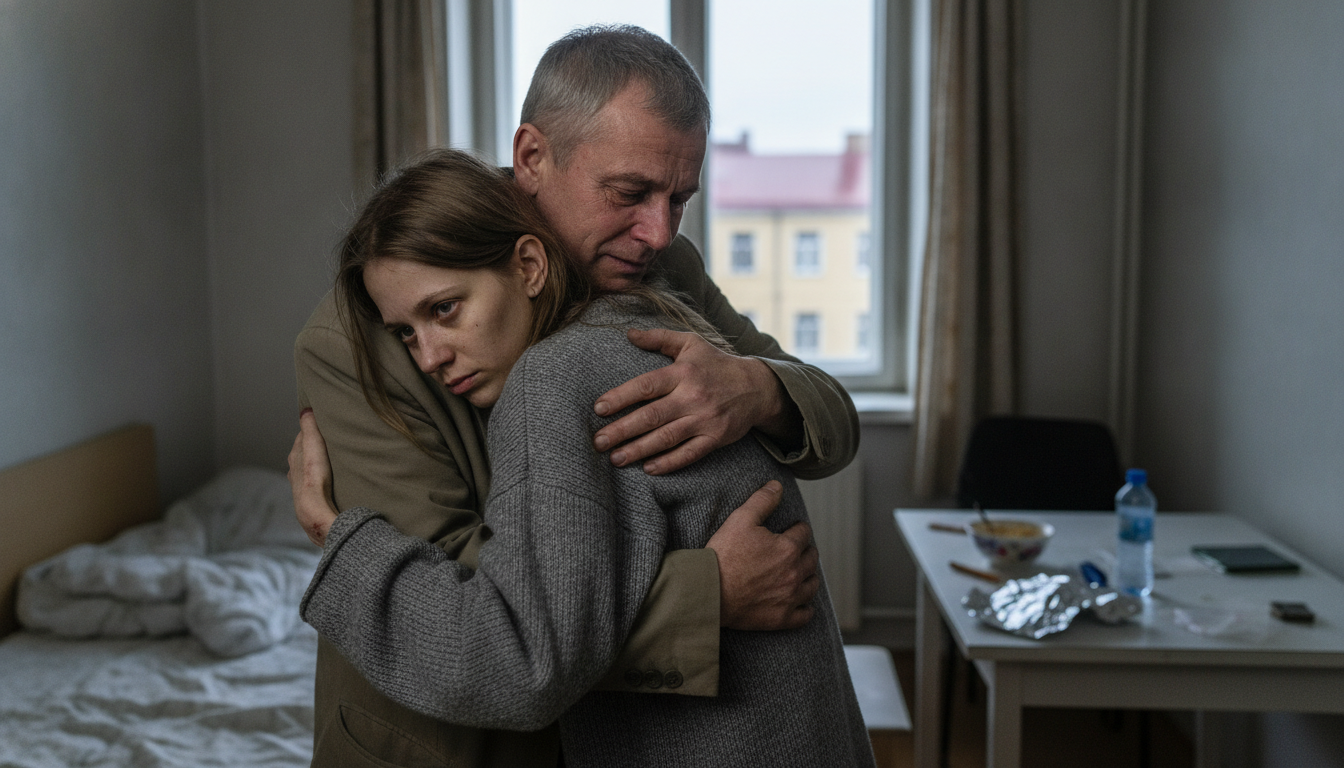
Father reunited with daughter after recovery from nitazenes addiction in Estonia
A man recovering from nitazenes addiction in Estonia reunited with his daughter at a shopping mall after completing treatment at Viljandi Hospital, highlighting severe withdrawal and the challenges of rebuilding family ties.
A father who spent months in a specialist treatment centre for nitazenes addiction experienced an emotional reunion with his daughter in a shopping mall near his northeastern Estonian hometown. The meeting followed nine months of separation, a period that began when he entered rehab and included only a single written reply from his daughter asking for space. The chance encounter, captured in his account of recovery, underscored the human cost of a drug that patients and clinicians say produces rapid dependence and intense withdrawal.
Emotional reunion at a shopping mall
After wandering the mall and scanning faces, he unexpectedly spotted his daughter seated at a café terrace and froze at the sight. He had prepared himself — clean-shaven and wearing a pressed T-shirt and leather jacket — but feared she might reject him or still need time apart. When she recognized him, she stood, smiled and made a small joke that immediately eased his tension and prompted him to cry.
Their first conversation was modest and cautious; she asked about his work and wellbeing while he admitted he mainly needed her attention. A shy request for a selfie followed, and when she agreed he described the moment as a sign that things could be all right moving forward.
Clinical staff describe severe withdrawal from nitazenes
Clinicians at Viljandi Hospital report that patients dependent on nitazenes often endure more intense withdrawal than from other opioids. Nursing staff say the nervous system effects are pronounced and that severe physical pain contributes to higher rates of patients abandoning programmes early. The treatment centre adjusted care plans to address the speed at which tolerance and withdrawal escalate for these substances.
Therapeutic routines at the centre — including counselling, structured physical activity and group education — were central to his ability to complete the programme. He worked closely with a psychologist and learned recovery language and strategies meant to rebuild self-awareness and encourage steps toward reconciliation.
Rapid escalation of use and tolerance
The patient described how nitazenes accelerated his progression from occasional use to daily dependence in a matter of weeks. What began as a few doses quickly required multiple daily intakes as tolerance rose, and he said the preoccupation with avoiding withdrawal eclipsed fear of death. He contrasted nitazenes with earlier experiences of fentanyl, saying the newer compounds consumed his thoughts and time more relentlessly.
This rapid escalation left him taking risks and staying away from home to avoid relapses and protect his family. He also described obtaining diverted substitution medication from informal sources, which he said ultimately proved inadequate against the increasing potency of nitazene products.
Life after discharge: structure and setbacks
After leaving inpatient treatment he returned to live with his ailing mother in the country’s northeast, where he found the absence of the rehabilitation centre’s routine difficult to manage. The predictability of daily lectures, gym sessions and therapy had provided a stabilising frame that was now missing at home. He said the most immediate task was managing disappointment when progress did not translate quickly into work or financial recovery.
Plans hatched in recovery — resuming a career, repairing relationships and rebuilding finances — proved slower to materialise than hoped. He acknowledged that much of the early work after rehab involved learning to tolerate setbacks and to apply the coping tools taught during treatment without the centre’s constant support.
Local social and economic context in Estonia’s east
The patient’s personal history reflects broader socio-economic conditions in Estonia’s eastern region, an area that shares a border with Russia and where opioid use remains concentrated. Decline in industrial employment after the Soviet era, long-term unemployment and social disruption have been cited by local observers as contributing factors to substance use. Families in these communities often face intergenerational impacts, including exposure to alcoholism and organised criminal activity in the years following economic collapse.
Those community dynamics, combined with the availability of potent synthetic opioids, have complicated prevention and treatment efforts. Health services in the region confront the dual challenge of treating acute addiction while supporting broader social reintegration for patients who return to environments with limited opportunities.
Family repair and gradual trust-building
The father reported sending two letters to his daughter: one during treatment and another after leaving the centre, the latter of which elicited her request for more time. She also spoke with a psychologist to help process the trauma of his addiction and its effect on the family. Those steps, he said, both opened a channel of communication and respected the boundaries she needed to feel safe.
Their public reunion at the mall was brief but significant, signalling an initial restoration of trust rather than a full reconciliation. Small gestures — a shared conversation, a photograph together — offered practical evidence of progress and a foundation for further steps toward rebuilding the relationship.
He described the moment of connection as fragile but hopeful, noting that the path ahead would require sustained effort, honesty and the slow rebuilding of routine and accountability.
