
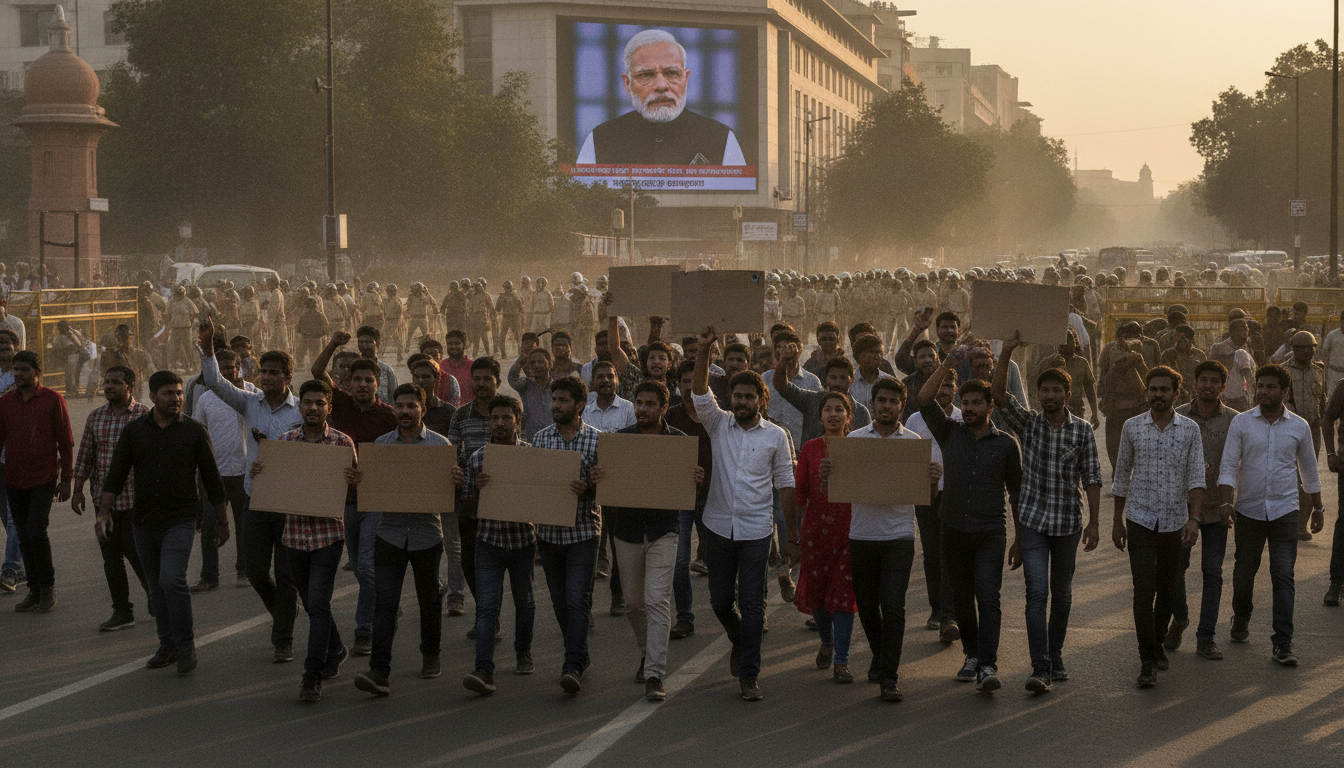
India student protests surge in Delhi after medical entrance exam leak
India student protests surge in Delhi after a leaked medical entrance exam; protesters widen demands amid youth unemployment and failing education systems.
Thousands of young people and recent graduates have gathered in New Delhi in one of the largest displays of student unrest in months, ignited by the cancellation of a national medical entrance exam after evidence of question leaks. The India student protests have quickly broadened from calls for accountability over the test to wider demands about education quality, joblessness and redress for those injured in clashes. Authorities used batons and tear gas during a police operation, intensifying public anger and prompting solidarity demonstrations in multiple cities.
Mass Protests Erupt After Medical Exam Cancellation
The immediate trigger was the scrapping of medical college results for millions of candidates when authorities concluded that the exam paper had been compromised. Protesters converged on central Delhi within days, establishing a sustained presence and demanding transparent investigations and punishments for those responsible. Tensions peaked after a heavy-handed police dispersal that left dozens injured and prompted calls for compensation and independent probes.
Protesters Expand Demands Beyond Exam Accountability
What began as a focus on one failed exam has transformed into a broader movement pressing for systemic change in higher education and employment policy. Demonstrators are now calling for monetary compensation for those harmed in recent clashes, fast and credible tribunals to try alleged perpetrators of the leak, and guarantees against future malpractice. Many on the ground described a deepening mistrust of institutions rather than a narrow grievance about one test.
Cockroach Janta Party Mobilises Disaffected Youth
A loosely organised group calling itself the Cockroach Janta Party — named after an insult from a senior judicial figure — has emerged as a prominent voice in the protests despite not being a formal political organisation. Its spokespeople have sought to channel public frustration into demands for accountability from education regulators and civil servants accused of corruption or incompetence. The movement’s decentralised structure has made it difficult for authorities to negotiate through a single interlocutor and has kept the demonstrations fluid and unpredictable.
Students Cite Education System Failures and Joblessness
Protesters repeatedly emphasise that the exam controversy is symptomatic of deeper weaknesses in India’s education system, which many say fails to prepare graduates for the job market. Reports cited by participants — including the State of Working India 2026 from Azim Premji University — indicate high rates of unemployment and a mismatch between courses offered and labour market needs. Families have invested significant time and money in higher education with limited returns, leaving many young people disillusioned and indebted.
Political Fallout for Prime Minister Narendra Modi
The unrest presents a fresh political headache for Prime Minister Narendra Modi as his administration faces heightened public scrutiny over governance and economic management. Officials promised fast-track tribunals to hold those responsible for the exam scandal to account, but critics and protesters called this response partial and belated. With the demonstrations drawing middle-class participants who are hard to dismiss as marginal, the movement risks reshaping public debate ahead of future electoral contests and state-level political battles.
Demonstrations Spread to Major Cities Across India
Solidarity protests have appeared in Mumbai, Bengaluru, Ahmedabad and other urban centres, reflecting the national reach of the grievances. While the core of the mobilisation remains in Delhi, the spread of demonstrations has amplified pressure on both central and state governments to present substantive policy responses. Observers note that the protests’ demographic mix — students, degree-holders and young professionals — complicates traditional political calculations.
The India student protests underscore a convergence of immediate and structural grievances: a concrete failure in exam administration fused with long-standing frustration over education quality and a stagnant job market. Government statements so far have focused on punitive measures for the scandal and warnings about economic difficulties, but protesters say only comprehensive reform and honest accountability will restore trust. As the movement continues, its ability to sustain momentum and win concrete concessions will shape both public policy and political dynamics in the months ahead.
