
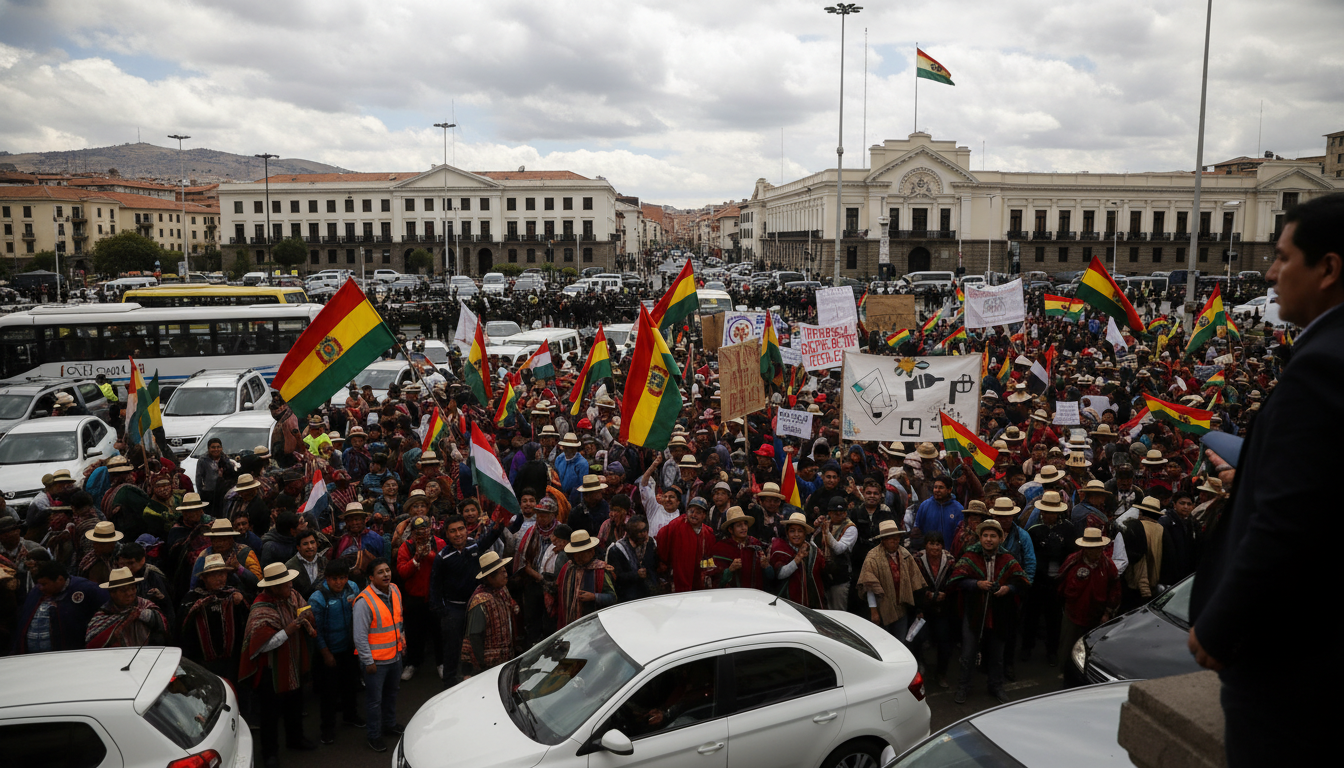
Bolivia protests paralyse La Paz as unions and Indigenous groups demand President Rodrigo Paz resign
Bolivia protests have isolated La Paz since May 6, 2026, triggering shortages, price hikes and a broad coalition of unions, Indigenous groups and Morales loyalists calling for President Rodrigo Paz to step down.
Bolivia protests have entered a monthlong crisis phase that has effectively cut the administrative capital off from key supply routes and brought daily life to a near standstill. Demonstrators have established widespread roadblocks around La Paz and El Alto, and clashes between protesters and security forces have intensified in recent weeks. The unrest has disrupted transport, shuttered businesses and forced some schools to switch to virtual classes as shortages and rising costs bite households.
Roadblocks Isolate La Paz and Disrupt Supply Chains
The campaign of highway blockades that began on May 6, 2026, has isolated La Paz and its surrounding areas, halting freight and passenger movement into the city. Farmers and transport operators report delayed deliveries of staple foods and fuel, while shopkeepers say inventories are being depleted faster than they can be replenished. Local markets have seen sharp price increases for basic items as the logistics squeeze tightens and traders struggle to find alternative routes.
United Coalition Escalates Demand for President Paz’s Resignation
What started as sectoral protests over wages and policy changes has coalesced into a unified call for President Rodrigo Paz to resign. Teachers, miners, transport workers and Indigenous organisations joined forces with activists loyal to former president Evo Morales, amplifying demands into a single political objective. Demonstrators have taken to central streets in La Paz, staging symbolic acts such as dragging effigies of ministers and occupying key intersections to sustain pressure on the government.
Economic Pain Widens as Businesses Close and Services Halt
The economic toll has widened as government offices and major companies in La Paz have closed temporarily and commercial activity has slowed. In El Alto, once-bustling thoroughfares have become nearly empty, with isolated cyclists and pedestrians moving through deserted highways. Transport workers have reported exposure to tear gas during confrontations with police, and some have adopted respirators as a precaution, further complicating efforts to restore normal services.
Policy Shifts and Perceived Exclusion Fuel the Backlash
Critics say the protests are rooted in deeper grievances arising from policy shifts since Mr. Paz took office in November 2025. His administration’s move to populate cabinet posts with business figures, the repeal of a wealth tax and a controversial land classification law — later repealed — left many rural, Indigenous and labour groups feeling politically excluded. Initial triggers such as teachers’ wage demands and complaints about contaminated fuel quickly merged with broader discontent over what critics describe as a government pivot toward corporate interests.
Role of Evo Morales and Rural Mobilisation
Supporters of former president Evo Morales have played a prominent role in amplifying the unrest, bringing organised marches and rural mobilisation into the capital’s orbit. A 118-mile march from Morales’s stronghold regions attracted national attention and merged with other protest contingents in and around La Paz. Leaders from Chapare and other rural areas say many of their constituents voted for Mr. Paz last year but now view his government as departing from promises that protected working-class and Indigenous gains under the previous two decades of MAS rule.
Violence, Vandalism and Public Safety Concerns Rise
The situation has at times tipped into violence, with reports that demonstrating miners detonated dynamite during clashes with police and that at least two government buildings were looted while a police car was set ablaze. Authorities have been cautious about escalating security responses, mindful that heavy-handed measures could further inflame tensions. Still, civilians and business owners express growing concern about public safety as the standoffs continue and the economic fallout deepens.
Government officials have called repeatedly for dialogue with protest leaders while making public accusations that the unrest is being financed by criminal networks and manipulated by political opponents seeking to regain power. The presidency has singled out Mr. Morales as a destabilising force, assertions that Morales’s camp denies even as it mobilises supporters. So far, the state has refrained from declaring a nationwide emergency, opting instead for targeted security deployments and negotiation efforts.
Bolivia’s months-long shift from a MAS-dominated political landscape to a centrist administration under Mr. Paz has left a fragmented electorate and a volatile public square. As negotiations and street-level confrontations continue, the immediate challenge remains restoring supply lines into La Paz and easing the economic pressure on households. Observers say the next days will be decisive in determining whether talks can defuse the crisis or whether the protests will further escalate into a protracted political confrontation.
