
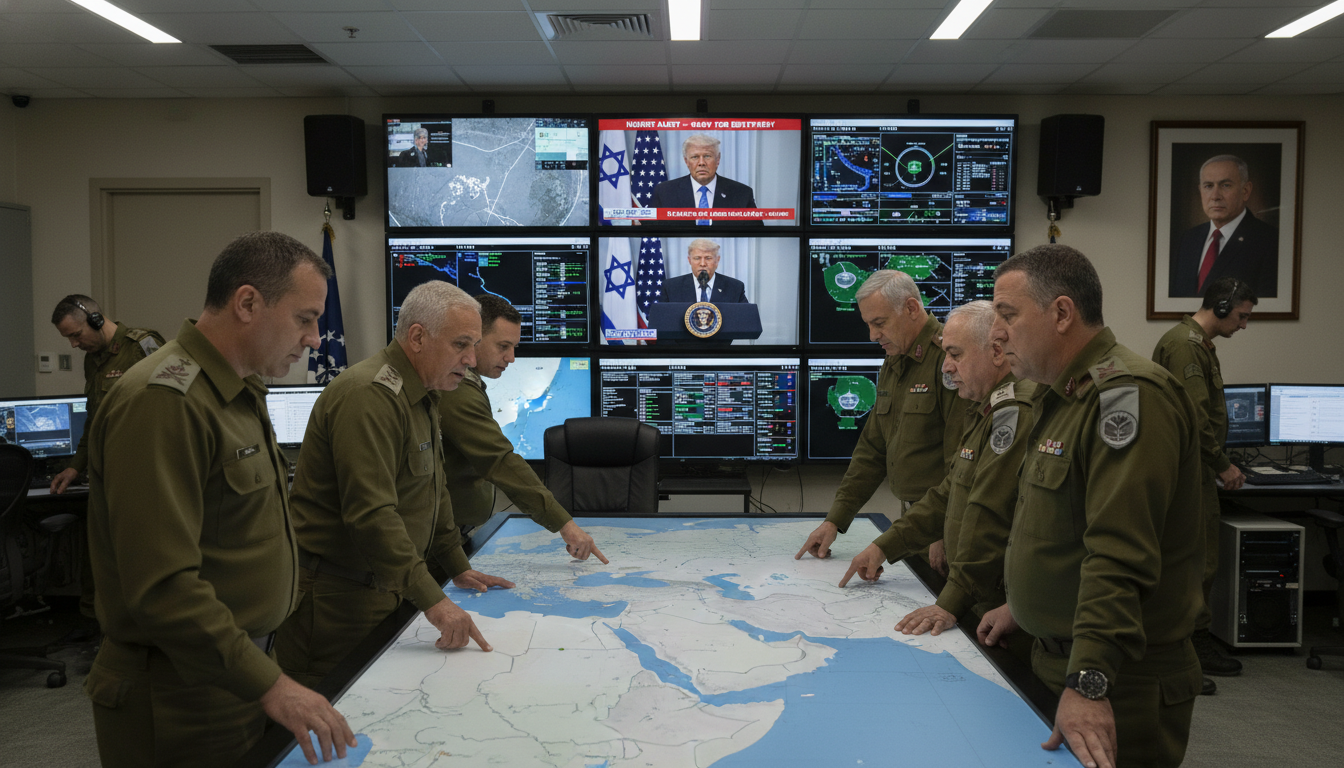
Israeli military alert raised to highest level after U.S. freezes planned strike on Iran
Israeli military alert was raised to the highest level after Washington froze a planned strike on Iran; Israeli air forces continue intensive preparations amid mounting regional risks.
The Israeli military raised its alert level to the maximum after a sudden decision by the United States to freeze a planned strike on Iran, leaving Israeli commanders on edge and air force units on high readiness. The phrase Israeli military alert has been central to official communications as forces maintained intensive preparations despite the last-minute change. Israeli officials say they were notified of the U.S. decision only in the final moments, and the Israeli Air Force continued to rehearse strike and support scenarios in case U.S. orders are issued in short order.
U.S. strike postponed at the last minute
A U.S. operation that had been scheduled for Tuesday was announced as frozen in an abrupt move that surprised Israeli planners. Sources inside Israeli security circles said the decision was communicated to Jerusalem at very short notice, producing operational and political ripple effects. Israeli defence officials described the pause as temporary but cautioned that timing could shift quickly and unpredictably.
Israel raises military alert to highest level
In response to the uncertainty, the Israeli military ordered its forces to the highest state of alert, prioritising rapid mobilization and mission-ready posture. Ground and air units were placed on immediate standby while command centres ran continuous readiness checks. The official emphasis on an Israeli military alert reflects a focus on ensuring the capacity to act alongside or independently of U.S. operations, should orders be received.
Joint U.S.-Israeli combat review completed
Israeli and U.S. air force elements completed a joint, comprehensive review of the recent combat round, according to Israeli sources speaking to local media. The after-action assessment was aimed at extracting operational lessons and updating joint tactics, techniques and procedures. Military planners said the review informed contingency planning and highlighted gaps to be addressed before any new aerial campaign.
Operational focus: surprise, deception and air superiority
Military planners identified surprise and deception as the core operational priorities to avoid the pitfalls of previous engagements, sources said. Preparations have included refining strike packages, rehearsing electronic warfare and bolstering suppression-of-enemy-air-defence capabilities to secure near-total air superiority. Commanders stressed that achieving and sustaining air dominance would be essential for any large-scale operation aimed at Iranian targets.
Political debate in Jerusalem over strategy
Within Israel’s political leadership there is a visible debate over the preferred path forward, with some officials advocating for a prolonged economic squeeze on Tehran rather than immediate military escalation. Proponents of pressure argue that sanctions and diplomatic isolation could force Iran back to negotiations under more favourable terms. Opponents warn that economic measures take time to bite and that Israel may not have the luxury of prolonged delay given tensions on multiple fronts.
Regional risks and the Lebanon front
Security planners are particularly concerned about the situation along the Lebanese border, where hostilities could widen and complicate any campaign directed at Iran. Israeli officials view the Lebanese theatre as a potential escalation point that could drain resources and extend the conflict into a broader multi-front confrontation. The possibility of a sustained, attritional war remains a central worry influencing both military posture and political calculations.
The immediate operational picture remains fluid as Israeli forces sustain high readiness and continue to coordinate with U.S. counterparts while political leaders weigh options. The emphasis on an Israeli military alert underscores a readiness to respond rapidly if circumstances change, but also a recognition that the strategic calculus will hinge on timing, international support and the evolving security dynamics across the region.
