
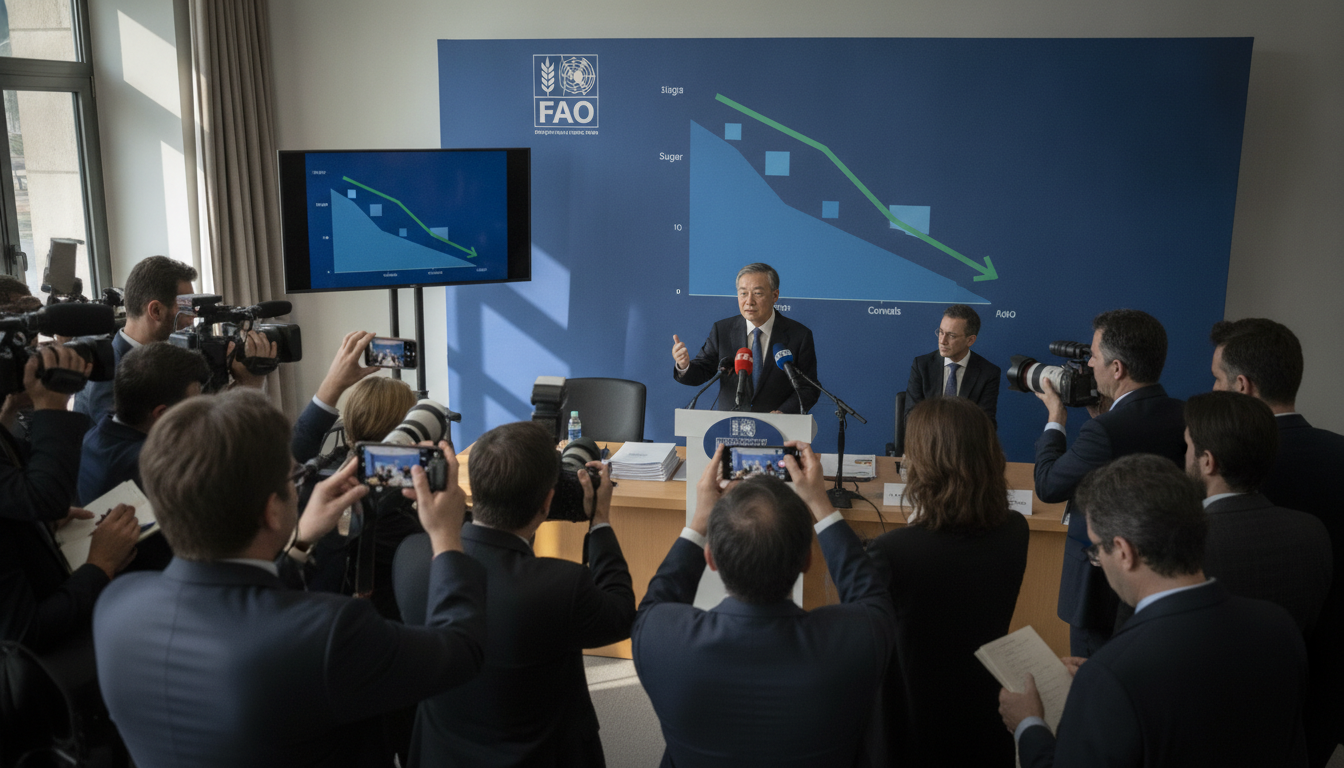
FAO food price index eases to 130.3 in June as sugar, cereals and dairy fall
FAO food price index dips to 130.3 in June as sugar, cereals and dairy soften; vegetable oils and meat climb. Annual change +1.7%, 18.7% below 2022 peak.
The United Nations Food and Agriculture Organization (FAO) reported a slight easing in global food costs in June, with its FAO food price index falling to 130.3 points from 130.8 in May. The decline reflected weaker international prices for sugar, cereals and dairy that more than offset rises in vegetable oils and meat. This change continues a downward trend from a three-year high in April and leaves the index 1.7 percent above June last year but still 18.7 percent below the March 2022 peak.
June movement driven by sugar and cereals
Sugar and cereal prices were the principal downward contributors to the June reading, according to FAO data. Global sugar supplies improved after harvests in major producers stabilised, easing pressure on international markets. Cereals also softened following reports of better-than-expected harvest prospects in several exporting countries, which relieved some immediate supply concerns.
The cereal sub-index benefitted from falling wheat and maize quotations in many trading hubs. Analysts noted that favourable weather in key growing regions supported yield expectations and prompted traders to pare back earlier risk premiums. Lower freight and insurance costs compared with the spring spike also helped moderate cereals’ contribution to the overall index.
Dairy prices contribute to the dip
International dairy prices moved lower in June, adding to the index decline as global butter and cheese quotations eased. Demand from some importing regions cooled after strong early-year purchases, allowing inventories to rebuild and exert downward pressure on prices. Milk production recovery in several exporter countries also supported the softer trend.
Despite the monthly fall, dairy remains sensitive to seasonal supply shifts and feed cost volatility, which could reverse gains quickly if conditions change. FAO cautioned that while dairy prices have eased, market balances can tighten rapidly if major exporters curb shipments or adverse weather affects production.
Vegetable oils and meat push upward
Rising vegetable oil prices were the main upward factor in June, driven by continued concerns about production in key oilseed-producing zones. Market attention remained on soybean and palm oil supply prospects, which sustained stronger quotations despite weaker grains and sugar. The earlier spike in April tied to regional tensions had already raised baseline prices for oils, keeping them elevated relative to other commodities.
Meat prices also increased, reflecting higher pork and poultry quotations in several markets. Strong domestic demand in major consuming countries and tighter supplies in specific producing regions supported those gains. Together, oils and meat offset some of the declines from sugar, cereals and dairy, producing only a modest net fall in the composite index.
Context: year-on-year and post‑2022 comparison
FAO’s June reading was 1.7 percent higher than a year earlier, indicating that food costs remain elevated compared with mid‑2025 levels in some categories. However, the index is still 18.7 percent below its March 2022 peak, when global food markets were disrupted following the Russia‑Ukraine conflict. That 2022 high continues to serve as a benchmark for assessing longer-term volatility in staple commodity prices.
The gradual retreat from the 2022 peak suggests some normalization in supply chains and a reduction in emergency-driven premiums. Nevertheless, experts warn that dependence on a narrow set of exporters for certain commodities and episodic geopolitical shocks can quickly reverse that trend.
Market drivers and geopolitical risks
FAO and market analysts point to a mix of supply, demand and geopolitical factors that shaped June movements. Weather patterns, harvest reports and shipping costs all influenced commodity-specific prices, while regional conflicts and policy decisions occasionally amplified price swings. The April spike tied to conflict in the Gulf region highlighted how localized events can ripple through global vegetable oil markets.
Traders remain attentive to emerging risks such as crop disease, fuel and fertiliser price volatility, and export restrictions that some countries may deploy to protect domestic supplies. Such measures can tighten international availability and trigger rapid price adjustments, particularly for cereals and vegetable oils.
Implications for UAE consumers and policy makers
For the United Arab Emirates, where a large share of staple foods is imported, modest international price declines can ease short-term procurement costs for retailers and wholesalers. The mixed pattern across commodity groups means some food categories may see smaller retail price reductions than others, depending on supply chain and local market dynamics. Policymakers will likely monitor shipments and port logistics to ensure stability ahead of peak consumption periods.
Government agencies and private sector buyers in the UAE may take advantage of softer cereal and sugar markets to replenish strategic stocks, while remaining cautious on vegetable oils and meat where prices have firmed. Ensuring a diversified supplier base and resilient storage infrastructure remains central to mitigating exposure to sudden global price spikes.
Global food markets showed a nuanced picture in June as the FAO food price index moderated slightly, reflecting commodity-specific shifts rather than a broad-based easing. Continued monitoring of weather developments, export policies and regional tensions will be essential to anticipating future price movements and protecting import-dependent economies.
