
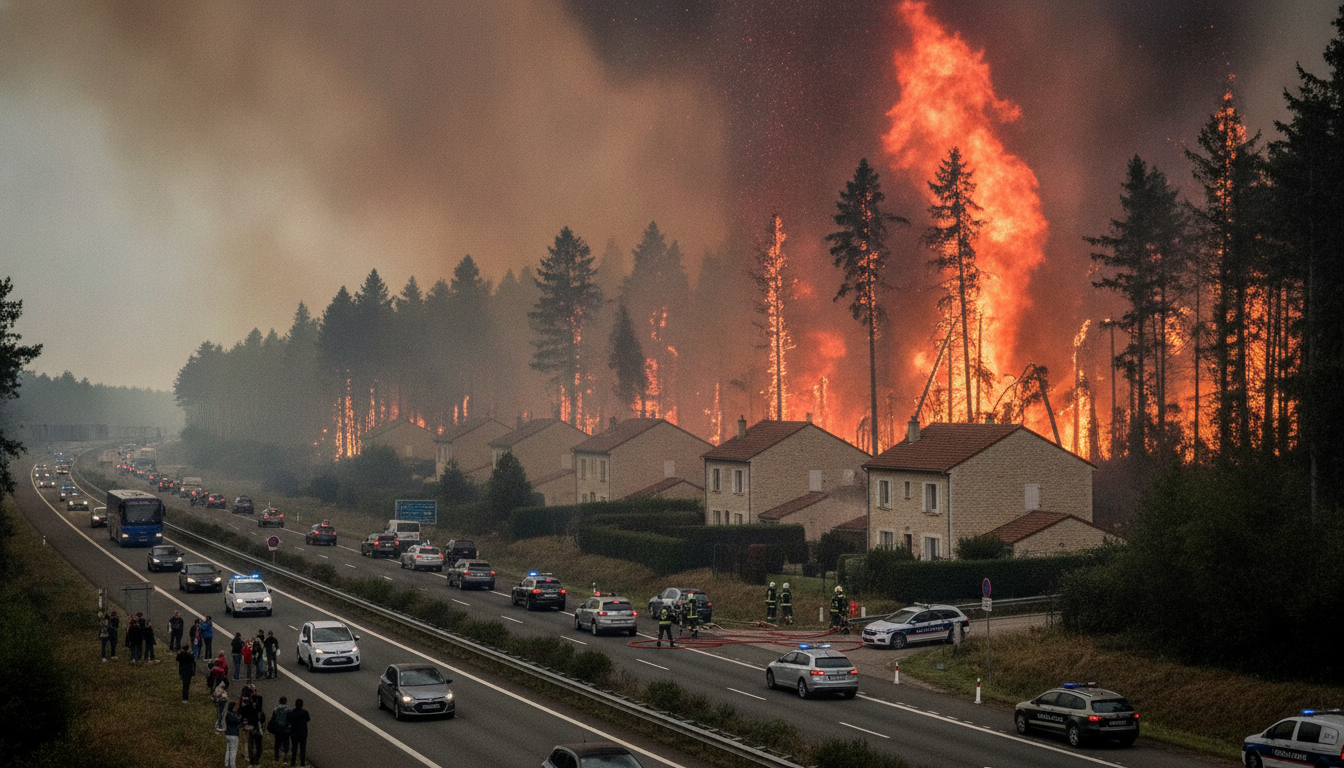
Wildfires in France and Spain Threaten Bordeaux Suburbs and Force Mass Evacuations
Wildfires in France and Spain have closed in on Bordeaux suburbs, forcing hundreds of thousands to flee and prompting international firefighting aid as officials warn heat and drought are intensifying blazes.
A fast-moving blaze on the Atlantic coast has pushed toward the outskirts of Bordeaux, while a separate series of fires across central and eastern Spain have consumed large swathes of forest and agricultural land. Authorities in both countries reported mass evacuations, shelter-in-place orders and widespread deployment of firefighting crews and aerial resources to contain flames racing through parched terrain.
Wildfires Threaten Bordeaux Suburbs
Firefighters battled blazes that swept across the Cap Ferret peninsula and spread toward surrounding vineyards and woodland near Bordeaux.
Mayor Thomas Cazenave warned the fire front was roughly 15 kilometres from the city’s main gateways, raising fears for suburban communities and critical infrastructure.
Crews focused on creating firebreaks and protecting populated areas as smoke plumes drifted over the region, disrupting local transport and fuelling public alarm.
Officials said the fast-moving nature of the fires, driven by dry fuel and gusty conditions, made containment efforts particularly difficult overnight.
Mass Evacuations and Shelter Orders Across Regions
French authorities said about 220,000 people were evacuated from threatened zones, while Spanish officials reported more than 75,000 residents had been moved to safety.
Officials also ordered nearly 30,000 people to remain in place under shelter-in-place directives where evacuation was judged more hazardous.
Local emergency centres set up reception points for displaced families and coordinated medical and logistical support for vulnerable residents.
Hospitals and care homes were placed on alert and transport hubs adjusted services to aid evacuation operations in both countries.
Major Blazes in Central Spain and Eastern Regions
Central Spain saw several large fires converge on provinces including Ávila, Madrid and Toledo, with local authorities reporting a combined burn area of some 45,000 hectares in the most affected zones.
In the east, a separate inferno in the Castellón province destroyed more than 4,300 hectares as flames raced into the Sierra de Espadán natural park, home to extensive pine and oak forests.
Juanfran Pérez, a senior Valencian official, described the eastern blaze as “technically difficult to extinguish” because of adverse weather and steep terrain.
The fires threatened rural towns, agricultural holdings and protected natural areas, prompting renewed calls for enhanced monitoring and rapid response.
Firefighting Efforts and International Aid
Under the EU Civil Protection Mechanism, Greece and Italy dispatched firefighting aircraft to Spain while Portugal sent more than 100 military personnel and specialist equipment.
Spain’s interior ministry said two additional aircraft were expected from Turkey to bolster aerial suppression capacity in the hardest-hit regions.
Prime Minister Pedro Sánchez visited affected areas in Ávila and pledged expedited support, announcing plans to declare a civil protection state of emergency to unlock additional reconstruction funding.
Ground crews, aerial tankers and military units worked around the clock to protect communities and key infrastructure, supported by regional civil protection teams coordinating cross-border assistance.
Climate Signals and Heat Records Linked to Spread
Scientists and officials pointed to a prolonged drought and a string of heatwaves as major factors behind the fires’ intensity and rapid spread.
Data cited by monitoring agencies showed July maximum temperatures in Bordeaux and Ávila averaged about 32°C, roughly six degrees Celsius above the long-term 1961–1990 monthly norm, exacerbating drought-stressed vegetation.
Researchers say such departures from historical averages are increasingly consistent with climate-driven warming trends that lengthen fire seasons and raise the likelihood of extreme wildfire events.
Policy makers in both countries reiterated the need to accelerate adaptation measures, expand firefighting capacity and invest in landscape management to reduce future risks.
Other Large Blazes and Ongoing Challenges
Beyond France and Spain, a prolonged wildfire has consumed upland areas in Scotland’s Cairngorms National Park since mid-July, with up to 500 firefighters engaged in suppression efforts there.
Spanish authorities reported that more than 150,000 hectares have burned across the country since January, a figure roughly six times larger than the area lost during the same period last year.
Emergency services warned that hot, dry conditions forecast to persist in parts of Western Europe would keep the risk of new outbreaks high over the coming days.
Officials urged residents in vulnerable zones to heed evacuation orders promptly and to follow guidance from local authorities to reduce harm.
The immediate priority for authorities remains securing communities at risk while crews aim to stabilise fire lines and prevent further spread into urban and high-value agricultural areas.
As containment work continues, officials stressed that recovery and reforestation efforts will require months of coordinated funding and careful planning to restore landscapes and support displaced families.
