
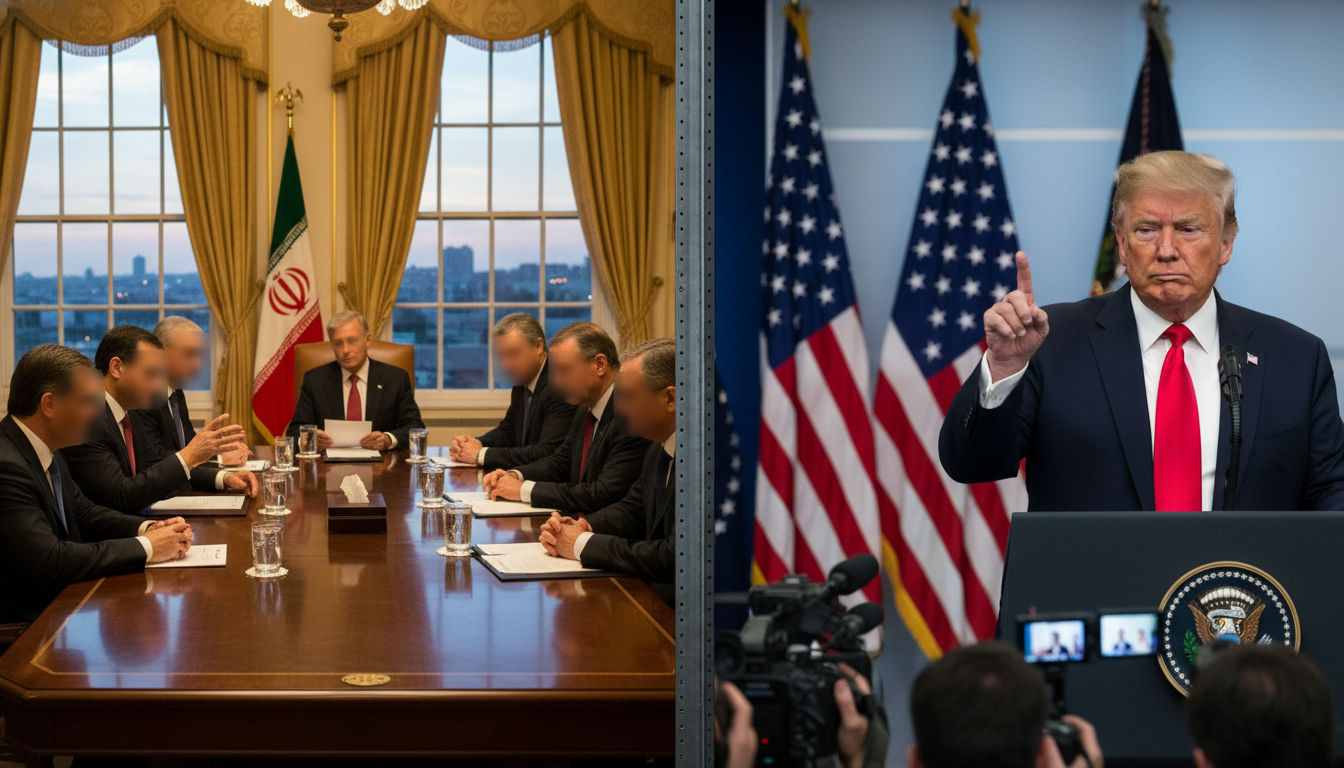
Iran peace proposal offers 30-day ceasefire to reopen Strait of Hormuz as Trump signals reservations
Iran peace proposal proposes one-month talks to end fighting and reopen the Strait of Hormuz, but President Trump has expressed doubts and kept the U.S. naval blockade under review. (axios.com)
Opening summary
Iran has submitted a new peace proposal that calls for negotiations intended to end hostilities within 30 days and to reopen the Strait of Hormuz, according to U.S. and Iranian accounts. (axios.com)
The plan, described by Iranian semi-official outlets as a 14-point response to a U.S. framework, would seek guarantees against renewed strikes and the lifting of a U.S. naval blockade as part of a rapid settlement. (wrkf.org)
President Donald Trump said he was briefed on the idea but later voiced skepticism, warning that military pressure could resume if Tehran “misbehaves.” (apnews.com)
Iran’s 14-point proposal and 30-day timeline
Iran’s submission reportedly frames the talks around an expedited timetable, urging that “all issues” be resolved within 30 days rather than accepting a longer interim ceasefire. (wrkf.org)
The document, according to semi-official Iranian reporting, urges a final end to the war on multiple fronts, including an immediate mechanism for normal transit through the Strait of Hormuz and assurances against future military aggression. (wrkf.org)
Mediation channel and delivery via Pakistan
Officials familiar with the negotiations say Tehran routed the proposal to Washington through mediators in Pakistan, part of ongoing back-channel diplomacy aimed at breaking the stalemate. (axios.com)
Pakistani intermediaries, working alongside other regional interlocutors, have been engaged in shuttle diplomacy in recent weeks to see whether a short, enforceable settlement can be secured before the temporary truce lapses. (axios.com)
Proposal separates Hormuz opening from nuclear talks
Under the terms reported by U.S. outlets, Iran’s proposal would first focus on reopening the Strait of Hormuz and ending active combat, with a second, separate round of negotiations to follow aimed at the nuclear file. (news.bloomberglaw.com)
If the first-stage agreement were reached within the proposed month, negotiators would then begin further discussions, potentially extending talks for another month to address Iran’s nuclear program and related safeguards. (news.bloomberglaw.com)
U.S. posture: scepticism and blockade conditions
White House officials say President Trump has reviewed Iran’s counterproposal but remains unconvinced that it adequately addresses U.S. concerns, especially on nuclear constraints and long-term verification. (apnews.com)
Administration comments and subsequent reporting indicate the U.S. will continue to link any lifting of the naval blockade and other pressure measures to binding, verifiable steps on the nuclear issue, underscoring that economic and security leverage remains central to American bargaining posture. (bloomberg.com)
Regional and market implications
The Strait of Hormuz is a strategic chokepoint through which a substantial share of the world’s seaborne oil and gas transits, and any arrangement to reopen it would have immediate implications for global energy markets. (bloomberg.com)
Energy and shipping stakeholders have watched negotiations closely as short-term deals to ease the blockade could relieve pressure on freight routes and prices, while a failure to reach terms risks renewed instability and higher costs for supply chains. (bloomberg.com)
Next steps and diplomatic outlook
Diplomats and mediators now face a narrow window to test whether Tehran and Washington can accept sequential steps: an immediate cessation and reopening of the strait followed by nuclear talks under a separate timetable. (axios.com)
Regional actors and international partners are likely to press for tangible verification measures and third‑party guarantees if an agreement is to hold, but significant trust gaps and competing red lines on both sides mean diplomats will have to bridge widely divergent expectations quickly. (news.bloomberglaw.com)
For now, Iran’s peace proposal has injected a renewed diplomatic cadence into a conflict entering its third month, even as Washington signals it will maintain pressure until its core nuclear and security demands are met. The coming days will determine whether the proposed 30-day window becomes the framework for an irreversible de-escalation or another short-lived pause in a fraught regional confrontation.
