
Iran warns of attacks as US launches “Project Freedom” to move ships through Strait of Hormuz
Tensions rise in the Strait of Hormuz as Iran warns it will target vessels that transit without permission, after the United States announced “Project Freedom” to help ships exit the waterway.
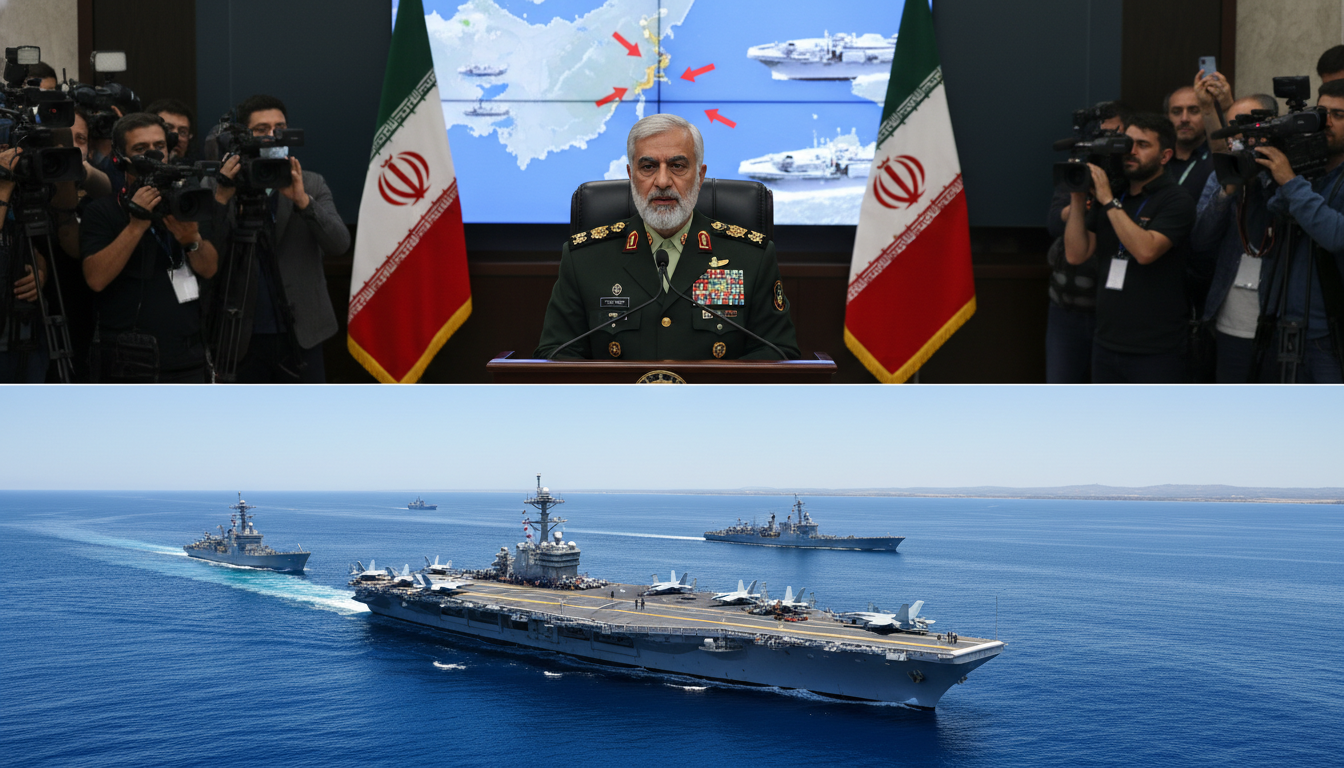
The United States and Iran entered a new public confrontation over the Strait of Hormuz on Monday, with Tehran threatening to strike any foreign warships or commercial vessels that attempt to transit without Iranian coordination.
President Trump said Washington would assist ships trapped in the vital shipping lane under a plan called Project Freedom, though he offered few operational details.
Iranian military issues explicit transit warning
Ali Abdollahi, a senior Iranian commander, publicly ordered commercial ships and oil tankers to refrain from passage unless they coordinate with Iran’s armed forces.
State-affiliated media quoted him saying that any foreign armed force, with particular reference to the United States, would be “targeted and attacked” if it approached or entered the strait without authorization.
United States describes support under Project Freedom
U.S. Central Command said Washington would help coordinate the movement of stranded vessels but stopped short of confirming escorted convoys.
CENTCOM described a significant deployable package for Project Freedom that includes guided-missile destroyers, more than 100 aircraft from land and sea bases, unmanned platforms across domains, and roughly 15,000 service members.
Military posture raises risk of direct clashes
The public exchange of warnings increases the probability of unintended encounters at sea, where close-quarters maneuvers and fast-moving small craft are common.
Iran’s announcement that it would target foreign military ships, combined with U.S. statements that interference would be met “forcefully,” narrows the margin for error and complicates de‑escalation.
Impact on global energy markets and regional trade
The Strait of Hormuz normally handles about one-fifth of global oil and gas shipments, making any disruption immediately consequential for energy prices and supply chains.
Markets have already responded to fears of prolonged closures and blockades, and commercial operators remain reluctant to risk transit without clearer security assurances.
Diplomatic deadlock and failed negotiations
Efforts to reach a negotiated end to hostilities have so far failed to produce a settlement acceptable to both sides, despite high-level contacts and rounds of talks.
Each side has set non-negotiable red lines, leaving the status of the strait and access to ports as central bargaining chips that neither party is prepared to cede.
European and regional concerns over escalation
European governments, including Britain and France, have urged caution, warning that immediate military policing of the strait risks drawing additional states into the conflict.
Those governments are exploring options to secure post‑war freedom of navigation, but they are wary of participating in operations that could be perceived as taking sides while hostilities continue.
With commercial masters and shipping companies weighing insurance costs and crew safety, many vessels continue to delay or reroute, prolonging logistical bottlenecks.
The coming days will test whether Project Freedom can persuade ship operators to resume transit without provoking Iranian retaliation, or whether the standoff will deepen and force wider regional or international involvement in securing the Strait of Hormuz.
