
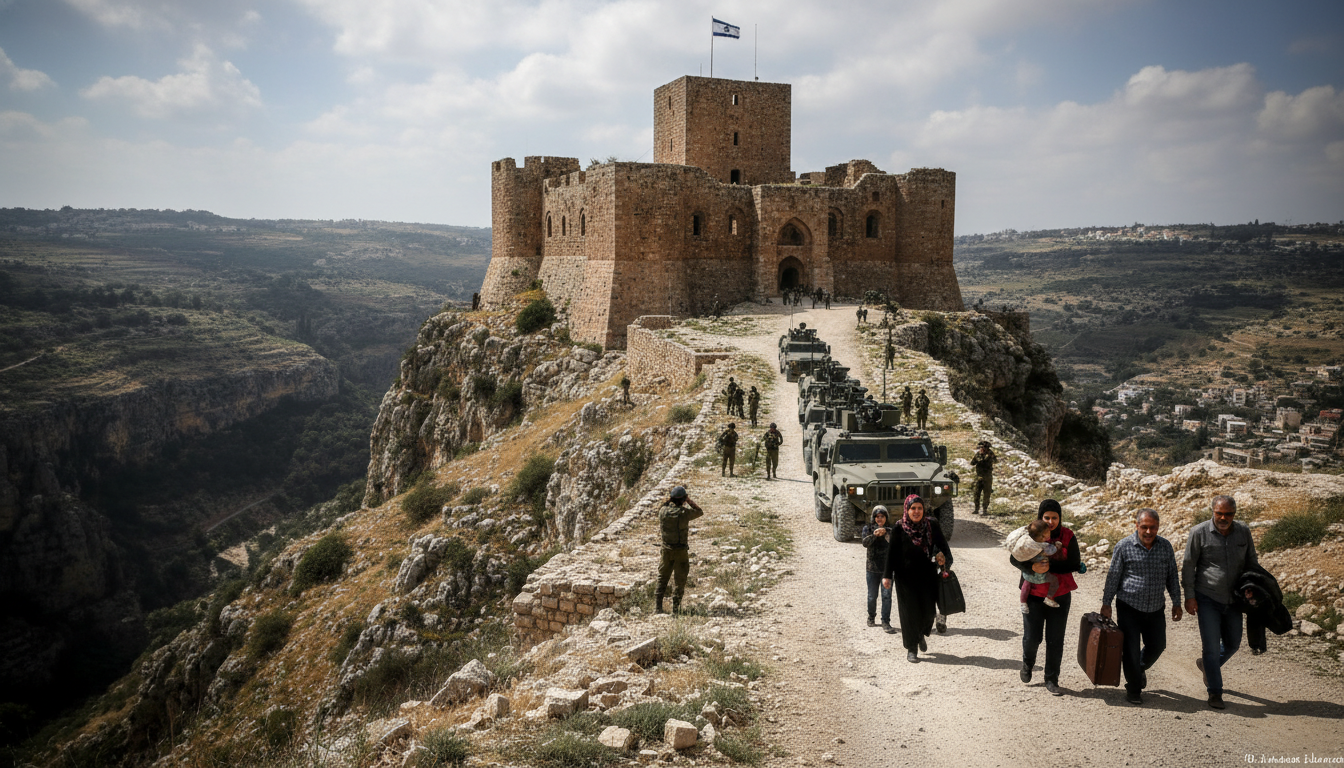
Israel Seizes Shaqif Fortress in Southern Lebanon as Ground Offensive Expands
Israel seizes Shaqif fortress in southern Lebanon; residents ordered to evacuate south of the Zahrani River as ground operations expand and casualties rise.
Israeli forces announced on Sunday that they have taken control of the strategic Shaqif fortress — also identified in some reports as Beaufort Castle — in southern Lebanon and raised an Israeli flag at the site, marking a significant deepening of operations across the border. The capture was shown in video footage circulated by news agencies and was confirmed by Israeli officials as troops pressed further into Lebanese territory. (washingtonpost.com)
Evacuation Orders for Communities South of the Zahrani River
The Israeli military issued evacuation orders for residents living south of the Zahrani River, roughly 40 kilometres from the Israeli border, warning of imminent operations and urging civilians to move north for their safety. These directives follow a pattern of displacement orders issued since March, which have affected large swathes of southern Lebanon and prompted humanitarian concerns. (aljazeera.com)
Local authorities and aid groups said the orders increase pressure on already strained displacement routes and complicate access for humanitarian convoys. Many communities in the declared zone have experienced repeated evacuations in recent weeks, and officials warned that infrastructure damage and fuel shortages are hampering relief and medical responses.
Ground Offensive Extends Beyond Established Lines
Israeli military statements said the operation to seize Shaqif formed part of an expanded ground campaign against armed positions in southern Lebanon and that troops had increased their presence on key high ground. The army framed the movements as targeted actions aimed at removing threats to Israeli communities and forces along the northern frontier. (washingtonpost.com)
Regional reporting described the advance as the deepest Israeli incursion in years, with operations backed by air and artillery strikes to secure lines of movement and to neutralise what the military identifies as militant infrastructure. Lebanese officials have criticized the widening operations as disproportionate and destructive, underlining the risk of further escalation.
Lebanese Officials Condemn ‘Scorched-Earth’ Tactics
Lebanese government figures and human rights groups accused Israeli forces of pursuing tactics they described as amounting to a scorched-earth approach, saying strikes and demolition operations have destroyed homes, farmland and cultural sites. Beirut’s leaders warned that sustained destruction and mass displacement would worsen an already fragile humanitarian situation. (saudigazette.com.sa)
The Lebanese prime minister called for intensified diplomatic efforts to halt the military escalation, saying negotiations offered the least costly path to protect civilians and preserve the country’s institutions. International agencies monitoring displacement trends reiterated calls for safe corridors and unimpeded humanitarian access.
Toll of Civilian Deaths and Wounded Rises
Lebanon’s health authorities reported a mounting civilian toll from the strikes and clashes since the outbreak of hostilities on March 2, with official tallies in recent days placing the nationwide death toll in the thousands and tens of thousands injured. The Ministry of Health’s emergency centre gave updated casualty figures that reflect heavy losses in southern districts and the Bekaa Valley. (china.org.cn)
Hospitals and clinics in affected provinces are operating under severe strain, according to medical workers, with shortages of surgical supplies, fuel for generators and safe transport complicating treatment of the wounded. Aid organisations warned that continued military activity will deepen Lebanon’s humanitarian crisis and heighten the urgency of international assistance.
Cross-Border Drone Attacks and Israeli Military Losses
The Israeli army said a soldier was killed in a Hezbollah-launched explosive drone strike, a development the military described as part of a pattern of remote-delivered attacks that have targeted Israeli units operating inside Lebanon. Israeli sources reported that the death raised the number of Israeli fatalities linked to the conflict in Lebanon since March to the mid‑twenties. (today.lorientlejour.com)
Hezbollah has meanwhile confirmed and characterised its cross-border operations as retaliation for strikes inside Lebanon and as defensive actions against what it calls occupation of Lebanese territory. The two sides’ accounts reflect a continuing tit‑for‑tat posture that analysts say increases the risk of broader confrontation.
Final paragraph
The seizure of Shaqif fortress and the latest evacuation orders mark a new phase in the northern front, intensifying both military pressure and diplomatic efforts to contain wider regional fallout, while humanitarian actors urge immediate measures to protect civilians and sustain relief operations.
