
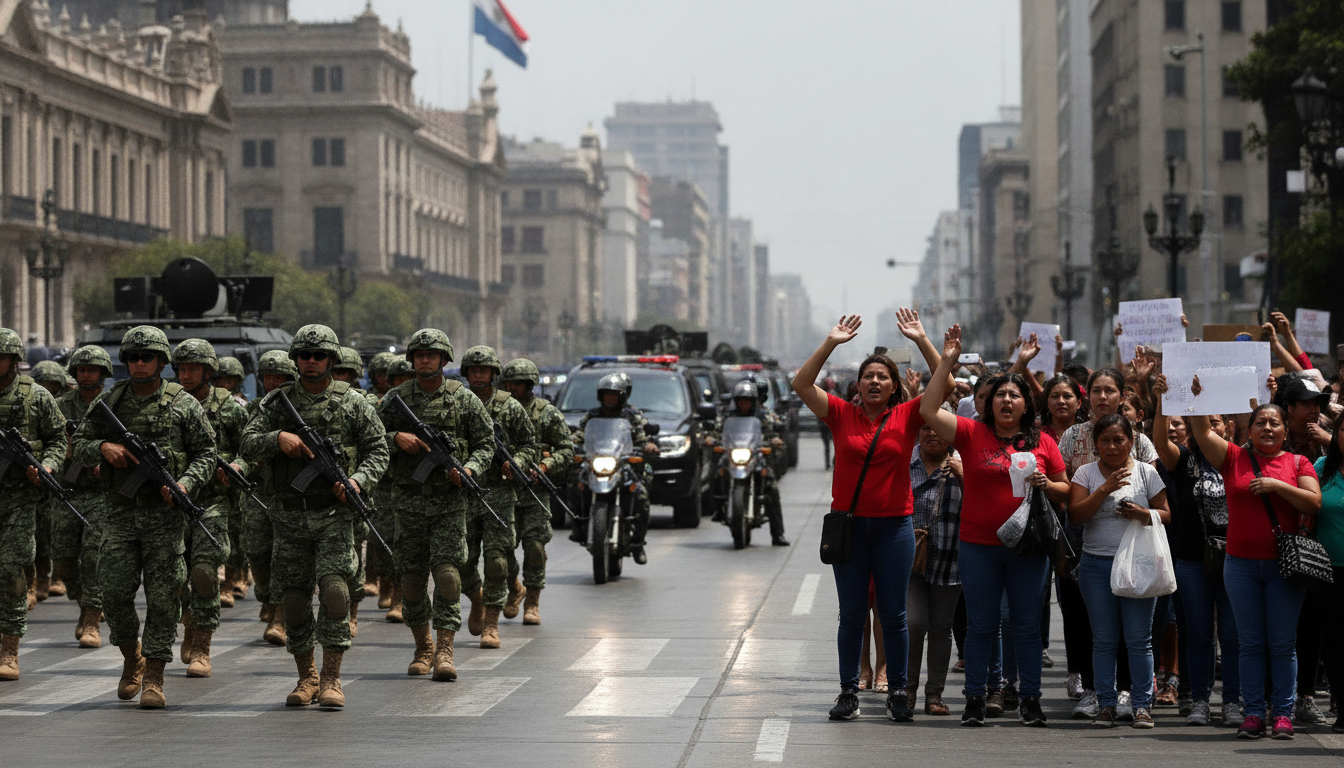
Militarization of Security in Latin America Spurs Rights and Governance Concerns
Governments across the region have increasingly turned to the militarization of security in Latin America to counter organized crime, but critics warn the strategy risks human-rights abuses and weakened civilian institutions.
Regional surge in military deployments
Across Latin America, states facing rising extortion, drug trafficking and contract killings have deployed armed forces to streets, prisons and internal security roles. Policymakers cite immediate needs to restore order, while analysts caution that soldiers are trained for external defense, not routine policing.
The recent wave reflects a pattern: crises prompt temporary militarized interventions that often become prolonged, reshaping security architecture and reallocating budgets away from civilian law enforcement and judicial capacity.
Peru expands military role amid political turmoil
Peru has repeatedly turned to its armed forces for internal security during political crises, renewing anxieties rooted in the country’s recent past. The current administration has proposed wider military authority, including legislative powers to allow armed forces to manage and organize national prisons.
Human-rights advocates and the head of Peru’s national human-rights observatory argue that the army’s expanded role may not reduce extortion or assassination-for-hire in the long term and heightens the risk of disproportionate force. Memories of the internal conflict of the 1980s and 1990s—when a truth and reconciliation commission documented tens of thousands of deaths and security force abuses—shape public sensitivity to remilitarization.
Ecuador declares internal armed conflict and faces abuse allegations
In January 2024, Ecuador’s government for the first time declared the existence of a non-international armed conflict, authorizing the immediate deployment of troops to retake control of prisons and patrol urban areas. The decision followed unprecedented violence that included coordinated prison uprisings, car bombings and an assault on a television station.
Initial government data suggested a partial slowdown in homicide rates early on, but the military-led approach was soon shadowed by allegations of mistreatment and disappearances. Prosecutors opened investigations into claims of enforced disappearances and deaths in custody, and international rights monitors raised concerns about delayed inquiries and limited military cooperation with civilian authorities.
Mexico’s long-running ‘war on drugs’ deepens military influence
Mexico’s large-scale military deployments against drug cartels began in earnest in 2006 and have continued under successive administrations, with the armed forces increasingly taking on roles traditionally held by police and prosecutors. Over time, the security portfolio and resources shifted toward the military, reflecting a belief that a robust, uniformed response was necessary to confront powerful criminal syndicates.
Critics note that while troops have helped dismantle some cartel structures, the strategy has coincided with surges in violence, municipal destabilization and broader governance challenges. The trend underscores a regional dilemma: when civilian institutions falter, political leaders often turn to the military, with mixed results for public safety and accountability.
Human-rights implications and institutional risks
Scholars and civil-society groups warn that sustained militarization of public security can concentrate political power, erode civilian oversight and create conditions conducive to rights violations. Reports from multiple countries document instances of excessive force, humiliating treatment of detainees and obstacles to independent investigations when the armed forces are the primary security actor.
A common refrain from human-rights advocates is that long-term crime reduction depends on targeted intelligence, financial investigations, stronger police forces and accountable prison management, rather than prolonged military patrols. Where judicial capacity and specialized prosecutors are strengthened, analysts say, the need to deploy soldiers diminishes.
Alternatives and policy measures to reduce dependency on troops
Policymakers recommending alternatives call for investment in criminal intelligence, forensics and anti-money-laundering mechanisms that can disrupt organized crime’s finances. They also urge professionalization of police forces, prison reform with civilian oversight, and rapid-response prosecutorial units to pursue high-level traffickers and extortion networks.
International partners and regional forums have encouraged a rebuilding of civilian capacities alongside transitional measures that keep the military under strict legal limits and transparent oversight. Experience in countries that resisted full militarization—by reinforcing civilian institutions—provides models for balancing immediate security needs with long-term governance.
Security decisions taken today will shape democratic control and human-rights trajectories for years to come. While the militarization of security in Latin America may offer short-term visibility and deterrence, its wider legal and social costs underscore the urgency of strengthening police, judicial and prison systems to ensure sustainable public safety outcomes.
