
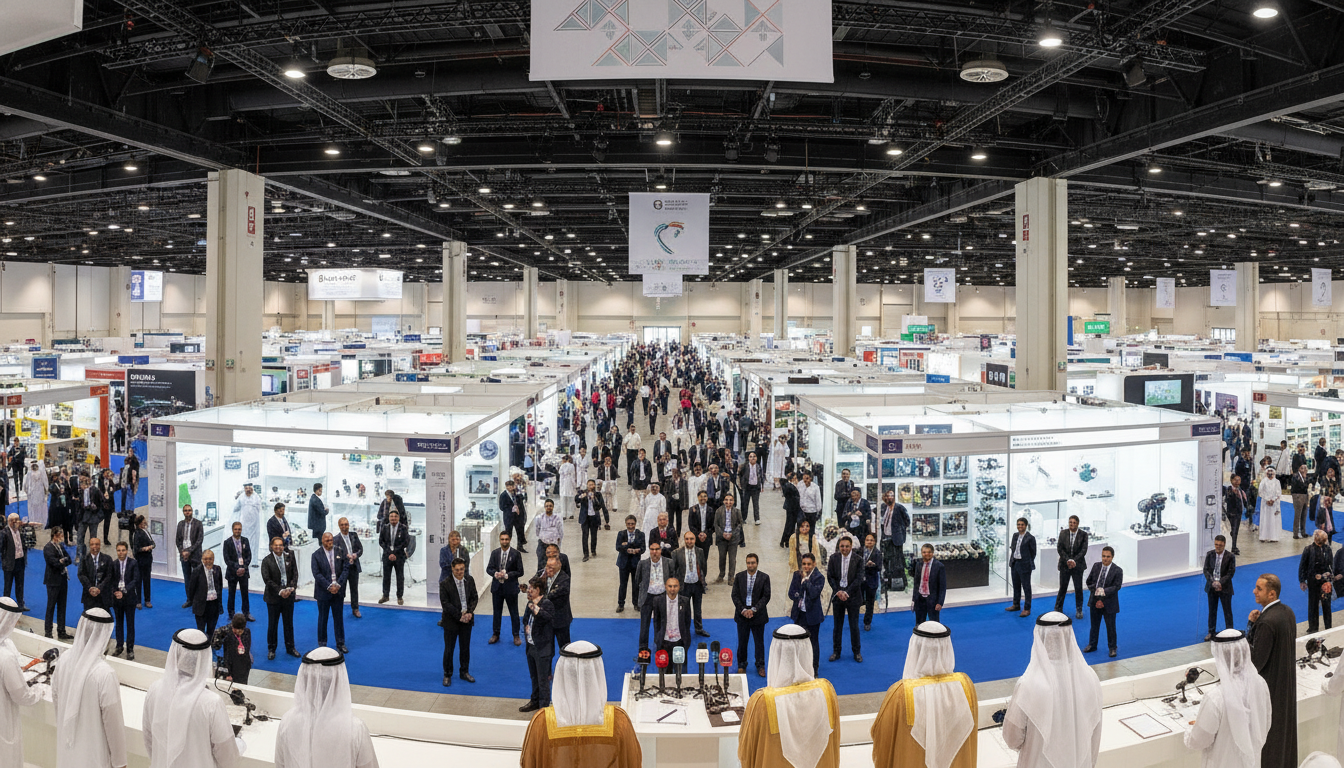
Make in UAE 2026 opens at ADNEC as largest industrial gathering in nation’s history
Make in UAE 2026 opens at ADNEC with record 88,000 sqm, 1,245 exhibitors and over 2,000 artisans, highlighting the UAE’s push for advanced manufacturing, plus jobs.
The fifth edition of Make in UAE 2026 opened today at the Abu Dhabi National Exhibition Centre (ADNEC), bringing ministers, investors, manufacturers and innovators together from May 4–7, 2026. The platform—branded around advanced industry—aims to accelerate the UAE’s shift to a production-led economy and showcase new capabilities across strategic sectors. With a marked expansion in scale and participation, the event positions the UAE as a regional hub for advanced manufacturing and industrial investment.
Record exhibition scale and exhibitor growth
Attendance figures and exhibition space for Make in UAE 2026 set new benchmarks for the platform’s history. The event occupies 88,000 square metres of display area, a 30 percent increase on last year, and hosts 1,245 exhibitors, up 73 percent compared with 2025. Organisers say the surge reflects stronger investor confidence and broader industry participation from across the seven emirates.
The growth in exhibitors is matched by a deeper commercial mix, with national champions, multinational firms and new entrants all represented. Planners reported that space demand exceeded projections in several priority clusters, prompting additional halls and feature zones at ADNEC.
Twelve priority industrial sectors on show
Make in UAE 2026 spans 12 priority sectors that the UAE has identified for industrial advancement. The sectors on display include advanced manufacturing, energy, aviation, defence, pharmaceuticals, mobility and sustainable materials, among others. Curated pavilions and thematic corridors group technologies and projects to help buyers, investors and policymakers find aligned opportunities.
Sector-specific showcases allow delegates to evaluate end-to-end supply chains and localised capabilities, while demonstrator areas highlight manufacturing processes and emerging technologies. The emphasis on sectoral depth aims to accelerate projects that can scale from pilot to mass production within the UAE.
SMEs and entrepreneurs account for majority participation
Small and medium-sized enterprises and start-ups form the backbone of this year’s show, representing 61 percent of participants. That concentration of SMEs underscores a policy shift toward scaling homegrown companies into national suppliers and exporters. Industry representatives pointed to targeted matchmaking programmes and procurement pipelines as key drivers for the SME turnout.
Delegates said the prominence of SMEs will help diversify supplier bases and shorten lead times for national projects. Several exhibitors are expected to secure memoranda of understanding and pilot contracts with larger industrial players and government buyers during the four-day event.
Craftsmanship and product breadth on display
More than 2,000 specialised artisans are participating at Make in UAE 2026, contributing to a product showcase of over 5,000 items—an increase of about 4 percent year‑on‑year. The mix ranges from high-tech components to locally manufactured consumer goods and sustainable material samples. Curated artisan zones provide visibility for traditional skills adapted for modern manufacturing contexts.
Organisers emphasised that linking craftsmanship with industrial processes helps create differentiated export offerings and domestic value. Live demonstrations and product trails are scheduled to give buyers direct exposure to quality standards and production methods.
Policy alignment with national industrial strategy
The platform explicitly supports the UAE’s industrial strategy by acting as a practical mechanism to convert national priorities into projects and investments. Officials and industry leaders at the venue highlighted the role of secure supply chains, scalable national companies and local innovation in delivering measurable economic impact. Government procurement commitments and industrial incentives were described as levers that will help translate event engagements into tangible manufacturing capacity.
Speakers reiterated a long-term commitment to building a resilient industrial base that reduces import dependence and strengthens export competitiveness. The event’s scale is intended to signal to global partners that the UAE is accelerating its industrial ambitions.
Programme, dialogues and investor engagement
Make in UAE 2026 hosts more than 50 sessions, panel discussions and workshops designed to foster collaboration between public and private sectors. The programme includes technical briefings, investment forums and matchmaking sessions that aim to facilitate joint ventures, technology transfer and financing arrangements. Organisers expect these interactions to generate pipeline projects and strategic partnerships after the event concludes.
High-level delegations, investors and trade missions will use the platform to assess capabilities and negotiate partnerships during May 4–7, 2026. The combination of curated content and extensive exhibitor participation is framed as a practical marketplace for deals that can be implemented at scale.
The event’s expanded footprint and participant mix underline a deliberate push by the UAE to entrench advanced manufacturing as a core economic pillar. By concentrating capital, policy support and market access in one national forum, Make in UAE 2026 aims to turn ambitions into executable projects that contribute to sustainable industrial growth in the years ahead.
