
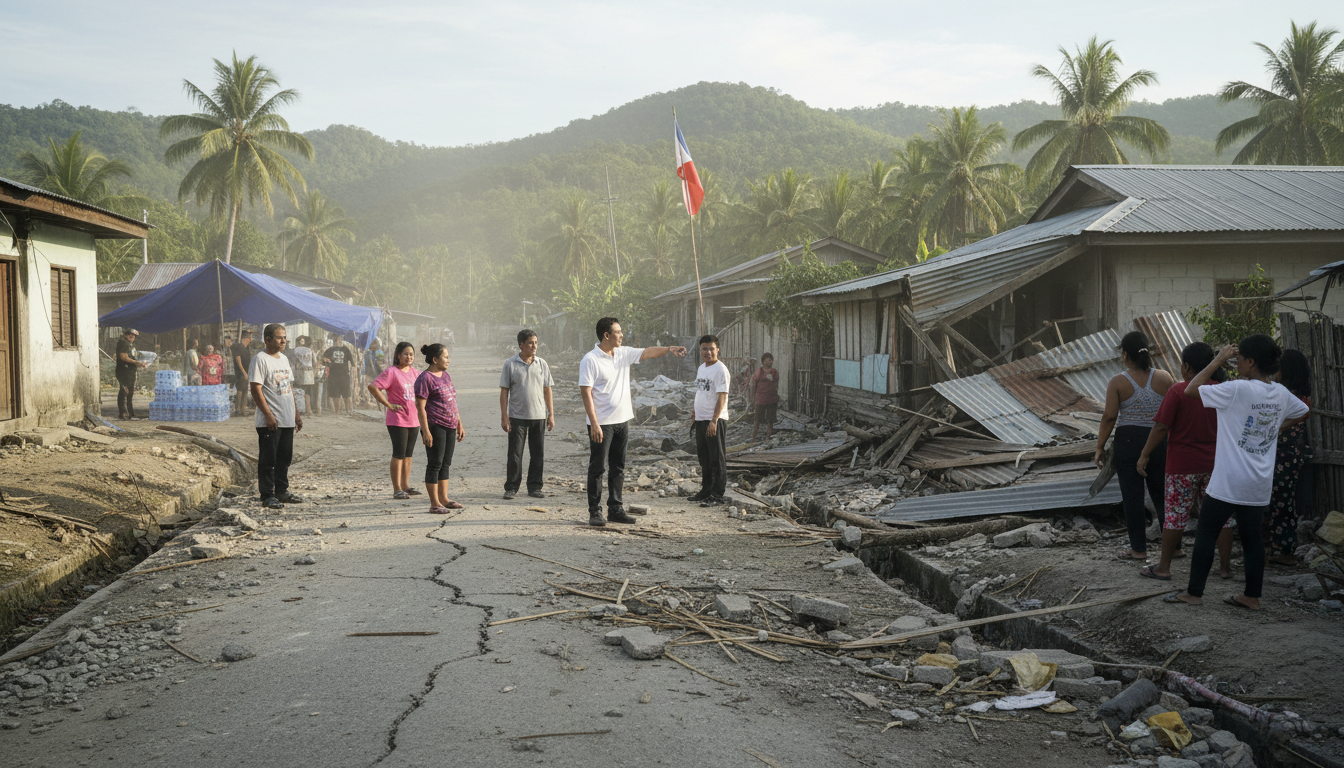
Philippines earthquake: 6.0-magnitude quake strikes near Nena, USGS issues shake maps
Philippines earthquake: a 6.0-magnitude quake struck near Nena at 2:09 p.m. local time; USGS released shake maps and seismologists are monitoring aftershocks.
A strong 6.0-magnitude Philippines earthquake struck on Monday afternoon, the United States Geological Survey reported, with the epicentre located just northwest of the village of Nena. The quake occurred at 2:09 p.m. Philippine time and was registered by USGS instruments that track seismic activity across the region. Seismologists say the initial measurement may be revised as further analysis of the seismic data continues.
Epicentre and immediate measurements
USGS data places the epicentre approximately three miles northwest of Nena, with the depth and precise coordinates reported in the agency’s initial bulletin. The magnitude reported was 6.0, a level that typically produces noticeable shaking across local communities and can cause damage depending on depth and built environment. Officials noted that as additional seismic readings are reviewed the agency could adjust the magnitude and related parameters.
Shake-intensity mapping and affected zones
Preliminary shake-intensity maps released alongside the event identify areas that experienced shaking of level 3 or greater on intensity scales commonly used by seismologists. These maps show a footprint where residents were most likely to feel the tremor, and they are overlaid with population-density data to indicate potential exposure. The mapping helps authorities and responders prioritise assessments in more densely populated localities.
Aftershocks and monitoring period
Seismologists typically monitor seismic clusters after an initial quake for aftershocks within a 100-mile radius and over a subsequent seven-day window, and the same protocol is being applied to this event. USGS reporting includes time-stamped aftershock tracking, with data snapshots published soon after the mainshock to assist in operational planning. The public is advised that aftershock sequences can continue for days and that smaller but sometimes damaging tremors may follow.
Scientific review and potential revisions
Experts noted that magnitude and shake-area estimates are provisional in the immediate aftermath of an earthquake and can change as more seismographs report data. The USGS and other monitoring agencies routinely update their bulletins when additional recordings and analyses refine initial computations. Such revisions can alter both the reported magnitude and the mapped intensity zones used by emergency managers.
Regional seismic context and risks
The Philippines sits along a highly active segment of the Pacific Ring of Fire, where tectonic plate boundaries generate frequent earthquakes and occasional volcanic activity. Large and moderate quakes occur with relative regularity across the archipelago, which has shaped national preparedness planning and building codes in many urban centres. Continued public awareness and adherence to local safety guidance remain key components of reducing risk from seismic events.
Data sources and public information
The event’s mapped shake intensity drew on population-density overlays from LandScan, an Oak Ridge National Laboratory dataset, combined with USGS seismic output to produce situational graphics. All timestamps in the initial data release were given in Philippine time, while data snapshots referenced Eastern Time for synchronised reporting across international feeds. Authorities and monitoring agencies have said they will publish updates as refined information becomes available.
Responders and residents are being urged to monitor official channels for confirmed safety advisories and to follow standard earthquake precautions when aftershocks occur. Emergency services typically advise checking buildings for structural damage, avoiding damaged infrastructure, and heeding local evacuation guidance where issued. The USGS and regional seismic networks continue to analyse recordings from the mainshock and any subsequent tremors, and further updates will be released as new data are verified.
