
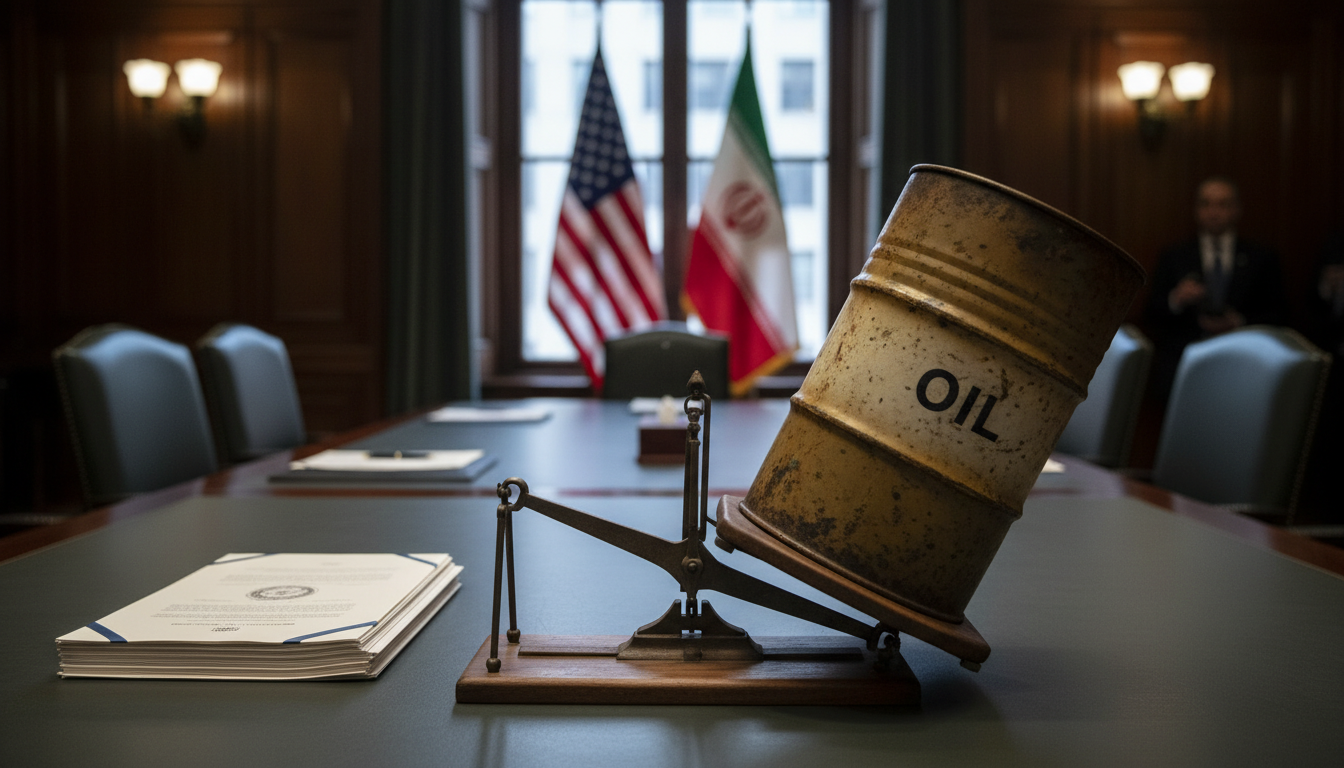
Oil prices ease as Iran submits revised peace proposal, trimming weekly gains
Oil prices slip after reports Iran submitted a revised peace proposal to the US; Brent falls to about $110 and WTI to $103 as markets trim weekly gains.
Global oil prices eased on Friday after reports emerged that Iran had presented a revised proposal in peace talks with the United States, prompting traders to reassess risk premiums that had supported earlier gains. Brent crude for July delivery fell roughly 0.2% to about $110 a barrel in London, while US West Texas Intermediate dropped around 2.1% to near $103 a barrel in thinner New York trade. The moves reduced what had been a stronger weekly advance in both London and New York markets, according to market reports cited by Bloomberg.
Brent and WTI Movement
Brent’s modest decline contrasted with a steeper pullback in US benchmarks, reflecting differences in regional liquidity and contract delivery dynamics. London trading showed Brent hovering near the $110 mark as buyers and sellers recalibrated positions after the Iran reports. In New York, WTI’s larger percentage drop was influenced by lighter volumes and the contract’s sensitivity to immediate physical market signals.
Price spreads between Brent and WTI narrowed during the session, a sign that global traders were factoring in a possible easing of near-term geopolitical premium. Dealers noted that headline-driven volatility can move benchmarks differently, and that settlement patterns across exchanges contributed to the varying magnitude of the declines.
Impact of Iran’s Revised Proposal
Reports that Iran submitted a revised peace proposal to US negotiators injected a degree of caution into oil markets by suggesting a potential reduction in immediate regional tensions. Market participants often price in a geopolitical premium when hostilities or political uncertainty threaten supply routes or production, so any sign of de-escalation can remove part of that premium. Traders appeared to take the reports as a signal that some near-term risk was receding, prompting profit-taking on positions built during the prior rally.
Observers emphasized that such diplomatic developments tend to be incremental and subject to verification, so while headlines can move markets quickly, sustained price trends depend on subsequent confirmations and actions. The initial market response was therefore cautious rather than celebratory, reflecting uncertainty about the durability and specifics of any agreement.
Market Reaction and Trading Patterns
Trading patterns on Friday reflected a mix of headline-driven repositioning and routine profit-taking ahead of the weekend. Bloomberg’s coverage highlighted that the reduced gains for the week came as participants squared books and reduced exposure to headline risk. Lower liquidity in some US sessions amplified percentage moves, particularly for WTI contracts, which are more sensitive to US inventory reports and local delivery constraints.
Speculative funds and short-term traders often drive exaggerated swings when geopolitical headlines arrive, and this session was no exception. Risk managers and hedge desks moved to trim leveraged bets, which contributed to a faster downward correction than the modest fundamentals might otherwise have produced.
Supply and Geopolitical Considerations
Beyond the Iran-related headlines, supply-side fundamentals remain an important backdrop for oil prices, with global production levels, OPEC+ policies and inventory data shaping longer-term expectations. Any diplomatic breakthrough that reduces the likelihood of supply disruptions in the Middle East could remove part of the upside pressure that has supported prices this year. Conversely, if talks falter or new developments introduce fresh uncertainty, risk premiums could return quickly.
Energy market analysts caution that headline-driven reprieves are often temporary unless accompanied by durable changes in the operational reality of production and transport. For now, the market appeared to be balancing a mix of steady demand prospects and the potential for shifts in geopolitical risk.
Regional Market Implications for UAE
Traders and energy firms in the UAE and the wider Gulf watched the developments closely, as changes in risk perception directly affect regional export revenues and trading flows. A reduction in immediate regional tensions can ease shipping insurance costs and logistical headwinds for Gulf producers, while price stability supports planning for state budgets and downstream operations. Local commodity desks were reported to be monitoring both the diplomatic track and oil inventories to assess whether the price dip would hold into the coming week.
The UAE’s energy sector, integrated into global markets, tends to respond to both headline diplomacy and concrete supply adjustments. Market participants in Abu Dhabi and Dubai were therefore weighing the short-term price correction against longer-term fundamentals.
Outlook for Traders and Investors
Looking ahead, traders signalled that oil markets would remain sensitive to any fresh developments from the Iran-US talks as well as routine data releases such as weekly US inventories and economic indicators. Short-term volatility is likely to persist while negotiations continue and as participants reposition for next week’s trading. Investors will watch for follow-through confirmations of any diplomatic progress and for signs that physical supply or demand trends are shifting materially.
Risk managers and long-term holders may use the price pullback as an opportunity to rebalance portfolios, but many market watchers warned that geopolitical stories can reverse quickly and that disciplined exposure limits remain important.
Price action on Friday left Brent and WTI with trimmed weekly gains, underscoring that the oil market is still closely tied to headlines and to the evolving diplomatic picture in the Middle East.
