
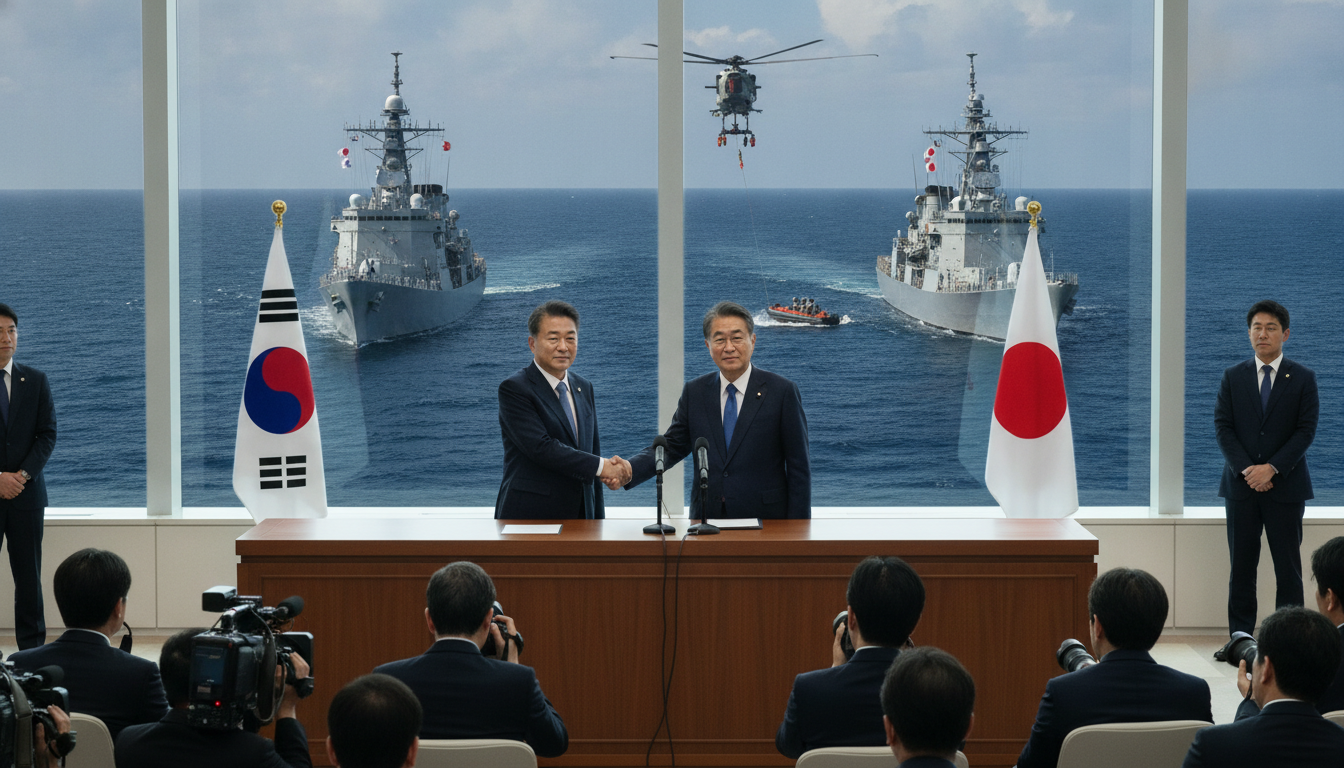
South Korea and Japan Reaffirm Denuclearisation of the Korean Peninsula and Resume Joint Drills
South Korea and Japan will resume joint search-and-rescue drills and boost security cooperation while reaffirming denuclearisation of the Korean Peninsula.
South Korea and Japan announced a renewed commitment to the denuclearisation of the Korean Peninsula after a meeting between their defence ministers in Seoul. The ministers agreed to resume joint search-and-rescue exercises and to deepen bilateral security coordination amid mounting regional concerns. The declaration was made during the sixth round of defence talks and framed as a step toward stabilising the region through both bilateral mechanisms and partnerships with the United States.
Defence Ministers Meet in Seoul
Ahn Gyu-bak, South Korea’s defence minister, met with his Japanese counterpart, Shinjiro Koizumi, in Seoul for what officials described as a substantive round of talks. The meeting marked the sixth formal defence-level dialogue between the two neighbours in recent months. Both ministers emphasised practical cooperation aimed at reducing immediate risks and building longer-term trust.
A statement from the South Korean Defence Ministry said the ministers agreed to cooperate to maintain peace and stability in what it described as a dangerous security environment. Officials framed the talks as a signal that both capitals were ready to move past long-standing frictions to pursue shared security objectives.
Commitment to Denuclearisation of the Korean Peninsula
The central outcome of the meeting was the paired reaffirmation of denuclearisation of the Korean Peninsula as a primary goal. Both sides stated they will work toward that objective through diplomatic pressure, defence coordination, and international cooperation. The pledge underscores Seoul and Tokyo’s shared concern over North Korea’s nuclear and missile programmes.
Ministers also discussed aligning their strategies to preserve diplomatic space while maintaining deterrence. The emphasis on denuclearisation signals a return to coordinated messaging amid broader regional uncertainty.
Joint Search-and-Rescue Drills to Restart
A concrete deliverable from the talks was the decision to resume joint search-and-rescue training that had been suspended previously. The exercises, designed to improve interoperability and civilian protection, will focus on maritime and air incident response. Officials said the drills will be framed strictly as humanitarian and disaster-response activities to reduce political sensitivities.
Resuming these practical exercises is intended to build operational familiarity between forces and provide a predictable platform for cooperation. Defence officials noted that such drills deliver immediate public safety benefits while serving as confidence-building measures between the two militaries.
Tri-party Cooperation with the United States
Both ministers agreed their bilateral work would be reinforced through partnerships with the United States, reflecting a three-way security dynamic in the region. The statement highlighted that Seoul and Tokyo would coordinate policies and exercises that complement U.S. deterrence efforts. Officials suggested closer trilateral planning could enhance contingencies related to crisis response and escalation management.
Analysts say the trilateral approach aims to present a unified front to deter provocations and to create channels for rapid information-sharing during incidents. Ministers did not provide a detailed timeline for expanded trilateral activities but indicated that further coordination will follow.
Security Outlook: Regional Tensions and North Korea
The renewed cooperation comes amid persistent regional tensions, including North Korea’s ongoing weapons development and a complex strategic environment in East Asia. Both Seoul and Tokyo face domestic and diplomatic pressures that complicate security planning. Officials acknowledged the need to balance deterrence and diplomacy while avoiding actions that could inadvertently heighten confrontation.
Ministers warned that the regional security environment remains precarious and underlined the importance of predictable defence ties. Their remarks reflected a recognition that enhanced practical cooperation can lower the risks of miscalculation and provide clearer crisis response options.
Next Steps and Diplomatic Timeline
The defence ministries said follow-up working groups will outline the practical arrangements for resuming drills and for increased information-sharing. Further meetings were scheduled to translate the ministers’ commitments into concrete exercise plans and communication protocols. Both capitals indicated they expect the resumed joint activities to proceed in a phased manner to manage domestic sensitivities and operational readiness.
Officials also flagged plans to brief allied partners on the outcomes and to align coordination with ongoing diplomatic channels. The ministers emphasised that these steps are meant to be steady and measurable rather than symbolic.
The Seoul meeting and its outcomes mark a notable shift toward cooperation between two neighbours that have historically alternated between rivalry and limited partnership. By combining a renewed pledge to the denuclearisation of the Korean Peninsula with practical measures such as search-and-rescue exercises and closer ties with the United States, Seoul and Tokyo signalled a pragmatic approach to managing shared security challenges while keeping diplomatic options open.
