
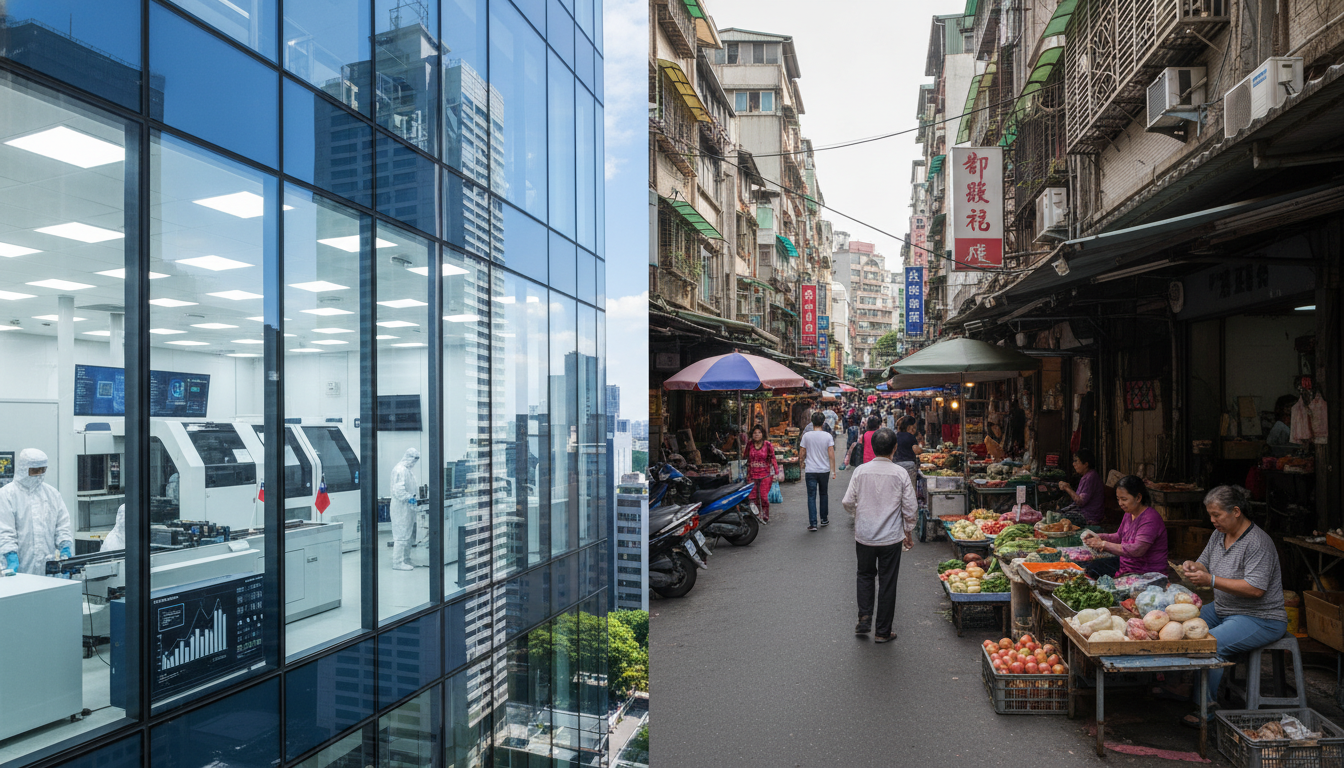
Taiwan AI boom lifts GDP and stock market but deepens inequality across the island
Taiwan AI boom fuels record GDP and stock gains but widens inequality as semiconductors capture capital, prompting concern over a K-shaped economy and housing.
Taiwan’s AI boom has propelled the island to exceptional economic growth while exposing widening gaps in income and opportunity. The surge in demand for cutting-edge chips and AI infrastructure has helped push gross domestic product higher, but analysts and officials warn the gains are concentrated in a handful of tech sectors rather than spread broadly. As Taipei prepares for the Computex tech and AI expo from June 2–6, 2026, the debate over how to turn a tech windfall into inclusive growth is intensifying.
Record GDP growth and export boom
Taiwan posted sharply higher growth as the global appetite for semiconductors and AI hardware strengthened. GDP expanded strongly in 2025 and continued accelerating into early 2026, driven by a large jump in exports that industry data show are now overwhelmingly tech-related.
Merchandise and services exports climbed substantially last year, with semiconductor-related goods representing a large share of the increase. The rapid trade expansion has translated into outsized headline growth even as many non-tech exporters struggle with trade frictions and higher costs.
TSMC and semiconductors dominate market value
Semiconductors now represent a major slice of Taiwan’s economic footprint and financial markets. Industry estimates show the chip sector contributes more than one-fifth of GDP, and Taiwan Semiconductor Manufacturing Company remains central to that concentration given its role supplying global AI and consumer technology firms.
TSMC’s weight on the bourse is significant: the company makes up a major portion of the market’s capitalization, magnifying the stock index gains tied to the semiconductor cycle. That concentration has helped fuel retail investor participation but also increased market sensitivity to sector-specific shocks.
Central bank warns of a K-shaped recovery
Officials and economists are sounding early warnings about uneven recovery patterns across the economy. Taiwan’s central bank governor has flagged the risk of a “K-shaped” outcome, where high-growth tech industries pull away while other sectors stagnate or decline.
Employment data underline that divergence: the semiconductor industry employs only a small fraction of the workforce, while services and smaller manufacturers still account for the bulk of jobs. Economists caution that when one industry dominates capital flows and wages, social and regional disparities can widen rapidly.
Wage trends and stock-market participation
Wage growth has resumed after a long period of stagnation, but the gains have been uneven across occupations. Official statistics show modest increases in average and median wages, yet a large share of workers still earn below the national average because high-paying tech roles lift the mean.
At the same time, the stock market has been a vehicle for wealth creation for many households. Regulatory changes in recent years have made it easier for individual investors to trade single stocks, and account numbers have surged, reflecting greater retail participation in equity markets as an alternative path to wealth accumulation.
Household anxiety over housing and living costs
Despite market and GDP gains, many households report financial strain amid rising housing prices and everyday expenses. Surveys indicate a substantial portion of voters feel anxious about their household finances, citing housing affordability as a central concern when weighing economic wellbeing.
Researchers and policy analysts say the combination of asset-price inflation and limited wage gains for non-tech workers is intensifying perceptions of economic exclusion. For those without savings or investment exposure, stock and property booms can deepen frustration rather than provide security.
Trade constraints and currency debates complicate policy options
Policymakers face external and structural constraints as they weigh responses to the imbalance. Tariff measures and trade policy differences, particularly with large markets, have left traditional exporters at a disadvantage compared with regional competitors able to negotiate broader trade deals.
Currency movements have also been part of the discussion: while a weaker currency has supported export competitiveness, critics argue it erodes household purchasing power. Authorities say they intervene only to temper volatility, but the debate over appropriate macroeconomic tools to support more inclusive growth remains active.
The challenge for Taiwan now is to sustain the gains from its technology leadership while broadening opportunity across sectors and regions. As companies and policymakers gather during Computex from June 2–6, 2026, discussions are expected to focus not only on the next wave of AI innovation but also on workforce development, SME support and housing policies that could help translate a booming tech cycle into more widely shared prosperity.
