
Trump Meeting on Iran Signals Possible Military Return After Talks Collapse
Trump holds May 11, 2026 national security meeting on Iran after talks collapsed; US considers military measures ahead of his May 13–15 China trip soon.
Trump convenes national security meeting on Iran
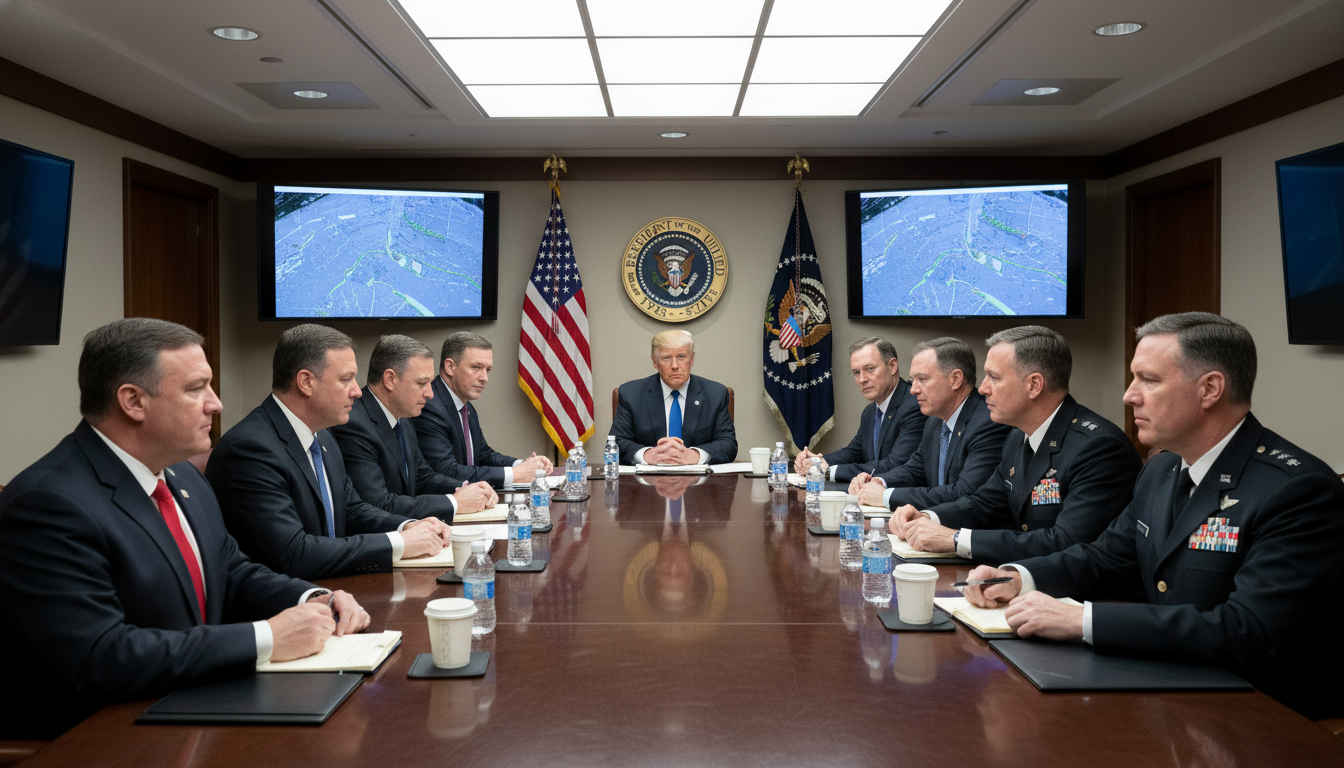
On May 11, 2026 President Donald Trump convened a decisive national security meeting to review options on Iran after diplomatic negotiations stalled. The Trump meeting on Iran brings senior officials together to weigh whether to resume military operations or pursue alternative pressure measures. Administration sources say the session follows a 10-day pause in which Washington expected Tehran to respond to a proposed draft ceasefire that was ultimately rejected.
The White House framed the meeting as both a review of intelligence and a forum to consider calibrated responses. Officials briefed at the session outlined scenarios ranging from maritime security operations to expanded strikes on remaining military targets. The discussion comes amid sharp rhetoric from both capitals and signals a potential shift from diplomacy back toward coercive measures.
Diplomatic talks collapsed after 10-day pause
U.S. officials told media outlets that Tehran declined the U.S. draft settlement after a 10-day waiting period, prompting frustration in Washington. Iranian state media characterized the U.S. proposal as unacceptable, portraying it as capitulation to excessive American demands. President Trump reacted tersely in remarks before the meeting, saying the proposal was “not acceptable” and reiterating his view that Iran must not acquire a nuclear weapon.
Sources indicate the American proposal had sought significant curbs on Iran’s enriched uranium holdings, a key sticking point in the talks. Iranian authorities have signaled domestic political divisions over concessions, complicating diplomatic outreach. The collapse of the draft removes the immediate diplomatic pathway that U.S. officials had been courting.
Military options outlined, including maritime operation
Officials at the briefing reviewed a range of military options now back on the table, according to participants. One option is the resumption of a maritime security effort referred to in planning documents as “Operation Freedom,” aimed at securing commercial transit through the Strait of Hormuz. That operation would focus on protecting shipping lanes and deterring attacks on vessels in a strategic choke point for global energy supplies.
Another option discussed was intensifying air strikes against remaining military targets that U.S. planners previously designated but did not hit; officials said about a quarter of those targets remain. A more audacious proposal, driven in part by allied pressure, would involve a special-operations effort to seize stockpiles of enriched uranium, an option U.S. leaders view as high risk. Administration representatives cautioned that any kinetic step would be calibrated to avoid an uncontrollable escalation.
Senior officials present at the White House briefing
The national security meeting included senior officials from across the administration to present options and legal assessments. Participants reportedly included the vice president, the secretary of state, the secretary of defense and the director of the Central Intelligence Agency. These officials were tasked with delivering intelligence updates, target assessments and diplomatic outreach plans to inform the president’s decision-making.
Legal and operational advisers briefed on the ramifications of each military option and on contingency plans for regional fallout. Military commanders outlined timelines and resource implications for a phased campaign versus discrete, limited strikes. The presence of a broad interagency team signaled a near-term decision window rather than a purely exploratory discussion.
Timing tied to state visit to China, May 13–15, 2026
U.S. officials tied the timing of any potential action to President Trump’s upcoming state visit to China, scheduled from May 13 to May 15, 2026. The administration has said the Iran file will be a prominent topic in discussions with Chinese President Xi Jinping, as Beijing has influence over Tehran and has been privately pressured to urge compromise. Officials indicated they were mindful of how any military step could affect high-level diplomacy in Beijing.
The proximity of the China trip adds a diplomatic constraint and an opportunity simultaneously, with Washington seeking China’s quiet leverage while preparing contingencies. Analysts note that synchronizing pressure with diplomacy could be intended to maximize diplomatic leverage, but it also raises the stakes for miscalculation during an already sensitive bilateral visit.
Regional impact and allied positions
Regional partners, particularly Israel and Gulf states, have pressed Washington for decisive action to prevent Iran from expanding its nuclear capabilities and to protect maritime commerce. Israeli officials reportedly urged consideration of a targeted ground or special-forces operation to secure enriched uranium stores, a move U.S. leadership regards as perilous and likely to trigger broader conflict. Gulf leaders have emphasized the need to keep commercial sea lanes open and to deter asymmetric attacks on energy infrastructure.
Any U.S. military escalation would reverberate across markets and alliances, affecting oil prices, shipping insurance and regional security dynamics. Military planners and diplomats alike stressed the importance of coordinating with partners to mitigate unintended consequences and to maintain coalition unity if operations proceed.
The White House meeting on May 11, 2026 set a narrow timeline for next steps, with senior advisers ordered to prepare options for rapid review. As the president departs for his China visit on May 13, the global community will be watching whether diplomacy can be revived or whether military pressure will be chosen to counter Iran’s nuclear trajectory.
