
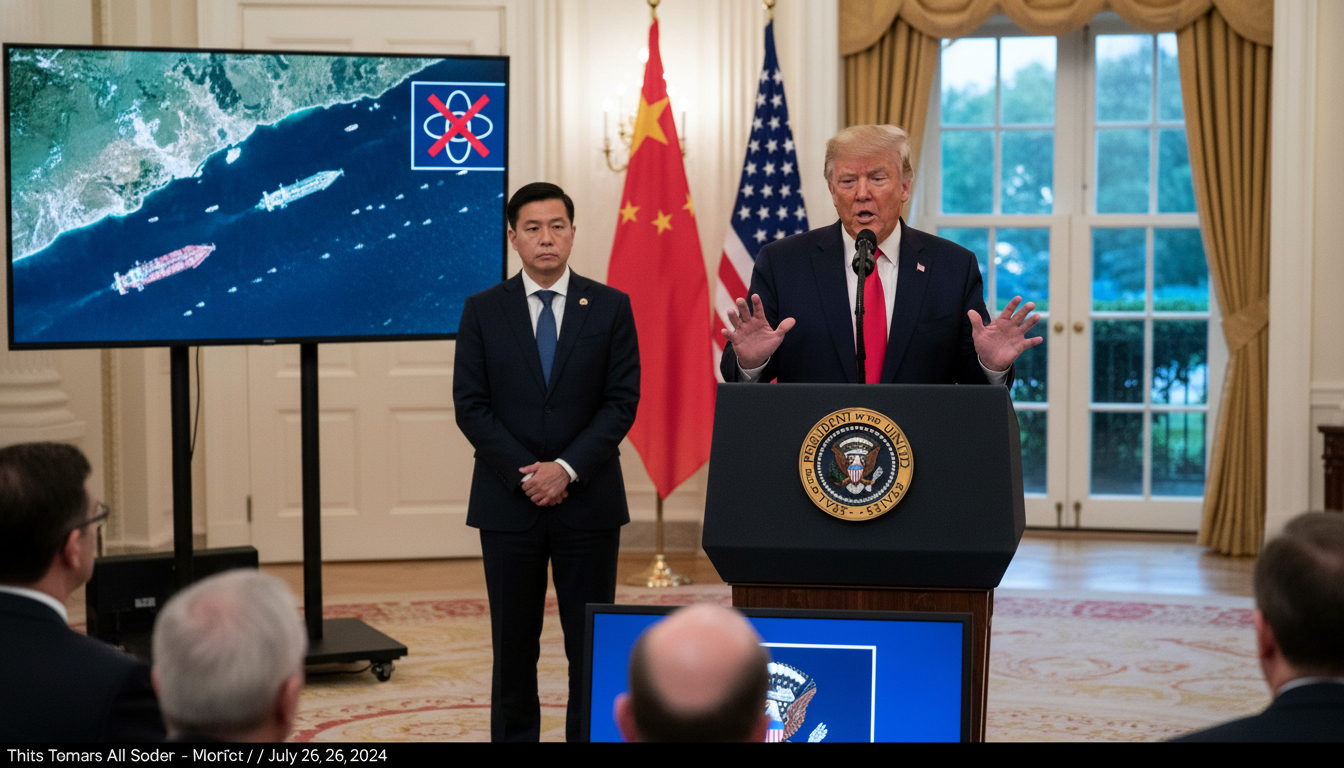
Trump says Xi supports preventing Iran from obtaining nuclear weapons and opening the Strait of Hormuz
President Trump says Xi Jinping supports preventing Iran from obtaining nuclear weapons and urged reopening the Strait of Hormuz, a move he said would ease Gulf tensions and protect global energy flows.
President Donald Trump told reporters aboard Air Force One that Chinese President Xi Jinping “feels strongly” that Iran should not acquire a nuclear weapon and that Beijing wants the Strait of Hormuz opened for commerce. The comments, made on Friday, tie Beijing’s stance on Iran’s nuclear ambitions to maritime access in a region critical to global oil and liquefied natural gas shipments.
Trump’s Remarks on Air Force One
President Trump addressed journalists while traveling on the presidential aircraft and framed his remarks as reflecting a shared US-China concern over Iran’s nuclear potential. He said Xi supports preventing Iran from obtaining a nuclear weapon and urged that Tehran allow freedom of navigation through the Strait of Hormuz.
The president linked Beijing’s view directly to energy security, suggesting that China wants the vital waterway reopened to ensure steady oil and LNG exports. His comments offered a public articulation of Chinese support on an issue Washington has long prioritized.
Xi Jinping’s Stance on Iran’s Nuclear Ambitions
Trump’s statement portrays Xi as aligned with the United States on the specific goal of preventing a nuclear-armed Iran. Beijing has historically emphasised non-proliferation, but it has also maintained economic and diplomatic ties with Tehran, complicating how that principle is translated into policy.
Analysts note that Chinese support could range from rhetorical backing of non-proliferation to concrete diplomatic pressure, depending on Beijing’s strategic calculations. Any meaningful shift would have implications for multilateral efforts to constrain Iran’s nuclear program and for future talks involving global powers.
Potential Impact on Strait of Hormuz and Maritime Security
The Strait of Hormuz is a strategic chokepoint through which a substantial share of the world’s oil and liquefied natural gas transits. Trump’s linking of nuclear non-proliferation and the need to “open the strait” underscores how security concerns and commercial access are intertwined in Gulf geopolitics.
If major powers coordinate on pressuring Tehran to avoid nuclear escalation, that could reduce risks of maritime blockades or confrontations that threaten shipping. Conversely, public declarations without follow-through can also heighten uncertainty for shipping companies and governments that rely on predictable access.
Regional Diplomatic and Security Reactions
Governments across the Gulf and beyond are likely to watch carefully for any coordinated strategy involving Washington and Beijing. Regional states have varied relationships with Iran, and a stronger Chinese posture could shift diplomatic dynamics in subtle ways.
Local capitals may seek clarification from both Washington and Beijing about what practical steps would follow such statements. Military planners, diplomats, and energy firms will be assessing the credibility of any pledge to restore open navigation in the Strait and the measures that would back it.
Energy Market and Economic Considerations
Comments tying Chinese support to Gulf maritime access are significant for global energy markets, which are sensitive to even modest changes in perceived supply risk. Traders and energy companies track developments that could alter the flow of crude oil and LNG through the Strait of Hormuz.
An apparent convergence between the United States and China on preventing a nuclear-armed Iran could reassure markets if it reduces the likelihood of supply disruptions. However, markets also respond to uncertainty, and vague or politically charged statements can produce short-term volatility.
Next Steps and International Forums
How Beijing intends to act beyond verbal support is likely to surface soon in diplomatic channels and at multilateral forums where Iran’s nuclear program is discussed. The United Nations, regional organizations, and bilateral consultations could provide venues for translating rhetoric into policy.
Observers will be looking for signals such as diplomatic démarches, voting patterns in international bodies, or coordination on sanctions and incentives that indicate Beijing’s priorities. Any coordinated approach will require careful calibration to avoid unintended escalation.
President Trump’s public account of Xi Jinping’s stance places the Chinese leader in an unfamiliar role as an explicit backer of preventing Iran from achieving a nuclear weapon while calling for reopening the Strait of Hormuz. The practical impact of those words will depend on subsequent diplomatic moves by Beijing, Washington, and regional partners, and on whether they can convert shared concerns into concrete, enforceable measures that reduce the risk of proliferation and secure vital maritime routes.
