
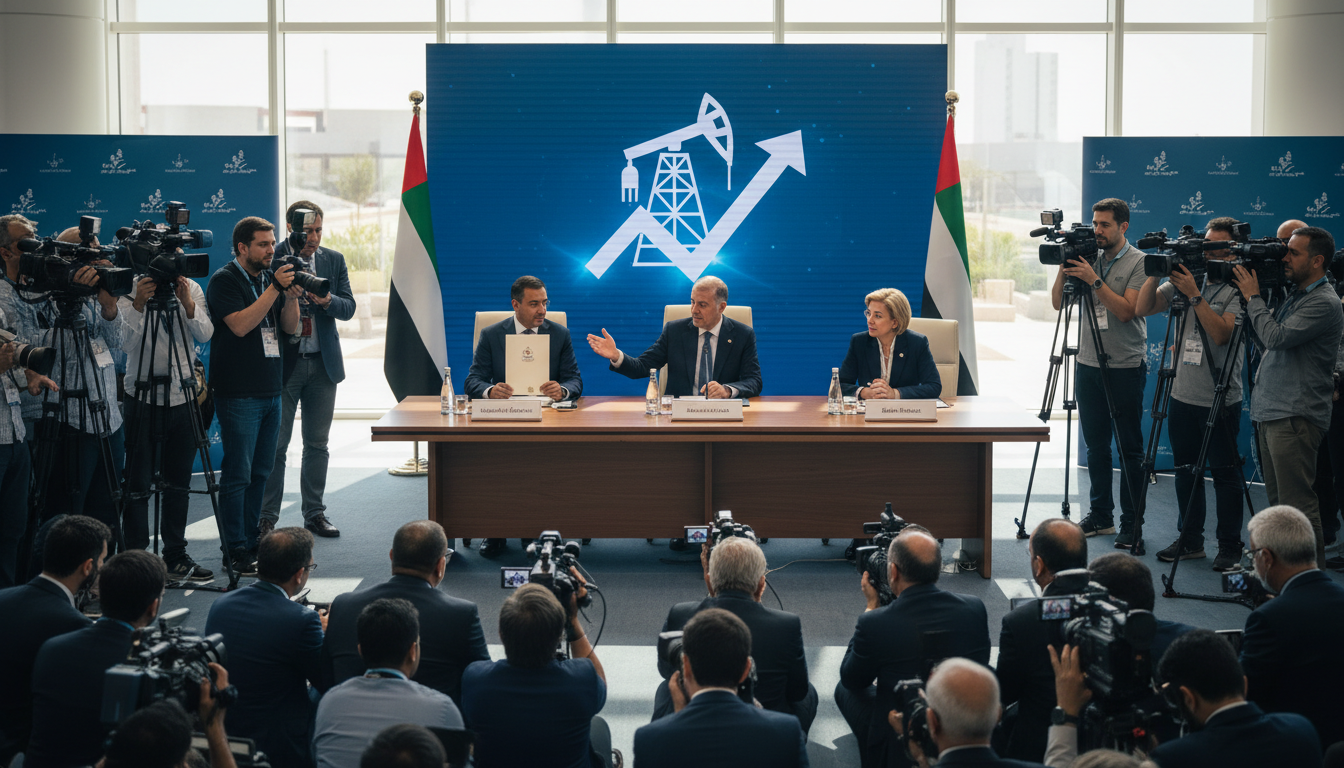
UAE exit from OPEC Signals Shift in Production Policy, Boosts ADNOC Listed Stocks
UAE exit from OPEC allows production to be aligned with national capacity, lifting ADNOC-listed shares on ADX and prompting analyst upgrades as markets reassess supply dynamics.
The United Arab Emirates’ decision to leave OPEC and the OPEC+ alliance marks a deliberate policy shift intended to align oil output more closely with the country’s production capacity and investment plans. The move, described by officials as aiming for a more measured link between capacity and actual production, immediately influenced trading on the Abu Dhabi Securities Exchange.
Immediate market reaction on ADX
Shares of ADNOC-affiliated companies listed on ADX reacted positively on the announcement, reflecting investor expectations of higher activity across the energy value chain. The ADNOC ecosystem posted an average gain of about 5.2 percent, with Fertiglobe jumping roughly 10.3 percent and ADNOC Drilling, ADNOC Logistics & Services and ADNOC Gas each recording notable advances.
Market participants said the spike in equities was driven by the prospect of clearer visibility on production volumes and the likelihood of increased utilization across upstream and midstream assets. Traders also pointed to quarterly results and near-term operational updates as reinforcing the sentiment behind the rally.
Operational flexibility for ADNOC companies
Analysts and company executives argue the UAE exit from OPEC removes a structural constraint that previously decoupled investments in capacity from immediate output decisions. That uncoupling had limited the pace at which expanded capacity translated into higher production, even when investments and infrastructure were available.
With policy autonomy restored, ADNOC Group companies could schedule ramp-ups more directly in line with their installed capacity and market demand. Expected outcomes include higher utilization of drilling fleets, increased gas processing volumes and expanded logistics throughput, each improving operating leverage across the listed entities.
Analyst upgrades and price-target revisions
Global and regional banks quickly revised coverage to reflect the changed operating backdrop for ADNOC subsidiaries, with Morgan Stanley upgrading ADNOC Gas to Overweight and raising its price target. Brokerage reports highlighted the potential for a 25–30 percent upside in some names if production and utilization increase as projected.
Other houses framed the decision as a move toward a more competitive market structure. HSBC and ING suggested the short-term market impact would be contained, while noting the change could influence OPEC’s coordination ability over time. EFG Hermes identified ADNOC Gas and ADNOC Drilling among the most likely beneficiaries of higher activity.
Linking capacity investment to production levels
For years, OPEC’s quota framework managed global supply but also created situations where national capacity expansions could not be fully reflected in output. UAE authorities invested heavily to grow production capacity, and leaving OPEC is intended to allow production to track those investments more directly.
Officials and industry observers say this linkage should smooth utilization rates across the value chain and reduce periods of underused capacity. The immediate beneficiary outlook centers on companies that operate the wells, processing plants and logistics networks required to translate capacity into marketable barrels and products.
Short-term market outlook and geopolitics
Although equities responded briskly, analysts cautioned that oil prices and global supply balances will continue to be driven by geopolitical developments, macroeconomic demand trends and OPEC+ behavior beyond the UAE. HSBC and ING emphasized that the near-term effect on prices is likely to be limited while longer-term coordination dynamics could shift.
Market-watchers noted that any material upward change in UAE production would emerge over months as wells, processing facilities and export logistics are commissioned and tested. As such, price momentum will depend on physical output growth, inventory moves and global demand recovery patterns.
Investor implications for dividends and earnings clarity
The prospect of higher production and steadier utilization offers clearer visibility on cash flows and dividend potential for ADNOC-listed firms, according to regional brokers. Better operating predictability could underpin more consistent payout profiles and reduce the uncertainty that weighed on valuations under quota constraints.
Portfolio managers told analysts that increased clarity around volumes and margins would likely lead to a re-rating of some ADNOC stocks, particularly those with capital-intensive operations where utilization materially affects profitability. Market participants also flagged that any uplift in corporate earnings will still be tempered by commodity price swings.
The UAE’s exit from OPEC represents a strategic recalibration of how the country intends to deploy its oil and gas capacity, shifting the emphasis from supranational quota compliance to national alignment of production and investment. As ADNOC-listed companies prepare to capture the potential upside from higher utilization, investors and policy-makers will be watching actual output trends and global market reactions over the coming quarters to assess how this change reshapes regional and international energy dynamics.
