
US Gives Iran Saturday Deadline to Publicly Confirm Strait of Hormuz Is Open
US gives Iran until Saturday to publicly confirm the Strait of Hormuz is open and to stop attacks on commercial vessels, warning of serious consequences.
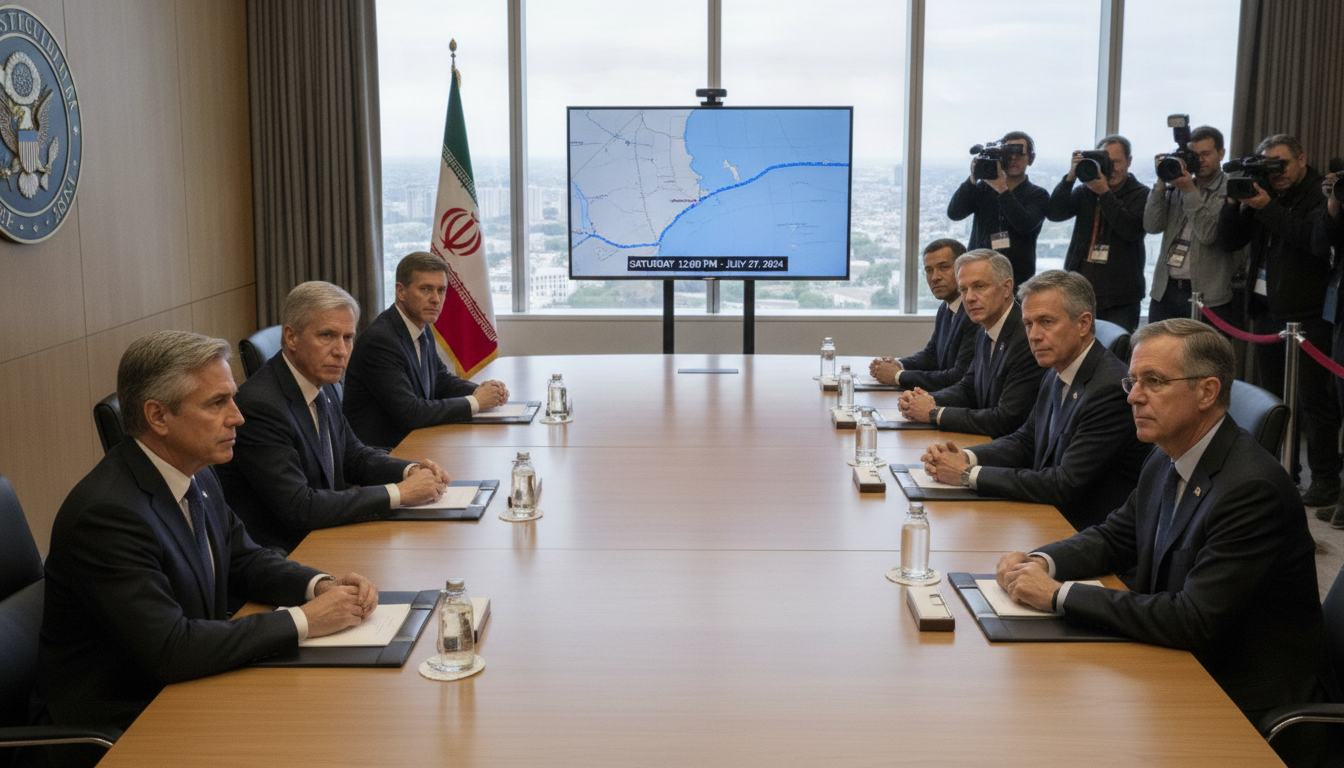
The Trump administration has set a firm Saturday deadline for Iran to issue a public statement acknowledging that the Strait of Hormuz will remain open to commercial shipping and to cease fire on vessels operating in the waterway. US officials said the demand follows repeated incidents in which Iran allegedly fired on merchant ships in and around the strait, undermining a fragile truce reached weeks earlier. Washington has signalled that failure to comply will prompt unspecified but severe responses and has been preparing contingency measures.
US Officials Say Iran Violated Recent Memorandum
Three US officials said Tehran breached a memorandum of understanding negotiated with Washington three weeks ago by resuming attacks on commercial shipping.
The administration interprets the strikes as a clear violation that shifted a tenuous ceasefire toward collapse, and President Trump declared earlier this week that the suspension of hostilities had ended. US officials contend that Iran’s actions raise doubts about Tehran’s willingness or ability to adhere to more complex agreements, such as a prospective nuclear deal.
Deadline Delivered Directly and Through Regional Intermediaries
US sources confirmed the demand was conveyed to Iranian counterparts both directly and via regional intermediaries ahead of the Saturday cutoff.
Officials described the request as narrowly focused: a public, unequivocal assurance that every channel of the strait would remain open, that fees or interdictions would cease, and that attacks on commercial vessels would stop. The administration said it expects an explicit or implicit acknowledgement of error from Tehran as part of any acceptable response.
Tehran’s Internal Divisions Over Tactics, US Officials Say
US officials described apparent divisions within Iran over tactics and the future of the agreement, with hardline elements blamed for provoking the recent incidents.
According to those officials, some Iranian negotiators privately asked for further talks after early-week skirmishes, admitting mistakes and seeking to continue negotiations. At the same time, public statements from Iranian negotiators and commanders of the Islamic Revolutionary Guard Corps have emphasized Tehran’s interest in retaining influence over navigation through the strait.
Oman to Host High-Level Talks on Hormuz
Iranian Foreign Minister and Deputy Foreign Minister Abbas Araghchi is scheduled to meet his Omani counterpart, Badr Al-Busaidi, in Muscat on Saturday to discuss the crisis, according to diplomatic sources.
US officials said they expect a clarifying statement from Iran following the Oman meetings, and are using Oman as a channel to press for the public commitments Washington demands. Oman has historically played a mediation role in Gulf security issues, and Muscat’s involvement underscores the regional stakes.
US Warns of Consequences While Maintaining Diplomatic Track
Washington has warned Iran that refusal to meet the Saturday demand will carry “serious consequences,” though officials stopped short of spelling out specific measures.
The administration has already carried out two rounds of retaliatory strikes in response to earlier incidents in the strait, and officials said contingency plans are being drafted should diplomacy fail. At the same time, President Trump signalled a willingness to return to diplomacy when conditions permit, keeping open a narrow window for a negotiated settlement.
Nuclear Talks Progress Clouded by Maritime Tensions
Despite the maritime confrontation, US officials reported progress in separate, direct and indirect negotiations over a possible nuclear agreement, saying some Iranian interlocutors have expressed a desire to reach a deal.
Nonetheless, the flare-up in the Strait of Hormuz has cast doubt on whether Tehran would accept or reliably implement a broader nuclear accord. US officials warned that while negotiators have been given space to continue talks, that latitude is limited and alternative options are being prepared if agreements cannot be secured.
The coming days will be pivotal: Oman’s diplomatic channel and the Saturday deadline are likely to determine whether the current fragile framework for de-escalation holds, or whether the dispute enters a more dangerous phase with wider regional consequences.
