
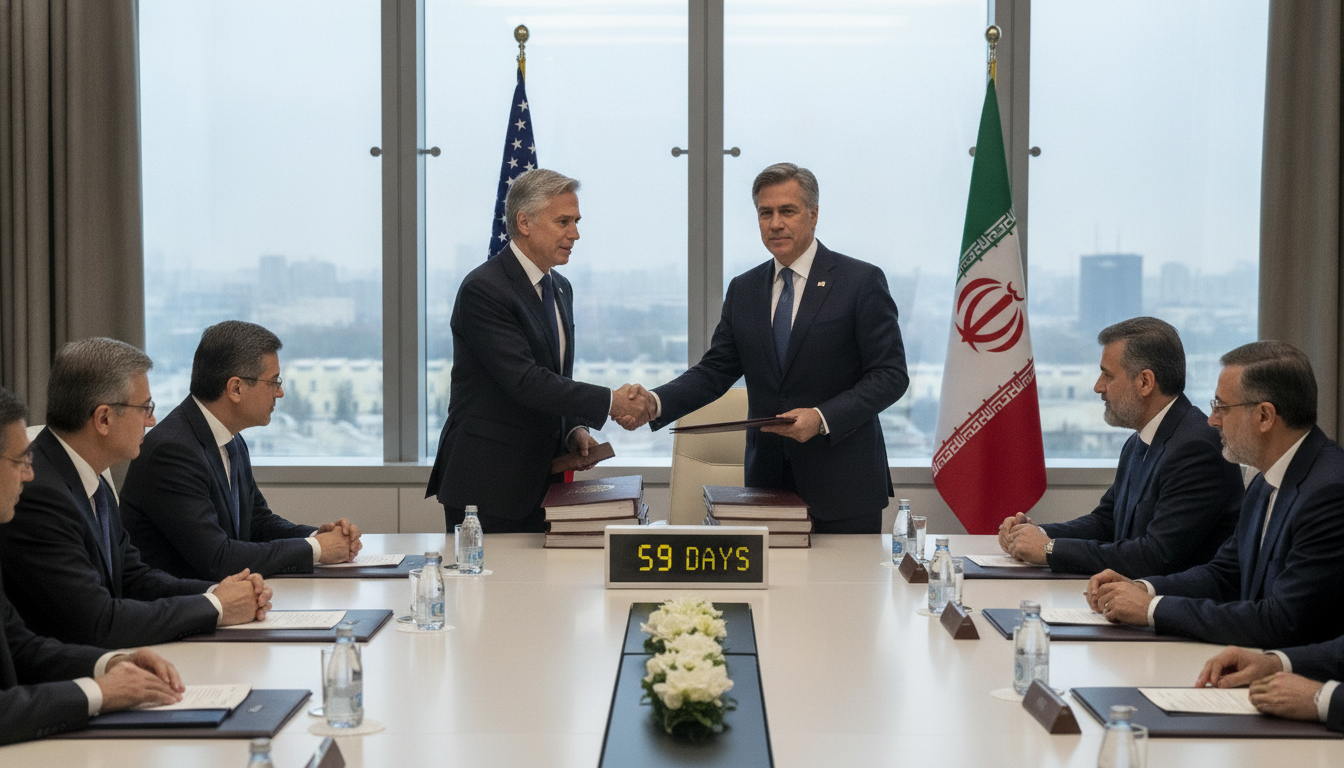
US-Iran deal opens 60-day window for nuclear talks but key disputes deferred
US-Iran deal ends hostilities and opens 60-day nuclear talks from June 19, 2026, while disputes over missiles, proxies and frozen assets remain unresolved.
The United States and Iran announced a provisional US-Iran deal that halts active fighting and launches a 60-day negotiation timetable to address core nuclear issues, with a formal signing expected in Geneva on June 19, 2026.
The accord ends a more than 100-day conflict that began with strikes on Tehran on February 28 and has eased immediate military pressure across the Gulf.
Observers cautioned the memorandum is a framework to begin talks rather than a final settlement, since many of the most contentious items have been deferred.
Ceasefire framework and Geneva signature
The agreement establishes an immediate cessation of hostilities and a timetable for diplomats to return to the table in Geneva on June 19, 2026 to formalise the memorandum.
Officials said the text will set a 60-day window for negotiating a final settlement on a subset of issues, while several topics have been temporarily removed from the agenda.
Regional capitals welcomed the apparent de-escalation, citing a fall in attacks on bases and infrastructure and relief at the prospect of reduced risk to shipping in the Strait of Hormuz.
Nuclear negotiations confined to a short timetable
Under the US-Iran deal, negotiators will have two months to tackle the central dispute over Iran’s nuclear programme rather than resolving it immediately.
Key questions include whether Iran may continue enriching uranium, at what levels, and the disposition of its existing enriched stockpile — matters that historically required years of expert-level bargaining.
Analysts flagged that a compressed timeline raises the risk of technical setbacks and that political conditions in both capitals will shape the pace and depth of any compromise.
Unsettled fate of enriched uranium and inspections
One of the most sensitive components of the talks is the fate of Iran’s highly enriched uranium stockpile and the scope of international inspections.
Reports indicate Iran holds enriched material at levels that fall short of weapons-grade but could shorten any breakout timeline, and Washington has pressed for intrusive verification measures.
Disagreements persist over whether inspectors will be allowed immediate access to material and facilities, and whether any stockpile would be transferred abroad, diluted, or remain under Iranian control.
Contention over $24 billion in frozen assets
The sequencing of economic relief and nuclear concessions is a central sticking point under the US-Iran deal, with competing claims about immediate access to frozen funds.
Iranian state-linked sources said the memorandum contemplates releasing up to $24 billion in frozen assets during the 60-day window, with part of that front-loaded, while senior US officials denied that such an upfront transfer is agreed.
Observers say phased financial measures could serve as confidence-building steps, but also create leverage that either side could use to walk back concessions if progress stalls.
Strait of Hormuz reopening and Gulf security implications
The memorandum reportedly commits parties to reopen transit through the Strait of Hormuz, a crucial route for global energy shipments that was disrupted during the conflict.
Reopening the strait would reduce insurance and transport costs and ease regional alarm, but Iranian statements suggest any reopening may be accompanied by joint management measures that leave Tehran with influence over operations.
Legal and practical questions remain about fees, maritime services and how to verify sustained compliance, all of which will test implementation on the water as much as in the negotiating room.
Missiles and proxy networks kept off the immediate agenda
Beyond the nuclear dossier, the US-Iran deal leaves Iran’s missile arsenal and its support for regional proxy groups outside the current negotiating scope.
Washington initially sought to include those items, but they were removed from the 60-day mandate, a choice intended to secure rapid de-escalation at the expense of addressing longer-term sources of instability.
Critics warn that bypassing missiles and proxies risks postponing confrontation rather than resolving it, since the three strands — nuclear, missile, and regional influence — are deeply intertwined in Tehran’s strategic calculations.
Both sides now face the politically fraught task of turning a memorandum into durable agreement, with trust at a low ebb after months of conflict and prior diplomatic ruptures.
Practical implementation will depend on verification measures, the sequencing of economic measures versus technical concessions, and whether regional actors can help sustain a détente beyond the initial 60-day window.
The coming weeks will test whether the US-Iran deal is a genuine opening toward a negotiated settlement or a temporary ceasefire that delays the hardest choices on enrichment, inspections, and regional deterrence.
If negotiators can convert the framework into clear, enforceable steps, the memorandum could mark the start of a managed rollback of hostilities; if not, the agreement may simply postpone the next round of diplomatic and military confrontation.
