
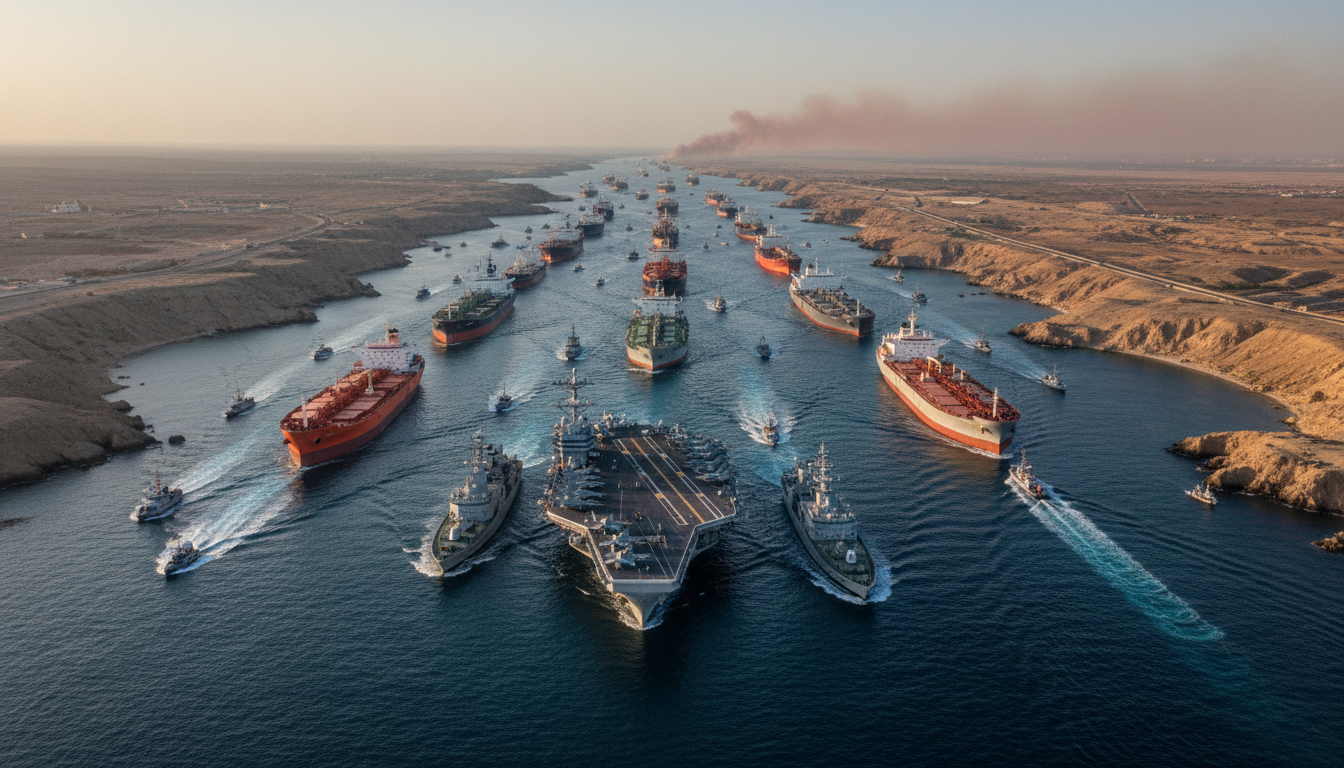
Freedom of Navigation Under Pressure as Iran, Houthis and China Test U.S. Naval Primacy
US maritime primacy tested as Iran, Houthis and China strain freedom of navigation; experts urge regional partnerships and resilient supply chains now.
The era in which the United States could unilaterally guarantee freedom of navigation across key sea lanes is showing signs of strain, analysts say. Recent disruptions in the Strait of Hormuz and Bab al-Mandeb, alongside China’s rapid naval expansion, have combined to limit Washington’s ability to ensure unchallenged passage. The debate over freedom of navigation has moved from academic circles into the practical realm of trade security and regional diplomacy. Policymakers in Washington and capitals across the Gulf are increasingly focused on how to adapt to a more contested maritime environment.
U.S. maritime primacy under strain
Despite maintaining a powerful navy, the United States faces growing limits on its capacity to control littoral chokepoints. Geography and the proliferation of relatively inexpensive, long-range anti-ship systems mean that powerful fleets cannot always operate freely near rival coastlines. Incidents in 2024 and pressures in the Arctic and parts of East Asia have illustrated that U.S. forces can be denied easy access without the risk of full-scale war. Experts argue this marks a shift from unquestioned dominance to contested influence in several strategic theaters.
Recent choke-point disruptions
Events in the Strait of Hormuz and the Bab al-Mandeb over the past two years have underscored new vulnerabilities for global shipping. Tehran’s effective leverage over Hormuz, and Houthi targeting of vessels near Bab al-Mandeb, intermittently constrained commercial flows and forced rerouting. While both corridors remained open for much traffic, periodic closures and attacks raised costs and delays for shippers and insurers. These disruptions prompted urgent diplomatic and military consultations among affected states and highlighted the limits of unilateral solutions.
Economic ripple effects on global trade
Limitations on guaranteed freedom of navigation translate directly into economic risks for import-dependent markets. Rising insurance premiums, longer transit times and the need to reconfigure supply chains can inflate the price of commodities and finished goods. For Gulf states, the stakes are especially high given their role in global oil and LNG shipments. Economists warn that sustained uncertainty in key sea lanes could drive exporters and manufacturers to diversify routes and partners, accelerating regional trade integration.
U.S. adaptation and strategy shifts
Washington is adapting by emphasizing contingency plans rather than perpetual patrols as a global public good. Officials and strategists advocate for flexible responses: surge deployments to defend core interests, investment in long-range surveillance and anti-access/area-denial countermeasures, and reliance on alternative transport corridors where feasible. The United States also appears to be adjusting expectations, accepting that it may act as one of several guarantors rather than the sole guarantor of maritime security. Such recalibration aims to preserve the ability to intervene decisively when vital interests are threatened while avoiding unsustainable perpetual commitments.
Greater burden-sharing by allies and partners
One central plank of adaptation is to expand responsibility for maritime security among regional and allied navies. Europe, Japan, India and Gulf partners have increased patrols, escorts and information-sharing to protect commercial traffic. Multinational task forces and coordinated sanctions enforcement have emerged as tools to deter attacks and unlawful seizures. Analysts suggest that robust regional capacities combined with coordinated diplomatic pressure can reduce the frequency and impact of disruptions without forcing permanent U.S. custody of every chokepoint.
Supply-chain resilience and alternative routes
Beyond military measures, governments and businesses are prioritizing supply-chain resilience to mitigate maritime risk. Companies are diversifying shipping routes, expanding overland corridors, and building inventory buffers to weather short-term interruptions. The gradual opening of Arctic routes, improved rail links across Eurasia, and stronger regional trade agreements present practical options for rerouting in crises. Policymakers emphasize that economic adaptation is as crucial as naval deployments in preserving the movement of goods when freedom of navigation is contested.
The broader picture is one of transition rather than collapse: the United States retains significant blue-water capabilities, but the assumptions that underpinned decades of uncontested maritime order no longer hold. A more plural set of security providers, coupled with economic diversification and targeted defense investments, will shape how freedom of navigation is preserved in the coming decade.
