
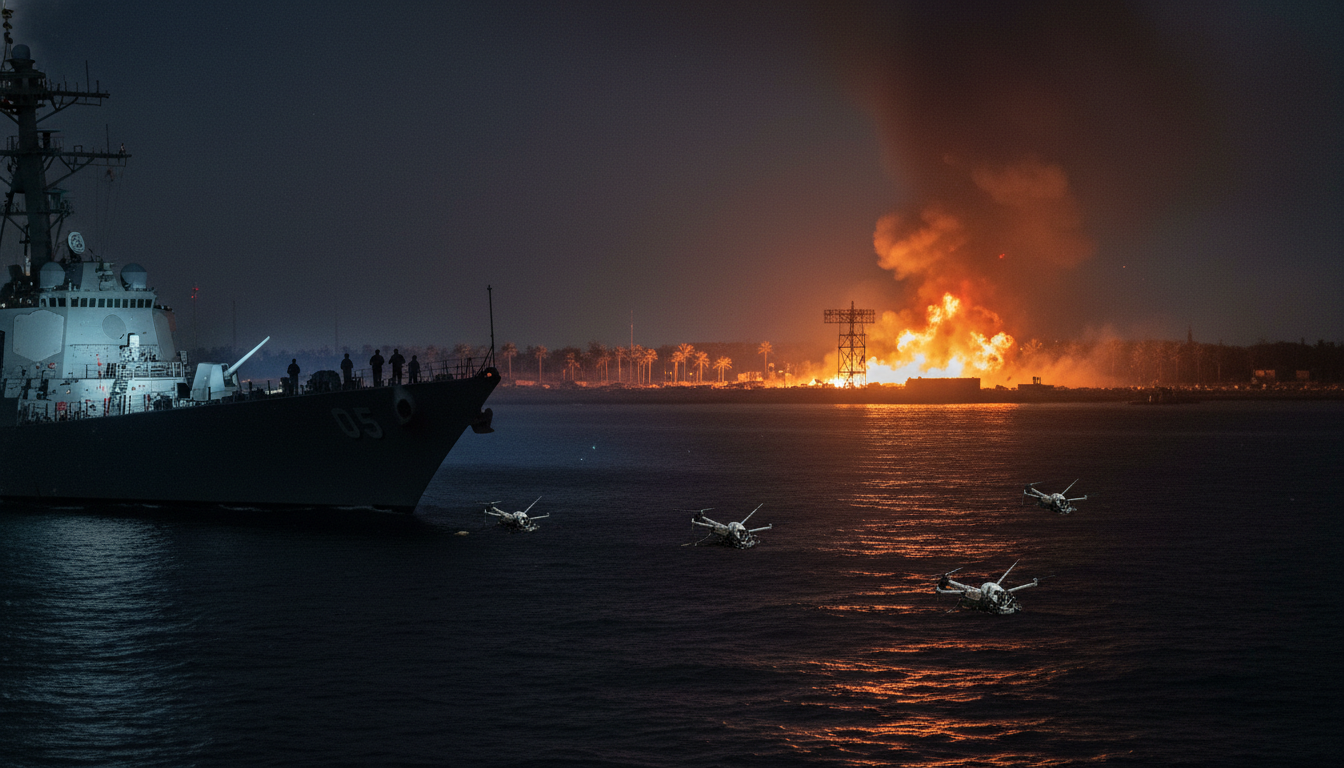
US strikes Iranian radar sites after shooting down four drones that threatened shipping
US strikes Iranian radar sites after shooting down four drones launched toward the Strait of Hormuz, citing self-defence to protect regional maritime navigation.
The United States military said it shot down four Iranian drones and subsequently carried out strikes on Iranian coastal radar sites in response to what it described as an immediate threat to regional shipping. The action, announced by U.S. Central Command, was framed as self‑defence following drones launched toward the Strait of Hormuz that Washington said endangered civilian maritime traffic. The strikes targeted radar installations on Qeshm Island and in the Goruk area, according to the U.S. statement. U.S. officials said forces would remain vigilant and prepared to respond to any further unjustified actions.
U.S. forces shoot down four unmanned aerial systems
U.S. Central Command reported that American forces downed four unmanned aerial systems that had been launched toward the Strait of Hormuz. The command characterized the incoming drones as posing a direct threat to regional maritime navigation and civilian vessels operating in the area. Details on the precise timing and the platforms used to intercept the drones were not disclosed in the initial statement. U.S. military spokespeople emphasized the defensive nature of the intercepts.
Strikes target coastal radar installations on Qeshm and Goruk
After neutralising the unmanned aerial threat, U.S. forces struck coastal radar sites near Goruk and on Qeshm Island, the central statement said. Those radar installations were described as part of Iran’s coastal surveillance network used to monitor and potentially direct aerial and maritime operations. The strikes were presented as limited and specific actions aimed at degrading Iran’s ability to conduct similar operations in the immediate term. No independent confirmation of damage to the sites was available at the time of the announcement.
CENTCOM frames action as lawful self‑defence
U.S. Central Command framed the operations as an exercise of the right of self‑defence under international law, saying the strikes were taken to protect innocent maritime traffic. The command said U.S. forces remain alert and ready to respond to any additional threats or attacks that it characterises as unjustified aggression. Officials highlighted precautions taken to minimise escalation and to reduce risk to civilians. The statement did not provide detail on any diplomatic steps taken prior to the strikes.
Washington cites threat to regional maritime navigation
CENTCOM specifically cited the threat to maritime commerce and the safety of civilian vessels transiting the Strait of Hormuz as the rationale for its response. The Strait is a strategic chokepoint through which a significant portion of global oil and shipping traffic passes, and any actions affecting its security carry economic and security implications. The U.S. description underscored concerns that unmanned aerial systems launched in the area could disrupt commercial shipping lanes or endanger crewed vessels. Maritime operators in the region routinely monitor military activity that might affect transit conditions.
No immediate Iranian comment reported
At the time of the U.S. announcement, there was no immediate, publicly available response from Iranian authorities confirming or contesting the account of events. Iran’s state media and official spokespeople had not issued a detailed statement that corroborated the U.S. narrative or described any retaliatory action. The absence of an immediate Iranian response left key questions about Tehran’s intent and potential next steps unanswered. Regional diplomatic channels may now become active as governments and maritime stakeholders seek clarification.
Potential regional and diplomatic repercussions
Analysts say the strikes risk raising tensions in an already volatile region, where incidents at sea and in the air have periodically led to wider confrontations. Even limited kinetic actions can prompt diplomatic responses, calls for restraint, and consultations among affected states and international bodies responsible for maritime safety. Governments with commercial shipping interests in the Gulf and global markets that rely on unimpeded transit through the Strait of Hormuz will likely follow developments closely. The long‑term implications will depend on whether the incident prompts further military activity or sustained diplomatic engagement to de‑escalate.
The U.S. military’s account emphasises that the action was narrowly tailored to address a specific and immediate threat to civilian maritime traffic, and it underlines a continued U.S. operational posture in the region intended to protect navigation and deter future attacks.
