
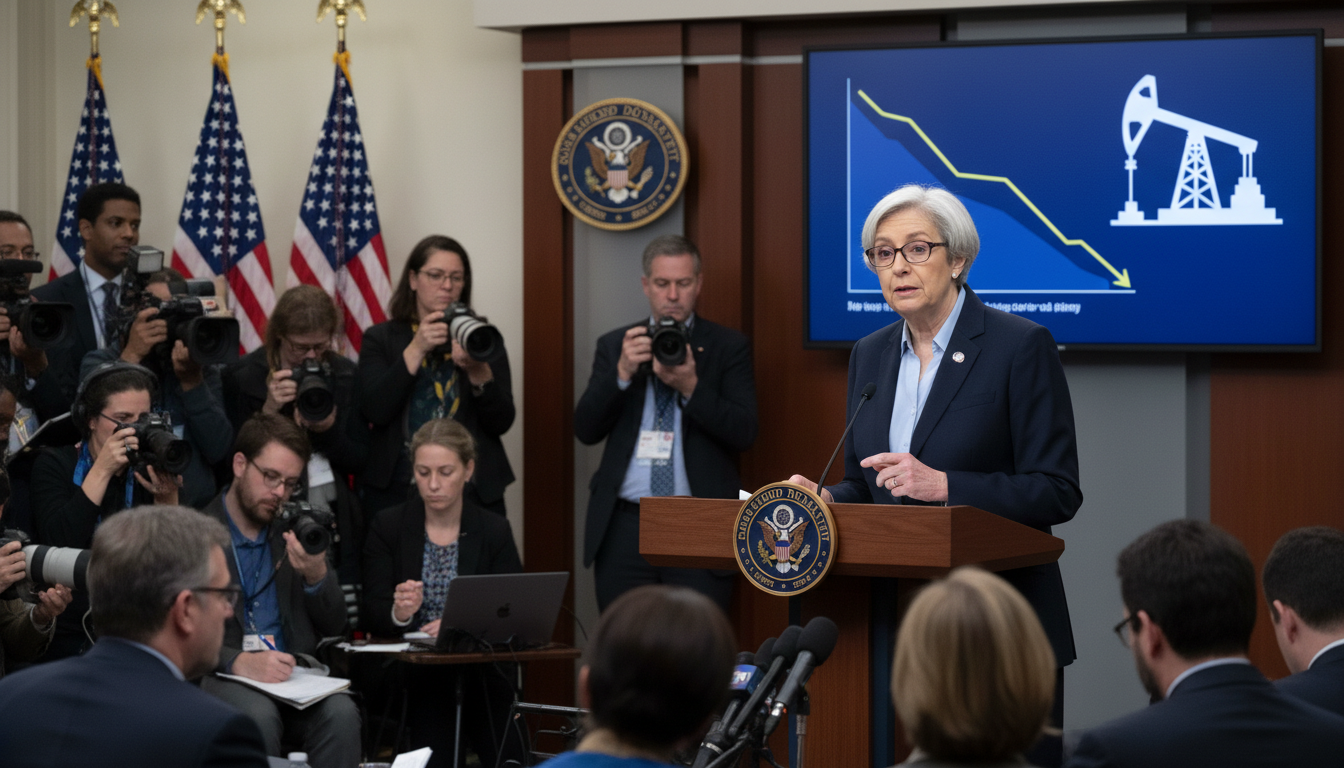
Energy prices after Iran war to fall sharply, U.S. Treasury secretary says
Scott Biesent says energy prices after Iran war will fall sharply; he told Fox Business on May 3, 2026 that more ships will transit the Strait of Hormuz.
U.S. Treasury Secretary’s Remarks
U.S. Treasury Secretary Scott Biesent told Fox Business on Sunday, May 3, 2026 that he expects energy prices after Iran war to decline significantly once hostilities end.
He said on the program that oil prices would fall “sharply” when the conflict subsides and that commercial shipping through the Strait of Hormuz should increase.
Biesent framed the remarks as part of a wider assessment of how reduced geopolitical risk would ease global energy market strains.
Market outlook and oil price dynamics
Biesent’s comments underscore a broad market view that supply disruptions are the principal driver of recent price spikes.
Analysts say that once shipping lanes reopen fully and risk premia diminish, crude and refined fuel markets could see a rapid rebalancing.
Still, traders will watch inventories, OPEC+ production choices and consumer demand for signs that a meaningful price correction is underway.
Maritime traffic and the Strait of Hormuz
The secretary specifically cited expectations that “more ships” will transit the Strait of Hormuz as tensions ease, highlighting the waterway’s strategic role.
The strait handles a substantial portion of seaborne oil and gas exports from the Gulf, so any restoration of normal traffic would quickly affect physical flows and freight costs.
Shipping insurers, freight operators and ports in the region have been adjusting routes and premiums, and a return to routine transit would lower those additional costs.
Implications for Gulf economies and energy producers
A drop in energy prices after Iran war would have mixed effects across the Gulf Cooperation Council economies.
Oil exporters could face narrower fiscal margins, pushing governments to accelerate diversification and fiscal adjustments, while fuel-importing sectors and consumers would benefit from cheaper energy.
Policymakers in the UAE and neighboring states are likely to monitor the pace of any price correction and recalibrate budgets and subsidy policies accordingly.
Financial markets and investor sentiment
Financial markets often price in expectations about conflict resolution well before on-the-ground changes occur, and Biesent’s remarks may bolster investor confidence.
Equities in energy-importing regions typically respond positively to the prospect of lower fuel costs, while energy stocks and producers may see downward pressure if the market anticipates sustained lower prices.
Bond markets and currency valuations in oil-dependent economies could also shift as revenue outlooks adjust to a new price environment.
Analysts’ caveats and remaining risks
Despite the secretary’s projection, analysts warn that several factors could delay or blunt any price decline.
Prolonged sanctions, supply chain disruptions, or retaliatory actions could keep risk premia elevated even after a formal end to hostilities.
Market participants point to the contingency of OPEC+ production decisions and unexpected demand rebounds as further variables that could keep prices from falling as rapidly as some expect.
Outlook for consumers and businesses
If energy prices fall as forecast, transportation, manufacturing and household energy bills could ease in many markets, supporting broader economic activity.
Businesses reliant on stable fuel costs may accelerate investment plans, while consumers could see immediate relief at the pump and in utility bills.
However, the timing and magnitude of any benefit will depend on how quickly shipping normalises and how traders price forward contracts.
Markets and policymakers will watch the interplay between physical flows through the Strait of Hormuz and the financial instruments that reflect future supply expectations.
The secretary’s public comments on May 3, 2026 serve as a signal that Washington sees a pathway to lower energy costs contingent on an end to the conflict, but the sequence of events and potential countervailing forces will determine the pace of any market adjustment.
