
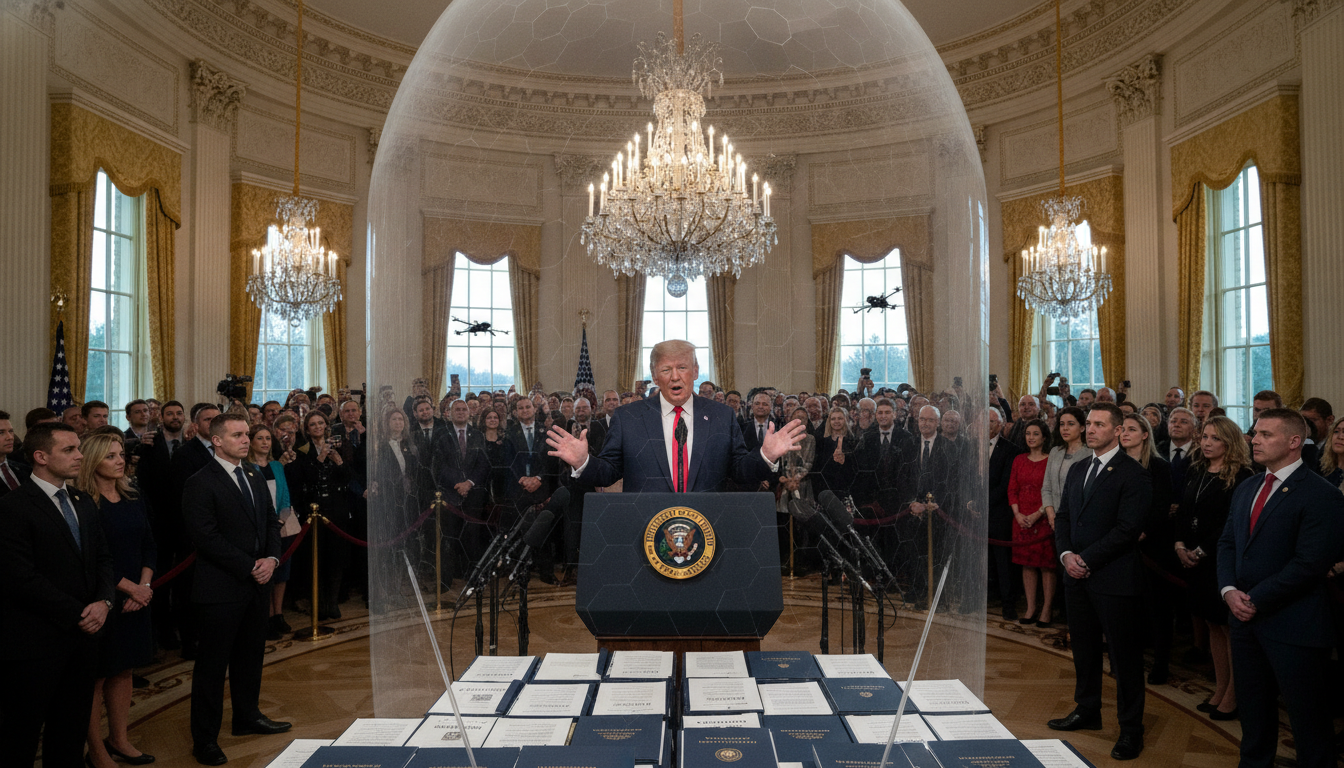
White House ballroom touted as “bulletproof” by Trump amid construction and legal battles
President Trump said the new White House ballroom will be able to withstand almost any attack while remaining aesthetically pleasing, calling the project a national security investment. The White House ballroom keyword appears here as central to the debate over security, cost and historic preservation. The announcement comes as construction continues on the former East Wing site and as lawsuits and congressional questions multiply over funding and permits. (washingtonpost.com)
Trump frames ballroom as a national security upgrade
President Donald Trump described the planned White House ballroom in militarized terms during a White House event, saying its thick glass and steel frame are “bulletproof” and capable of resisting drones and, in some cases, missiles. He said the structure will include hardened systems and even a rooftop landing area for drones designed to enhance security for the Executive Mansion. Those claims were made as the administration defended the project against criticism over size and the manner in which work began. (washingtonpost.com)
Construction started on former East Wing footprint
Work on the ballroom began last fall after the administration moved forward with demolition of parts of the historic East Wing to clear the site for the addition. Builders have overseen excavation and early structural work at the location once occupied by the East Wing, and officials say the new space is intended to host much larger official banquets than the current facilities allow. The replacement of a longstanding part of the White House complex has intensified scrutiny from preservationists and lawmakers. (apnews.com)
Security hardening and disputed funding levels
Documents and testimony provided to senators and watchdogs show a significant portion of recent security appropriations has been earmarked to “harden” the ballroom project, with requests to install bulletproof glazing, drone detection and other protective systems. Democratic lawmakers and outside groups have flagged more than $300 million of related security spending as potentially supporting the ballroom, even as the White House has sought to characterize the work as essential national-security upgrades. The allocation and shifting of funds have become central points in congressional oversight questions. (apnews.com)
Lawsuits halt or slow elements of the project
The ballroom has been the subject of multiple legal challenges that argue demolition and construction proceeded without necessary federal reviews or approvals. Nonprofit preservation groups and other plaintiffs contend that removal of parts of the East Wing and the vertical construction that followed violated review processes meant to protect historic federal properties. Federal judges have at times ordered pauses or sought clarifications about what work may continue, and the administration has filed emergency appeals arguing that a halt would itself create security risks. (legalclarity.org)
Preservationists and critics decry process and scale
Historic preservation advocates and some members of Congress warn that the size of the new ballroom and the methods used to authorize it set troubling precedents for the White House grounds. Critics have raised concerns about the loss of historic fabric, the appearance and scale of the new addition, and whether adequate public consultation and regulatory review took place. The debate has also touched off broader political arguments, with opponents saying the project is emblematic of executive overreach and supporters calling it a legitimate modernization for security and diplomatic needs.
Political rhetoric and public reaction
Mr. Trump dismissed criticism of the ballroom’s size as politically motivated, saying opponents frequently sue because they object to projects associated with his name. He framed the construction as both protective and ornamental, insisting that the facility will be “beautiful” while serving as a safeguard for presidential functions. Public reaction has been mixed, with some seeing a security rationale and others viewing the project as a costly, controversial alteration of a symbolically important national property. (washingtonpost.com)
Despite the administration’s repeated assurances that the ballroom is designed primarily as a security enhancement, questions about funding, the adequacy of review procedures and the preservation of historic structures are likely to persist as the courts and Congress continue to examine the project.
