
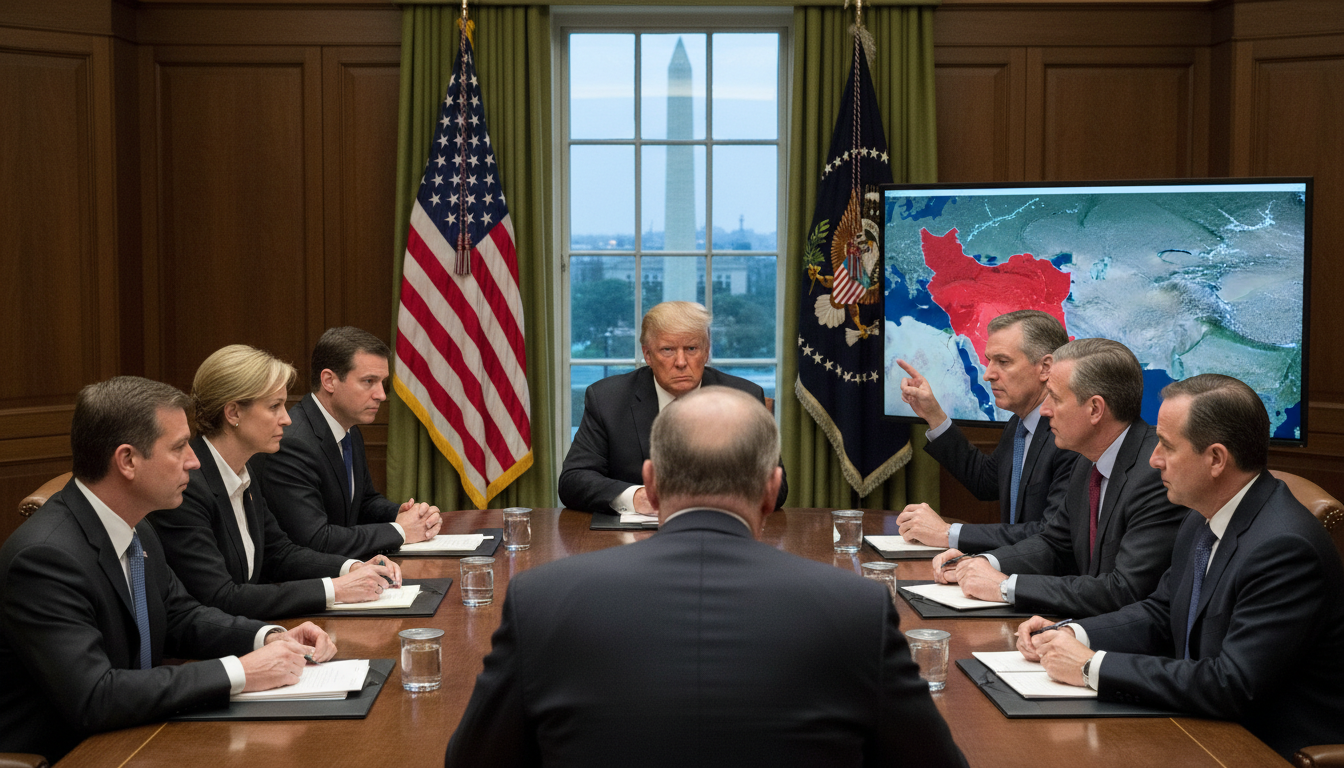
US Officials Warn of a ‘Cold War with Iran’, Raising Gulf Security Concerns
US officials warn the United States risks sliding into a protracted “cold war with Iran”, raising Gulf tensions and threatening shipping, politics and economy.
Senior U.S. officials have warned that the United States risks sliding into a prolonged “cold war with Iran” — a sustained standoff marked by economic pressure and military posturing rather than a clear diplomatic settlement. The warning, conveyed to news outlets by multiple advisers with direct access to the White House, frames such an outcome as politically and economically damaging. Officials described the scenario as one in which a U.S. blockade or increased restrictions on the Strait of Hormuz could persist while both sides wait for the other to back down or initiate further escalation.
Officials outline what a prolonged standoff would look like
A series of advisers told reporters that a cold war with Iran would hinge on continued U.S. pressure, sanctions and intermittent maritime confrontations rather than decisive negotiations. They said Tehran and Washington could remain locked in a cycle of coercion and probing actions, with each side hoping the other will yield first. Such a posture would leave regional security precarious and commerce through key sea lanes vulnerable to disruption.
One adviser who spoke directly to the president described the dilemma in stark terms, saying the commander-in-chief was torn between immediate military action and reliance on a “maximum pressure” strategy of sanctions. The source characterized the president as frustrated but hesitant to fully commit to either path, reflecting deep divisions among his national security team.
White House debate: military strikes versus continued pressure
The debate in the White House, according to those familiar with discussions, centered on whether limited military strikes would change Iranian behavior or simply accelerate a downward spiral. Proponents of strikes argued that force could restore deterrence and demonstrate resolve. Advocates of sustained sanctions countered that economic pressure could force Tehran to accept negotiations without triggering open conflict.
Several advisers warned that either choice carried heavy political costs. Military action risked drawing the United States into a broader regional conflict, while a drawn-out sanctions campaign risked entrenching antagonism without securing a clear outcome. The advisers said the president remained ambivalent, weighing visible action against the unpredictability of escalation.
Gulf security and the Strait of Hormuz at risk
Regional security officials cautioned that a prolonged U.S.-Iran standoff would heighten the risk of incidents in the Gulf and near the Strait of Hormuz, a chokepoint for global oil shipments. Maritime harassment, seizures of commercial vessels or interdiction efforts could intensify if Iran perceives an effective blockade or if U.S. naval presence increases. Such incidents would have immediate implications for global energy markets and shipping insurance rates.
Analysts note that even the perception of a sustained cold war could prompt commercial rerouting, higher freight costs and increased military deployments by Gulf states and international partners. Those commercial and security consequences would compound the domestic political pressures facing U.S. policymakers as they balance regional commitments and economic priorities.
Political and economic calculations influencing U.S. decisions
Advisers emphasized that domestic political considerations are tightly interwoven with foreign policy choices. The specter of a prolonged standoff with Iran, they said, would be particularly costly for U.S. leaders seeking to avoid extended conflict while projecting strength. Economic fallout from disrupted shipping or higher oil prices could feed back into politics at home and among allied governments in the region.
Officials also warned that a static posture of sanctions without diplomatic engagement can harden positions over time, closing windows for negotiated solutions. They urged that policymakers weigh short-term tactical gains against long-term strategic outcomes, including the risk of normalizing a perpetual low-level confrontation.
Diplomatic avenues and regional engagement remain available
Despite the warnings, officials stressed that alternatives to sustained confrontation are available and underused. Diplomatic outreach, third-party mediation and confidence-building measures at sea could reduce the likelihood of accidental escalation. Regional partners and international organizations were identified as potential facilitators of discreet talks or mechanisms to protect commercial shipping.
Advisers suggested that a calibrated mix of pressure and diplomacy could preserve leverage while opening channels for negotiation, particularly if coupled with clear red lines and multilateral support. They highlighted that avoiding a long-term cold war with Iran would require sustained diplomatic investment and creative problem-solving from Washington and its allies.
Closing paragraph
U.S. officials’ concerns underscore a central strategic question: whether Washington can convert coercive tools into meaningful diplomatic gains without becoming locked in a costly, enduring standoff with Tehran that would reverberate across the Gulf, global markets and domestic politics.
