
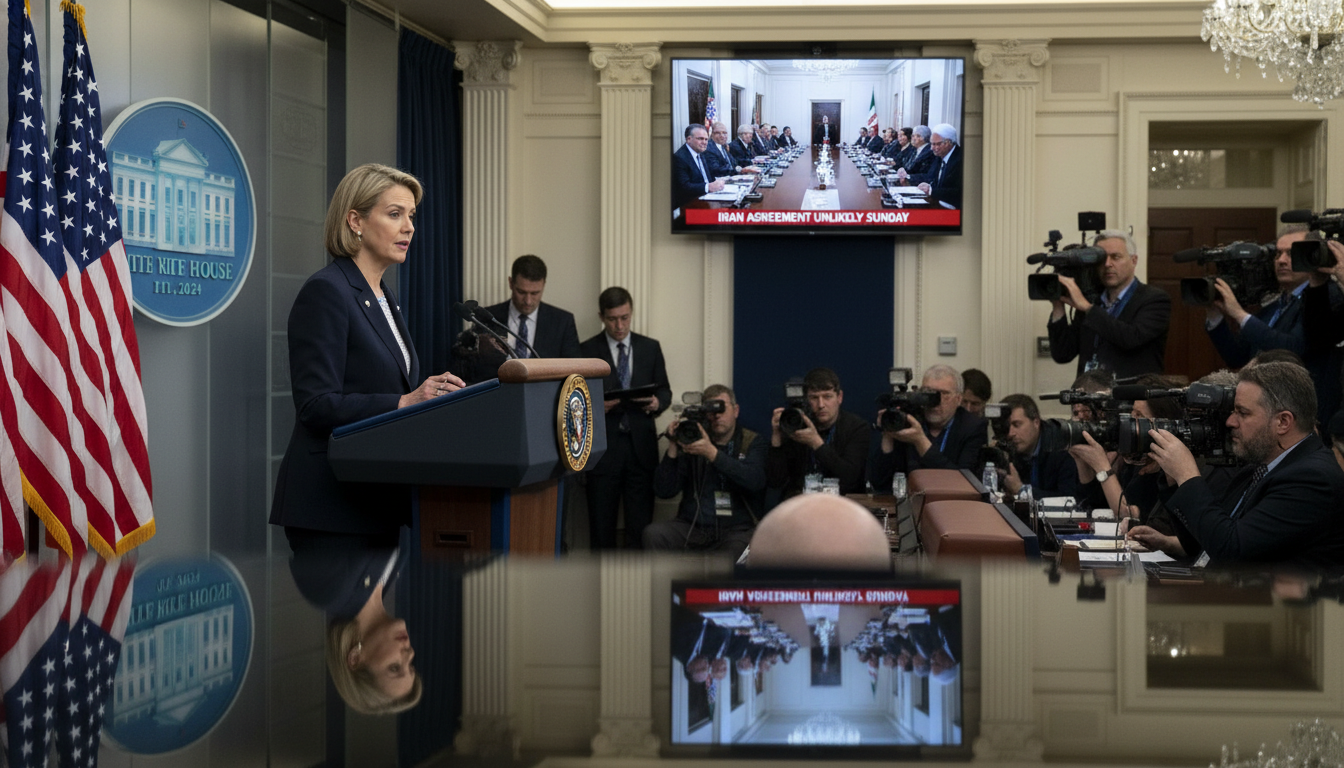
White House says agreement with Iran unlikely on Sunday as Tehran review may take days
White House says agreement with Iran unlikely on Sunday as Tehran’s leadership may need days to approve terms; US officials call deal fragile but possible soon.
The White House does not expect an agreement with Iran to be finalized on Sunday, a senior U.S. official told reporters, saying Tehran’s leadership may require several days to review any proposed deal. U.S. officials remain cautiously optimistic that a signature could be possible within days, but they stressed that key terms are unfinished and the arrangement remains fragile. The evolving situation carries potential regional and global economic implications, particularly for oil markets and the wider security environment.
White House briefing: no agreement expected Sunday
A senior U.S. official told a press briefing that Washington was not anticipating a breakthrough on Sunday and urged caution over timelines. The official said the White House has been engaged in intense diplomacy but that approval from Iranian authorities — including top leadership figures — could extend the process. U.S. spokespeople emphasized that while momentum exists, they were preparing for further delays and the possibility that talks could falter.
Iranian leadership review likely to take several days
U.S. officials indicated that Tehran’s internal deliberations could slow final approval, noting that Iran’s leadership structure requires high-level endorsements. Reports cited the need for senior Iranian figures to study the terms carefully before granting consent, a process that may span multiple days. That review period is being treated in Washington as a critical window that could reshape the final content or timing of any agreement.
Officials warn terms remain unfinished and fragile
Despite public expressions of optimism, U.S. negotiators acknowledged that key clauses were not yet finalized and that the deal remains vulnerable to collapse. Officials described ongoing technical and political discussions over guarantees, verification measures and sequencing that must be resolved before signatures are exchanged. They warned that even late-stage disagreements on wording or commitments could undo progress that negotiators have worked to achieve.
Regional escalation and oil supply risks at stake
Analysts and officials argue that a successful agreement with Iran would likely reduce the risk of a broader regional escalation and ease some pressure on global oil supplies. The prospect of de-escalation has been cited as a primary incentive for pushing negotiations forward, given the economic fallout from sustained instability in the Gulf. However, observers also note that a short-term pact could leave underlying tensions unresolved and thus restore market anxieties if implementation falters.
Open questions over lasting peace and nuclear demands
It remains unclear whether any immediate agreement would translate into a durable peace or satisfy broader demands related to Iran’s nuclear activities and regional behavior. U.S. officials said the deal on the table addresses near-term hostilities but may not fully resolve contentious long-term objectives that different administrations have pursued. Commentators have also raised questions about whether the outcome would meet political expectations domestically in the United States or allay international concerns about nuclear proliferation.
Next steps and likely short-term timeline
Officials in Washington described a short-term path in which final approvals could take place over several days if Tehran completes its internal review and negotiators reconcile outstanding text. Diplomats are expected to remain in close contact while technical teams prepare verification protocols and implementation schedules. Both sides face a narrow window in which momentum must be converted into signatures and then into reliable mechanisms for enforcement.
The coming days will be crucial for determining whether the negotiations move from a fragile understanding to a formal, enforceable pact, with implications that extend beyond bilateral relations to regional security and global energy markets.
