
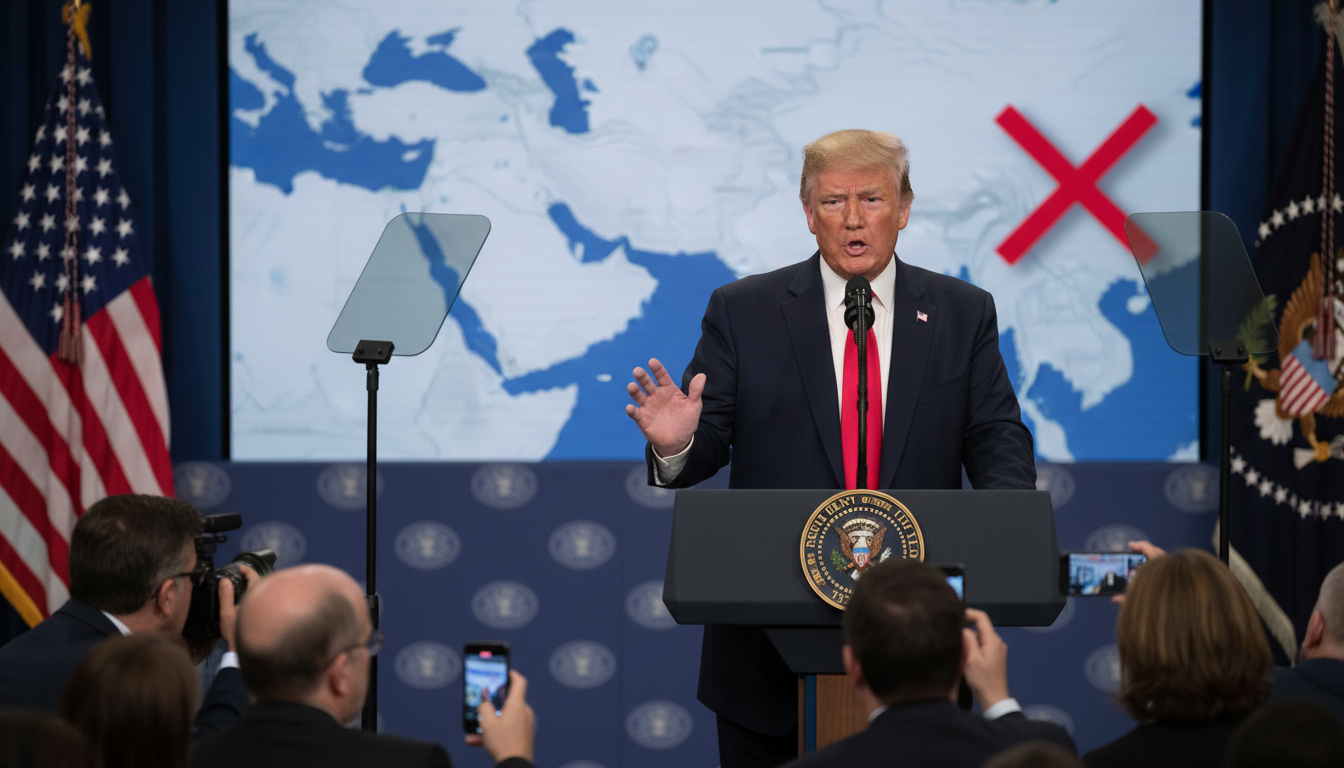
Trump Says Blockade on Iran’s Ports Will Remain Until an “Agreement” Is Reached
President Trump says the blockade on Iran’s ports will remain until an agreement is reached, asserting Tehran loses $500 million daily and criticizing US media coverage.
President Donald Trump on Monday said he will not lift the blockade on Iran’s ports unless Washington reaches a formal agreement with Tehran, posting the declaration on his Truth Social platform. He argued the economic pressure is severe, claiming Iran is losing about $500 million every day under the current restrictions. The remarks, framed as both a negotiating position and a rebuke of domestic coverage, underscore rising tensions over maritime access and sanctions enforcement.
Trump Reiterates Blockade Demand
President Trump framed the blockade on Iran’s ports as leverage designed to force talks, writing that the measure would remain until an acceptable agreement is secured. His statement was shared on Truth Social, where he also accused mainstream US outlets of misrepresenting the situation. The emphasis on an explicit “agreement” ties any potential easing of restrictions to diplomatic outcomes rather than an immediate humanitarian or logistical decision.
Claim of $500 Million Daily Loss
In his post, Trump quantified the economic impact on Iran, saying the country is losing $500 million a day as a result of the blockade on Iran’s ports. He described that figure as unsustainable for Tehran even over the short term, using the number to underscore the purported effectiveness of pressure. The monetary claim is central to his argument that the blockade is achieving its intended aim of extracting concessions or negotiations from Iranian authorities.
Truth Social Post Targets US Media
Alongside the blockade assertion, Trump criticized US media organizations for their coverage of the dispute, suggesting reports have downplayed or mischaracterized the effects of the blockade. The social media post combined policy declaration with political commentary, reflecting the administration’s effort to shape public perception domestically while signaling firmness to international audiences. Observers say such messaging is intended to shore up support among domestic constituencies while increasing diplomatic pressure on Tehran.
Regional Trade and Shipping Concerns
The continuation of a blockade on Iran’s ports raises immediate questions about regional trade flows and maritime logistics across the Gulf, where shipping lanes are heavily used for energy and commercial cargo. Gulf states, including major trading hubs, may face indirect consequences if prolonged restrictions alter shipping routes, insurance costs, or port traffic patterns. Economists and traders warn that even targeted measures can ripple through regional supply chains, affecting fuel supplies and commercial schedules.
Diplomatic and Legal Implications
Maintaining a blockade implicates complex international law and diplomatic protocols, since restrictions on ports and maritime access often prompt scrutiny from allies and adversaries alike. Legal experts say any prolonged maritime interdiction must be justified under specific security or sanctions frameworks to avoid clashes with neutral states and international shipping operators. The insistence that the blockade will not be lifted until a negotiated deal is struck signals a willingness to keep pressure in place even as legal and diplomatic debates unfold.
Potential Responses from Tehran and Allies
Trump’s declaration is likely to prompt responses from Tehran and from regional and global partners invested in stability and commerce, with state actors weighing both retaliation and engagement. Iranian officials historically have framed economic pressure as coercion and may respond with diplomatic protests, legal challenges, or measures intended to signal capability to withstand sanctions. Allies and partners in Europe and the Gulf may face diplomatic balancing acts between supporting pressure tactics and protecting commercial and security interests.
The announcement adds urgency to an already fraught policy environment, emphasizing the administration’s preference for pressure tactics tied to explicit diplomatic outcomes. The combination of a quantified economic toll, public criticism of media coverage, and a clear condition for lifting the blockade — an “agreement” — sets a firm negotiating posture that will shape discussions in capitals across the region and beyond.
