
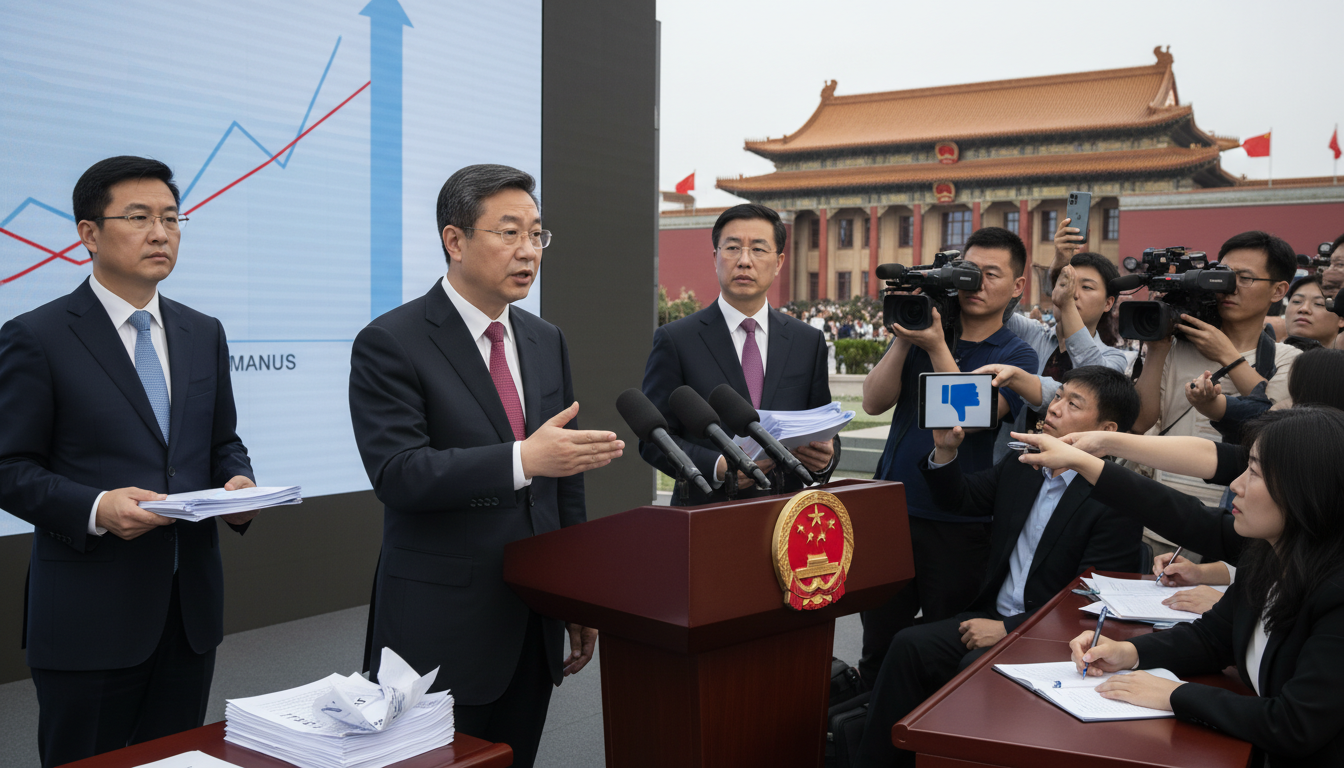
China blocks Meta acquisition of AI startup Manus, citing regulatory and security concerns
China’s NDRC blocks Meta acquisition of Manus, citing regulatory and national security concerns as Beijing tightens oversight of AI-related foreign investments. (153 characters)
China’s National Development and Reform Commission announced on April 27, 2026, that it is prohibiting the foreign acquisition of Manus, effectively blocking the Meta acquisition of Manus and escalating scrutiny of cross‑border deals in advanced artificial intelligence. The move, disclosed in an official statement, did not name Meta explicitly but targeted a transaction involving a Singapore‑based firm with Chinese roots. Markets and industry observers said the decision underscores Beijing’s heightened sensitivity to transfers of AI talent, intellectual property and control to foreign entities.
NDRC decision and legal basis
The NDRC said the directive to annul the transaction was made in accordance with Chinese laws and regulations governing foreign investment and security oversight. The commission’s statement framed the action as a measure to ensure compliance with national rules, although it provided limited detail on the specific legal grounds or the procedural steps for unwinding a completed deal.
Analysts note that China has recently expanded its review mechanisms for overseas transfers linked to critical technologies, and the Manus announcement fits a broader pattern of tighter controls. The lack of immediate clarity on legal remedies means the fate of any completed transfer or on‑paper ownership changes remains uncertain.
Manus corporate history and Singapore restructuring
Manus, an AI developer known for building general‑purpose agent software, traces its engineering roots to teams with connections to China but has operated from Singapore since last year. After a $75 million fundraising round led by U.S. venture firm Benchmark in May 2025, Manus closed its China offices and moved core operations and incorporation to Singapore under a parent company named Butterfly Effect.
Company filings and reporting at the time said the relocation aimed to align Manus with international investment norms and to address restrictions that previously limited Chinese AI firms’ ability to transfer intellectual property and capital overseas. The NDRC’s statement suggests Beijing remains able to challenge transactions that have a nexus to Chinese origins despite offshore reincorporation.
Meta’s response and U.S. government stance
Meta issued a brief response saying the transaction complied with applicable law and expressing anticipation of an “appropriate resolution” to the inquiry. The firm had announced the deal in December, presenting the acquisition as a way to accelerate AI offerings across its platforms and pledging that Manus would discontinue services and ownership ties in China.
A White House spokesperson reaffirmed U.S. policy to defend American technology leadership, characterizing the administration’s stance as protective of U.S. innovators against “undue foreign interference.” The U.S. response signals that Washington will monitor the situation closely but offered no immediate moves to alter corporate behaviour tied to the Manus deal.
Operational and workforce fallout
Sources familiar with Manus’s restructuring said the company reduced headcount in China after the 2025 financing round, laying off dozens of staff as it shifted development to Singapore. That downsizing was part of the company’s effort to sever continuing Chinese ownership and operations, according to earlier company statements.
Industry insiders warn that the NDRC action could reverberate through the global talent market for AI, raising the cost and complexity of hiring engineers with China‑linked backgrounds. Startups and investors may face higher compliance burdens and prolonged review timelines when transactions involve cross‑border talent flows or technology transfers.
Geopolitical timing ahead of planned summit
The NDRC decision arrives weeks before a planned mid‑May 2026 summit between U.S. President Donald Trump and Chinese President Xi Jinping in Beijing. Observers said the timing could complicate diplomatic efforts to stabilize economic ties and create a new friction point in talks about technology, trade and national security.
Diplomatic sources caution against reading the NDRC move as a signal of imminent escalation, arguing instead that it reflects a long‑running recalibration of policy to balance openness with strategic safeguards. Still, the case highlights how commercial deals are increasingly shaped by geopolitical calculations at the highest levels.
Regulatory precedent and implications for future AI deals
Regulators in both Washington and Beijing have tightened rules affecting AI and semiconductors, but the Manus case shows how different priorities can yield opposing outcomes for the same transaction. For investors, the incident underscores the importance of conducting jurisdictional risk assessments and preparing for multi‑layered regulatory reviews.
Legal experts say the Manus episode may prompt acquirers to adopt more conservative deal structures, such as greater onshore safeguards, escrow arrangements for sensitive assets, or clearer commitments about halting operations in restricted markets. The broader effect could be a slowdown in cross‑border mergers and acquisitions involving frontier AI technologies.
The NDRC action marks a significant escalation in Beijing’s oversight of foreign investment in AI and will likely shape how multinationals and startups negotiate ownership, talent mobility and intellectual property protections going forward.
