
White House says Trump discussed Iranian proposal to reopen Strait of Hormuz
White House confirms President Trump discussed an Iranian proposal on reopening the Strait of Hormuz and addressing Iran’s nuclear programme, sparking regional diplomatic interest.
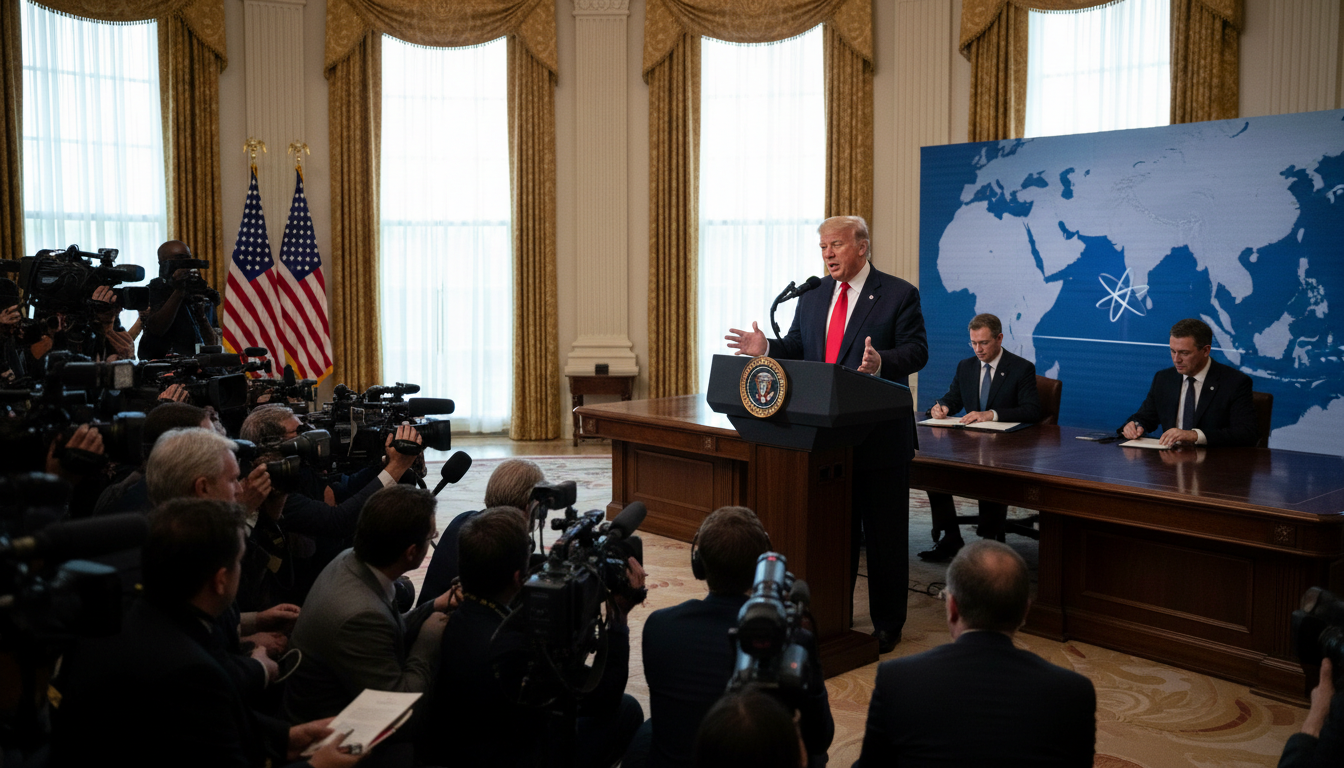
The White House announced on Monday, April 27, 2026, that President Donald Trump spoke with senior national security advisers about a new Iranian proposal to reopen the Strait of Hormuz and later negotiate Iran’s nuclear programme.
White House spokeswoman Caroline Levitt told reporters the proposal was raised in a morning discussion but she would not confirm whether the plan was being actively considered.
Levitt reiterated that the administration’s principal demands remain unchanged, notably the immediate reopening of the Strait of Hormuz and the relinquishment of Iran’s stockpiles of enriched uranium.
White House briefing on the proposal
Caroline Levitt told journalists that President Trump had a classified meeting on Monday morning with top national security aides to review the Iranian offer.
She declined to characterize the depth of the proposal, saying only that a discussion took place and that the president would issue a direct statement in due course.
Terms reportedly included in the Iranian offer
According to the account provided by the White House spokeswoman, the Iranian proposal envisions reopening the Strait of Hormuz and postponing detailed talks on Tehran’s nuclear programme until a later stage.
The offer, as described, would separate immediate maritime security measures from nuclear negotiations, a sequence U.S. officials have previously resisted unless concrete nuclear concessions are secured.
U.S. core demands remain: Hormuz access and enriched uranium
Levitt emphasized that the administration’s core conditions have not changed: the United States continues to demand that Iran open the Strait of Hormuz and turn over its enriched uranium stockpiles.
Those two items were identified by the White House as non-negotiable prerequisites for broader de-escalation, reflecting Washington’s stated priorities on both regional security and non-proliferation.
Regional and economic implications of reopening the strait
The Strait of Hormuz is a vital maritime chokepoint through which a significant share of global oil and liquefied natural gas shipments transit.
Any movement toward reopening the strait would have immediate implications for global energy markets, regional shipping security, and the strategic calculations of Gulf states that rely on uninterrupted flows through the waterway.
Diplomatic context and potential international responses
International actors, including Gulf Cooperation Council members and European partners, have long sought diplomatic mechanisms to reduce tensions between Washington and Tehran.
A proposal that separates maritime access from nuclear talks would test allies’ willingness to accept phased solutions versus demands for immediate, comprehensive nuclear guarantees.
Next steps and presidential communication
Levitt declined to say whether the proposal would be advanced beyond the review stage, telling reporters that she could not “say they are considering it” and that a direct comment from the president was forthcoming.
Officials in the national security apparatus are expected to weigh the operational, legal, and intelligence implications before any formal response is announced.
The evolving situation places allied capitals on alert as they await a U.S. position and any formal outreach to Tehran that could affect regional force postures and commercial shipping insurance rates.
Observers will also monitor whether international institutions such as the International Atomic Energy Agency are engaged to verify any deal terms related to enriched uranium transfers or storage.
U.S. officials have long argued that verifiable steps on nuclear materials are essential for sustainable easing of regional tensions, and any proposal that delays those measures will face scrutiny from both Washington and its partners.
If the president issues a statement, it is likely to clarify whether the administration views the Iranian proposal as a credible opening for negotiations or as an interim public relations move.
For now, the White House message is that discussions occurred on Monday, April 27, 2026, but Washington’s central conditions — access through the Strait of Hormuz and the surrender of enriched uranium — remain decisive in evaluating the offer.
