
EU Rules Meta Age Verification Fails to Keep Under-13s Off Instagram and Facebook
EU regulators say Meta’s age verification fails to keep under-13s off Instagram and Facebook, prompting a preliminary DSA probe and possible fines in EU.
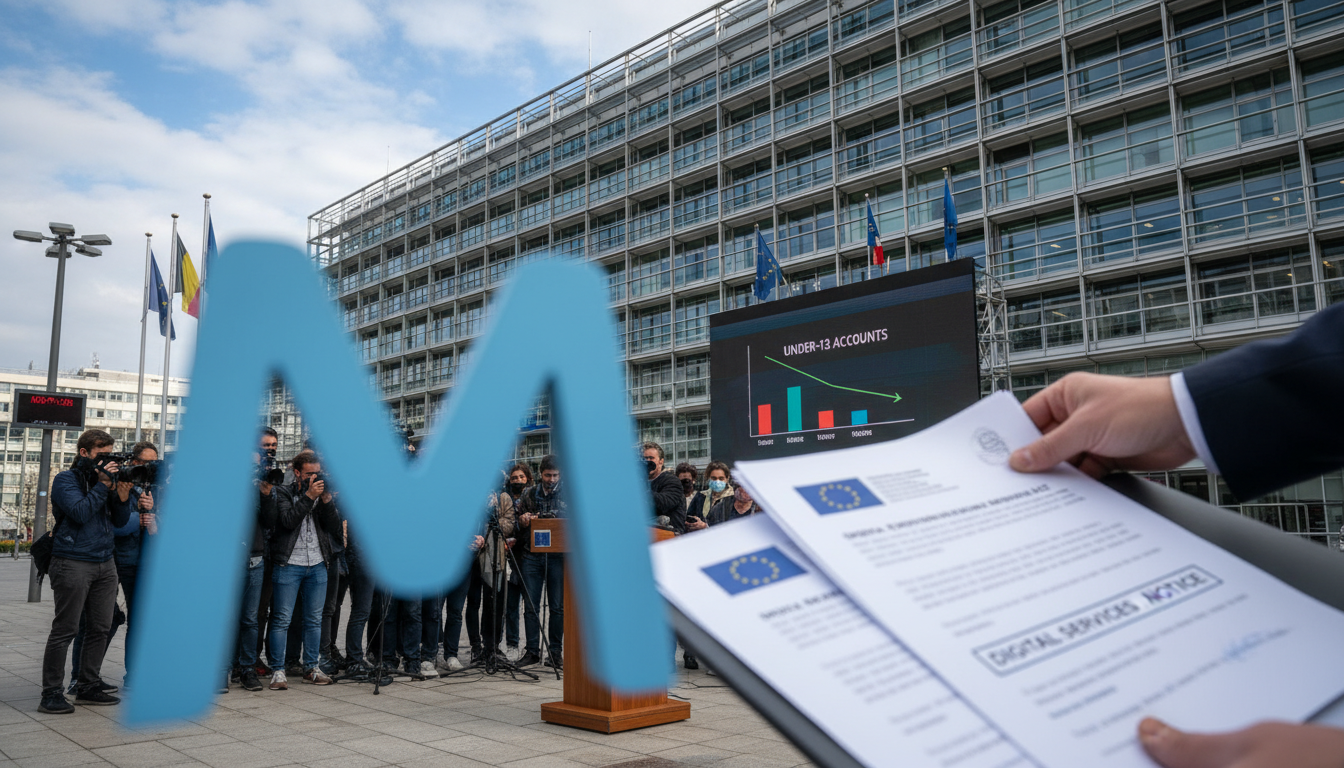
Meta age verification is at the centre of a preliminary ruling by the European Commission after regulators concluded the company has not put in place adequate safeguards to prevent children under 13 from using Instagram and Facebook. The commission found that Meta’s systems for checking users’ self-declared ages and for responding to reports of underage accounts are ineffective, potentially breaching the Digital Services Act. If the findings stand, Meta could face fines or other sanctions while the company has the opportunity to respond to the charges.
European Commission issues preliminary finding under the DSA
The European Commission said its initial assessment shows Meta lacks robust tools to verify the accuracy of a person’s stated date of birth when creating accounts. Regulators say this shortcoming makes it straightforward for underage users to bypass age limits and remain active on the platforms. The ruling is preliminary, giving Meta a chance to submit rebuttals or evidence before a final decision, which can take more than a year.
Reporting tool described as cumbersome and often ineffective
EU officials criticised Meta’s reporting mechanism for suspected underage accounts as difficult to use and slow to produce any review. Regulators noted that accessing the form can require multiple steps, and that many reports do not trigger follow-up or account removal. This combination of a weak verification step and an inefficient reporting process is central to the commission’s concern that children under 13 are not being adequately protected.
Regulators estimate significant underage access across the bloc
Evidence gathered by authorities suggests that roughly 10 to 12 percent of children under 13 in the European Union are accessing Instagram and Facebook. That estimate informed the commission’s view that current safeguards are not working at scale. Officials have said that terms of service alone are insufficient unless backed by reliable, operational measures to enforce age rules.
Meta disputes the commission’s analysis and promises further steps
Meta rejected the commission’s conclusions, calling age verification an “industry-wide challenge” and disputing the EU’s user estimates. The company said it has measures in place to detect and remove accounts belonging to those under 13 and that it continues to invest in new technologies. Meta also indicated that it will disclose additional measures in the near term to strengthen detection and removal of underage users.
Wider regulatory focus on platform design and algorithmic systems
The age-verification probe sits within a broader European effort to hold technology companies to account on child safety and platform harms. The EU is also examining issues such as addictive design features and recommender systems that shape what users see. Regulators have pursued other major U.S. social media firms in recent years, and several member states are exploring national steps to restrict access or require stronger verification for minors.
Potential fines and procedural timeline for enforcement
Under the Digital Services Act, the commission can impose fines that may reach a percentage of global turnover in severe cases, though maximum penalties are rare. The current process gives Meta time to respond to the preliminary charges and to present corrective measures or legal arguments. A final decision, which can include fines or negotiated settlements, is not expected quickly and could take a year or longer to resolve.
European authorities say their priority is concrete action that enforces the rules rather than leaving protections only on paper. Meta’s next submissions and the company’s promised technical rollouts will be closely scrutinised by regulators who have signalled readiness to pursue enforcement to protect children online.
The commission’s move highlights rising pressure on social platforms to produce verifiable, operational solutions for age checks and to make reporting and enforcement mechanisms straightforward and effective for users and authorities.
