
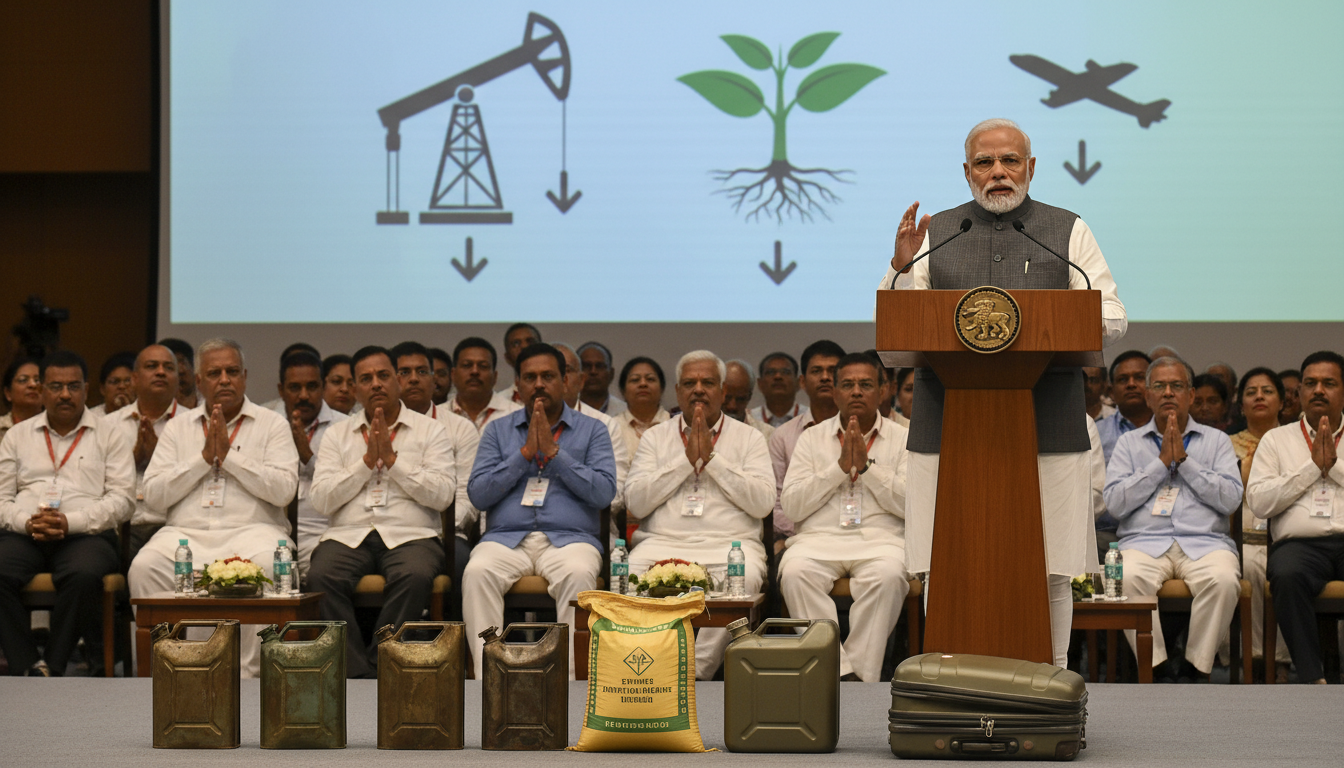
Modi Asks Indians to Spend Less on Fuel, Fertiliser and Travel amid Iran Conflict
Modi asks Indians to spend less on fuel, fertiliser and travel to conserve foreign exchange as supply disruptions from the Iran war weaken the rupee and strain government finances.
Prime Minister Narendra Modi on Sunday urged Indians to cut spending on fuel, fertiliser and travel to help conserve foreign exchange and shield the economy from shocks tied to the war in Iran. The appeal, delivered in Hyderabad, was framed as a patriotic duty and explicitly targeted urban consumption patterns such as foreign holidays, gold purchases and daily commuting. Modi asks Indians to spend less on staple imports, he said, as a way to stabilise the rupee and reduce mounting fiscal pressures.
Modi’s national appeal and its aims
Mr Modi presented the requests as short-term sacrifices to preserve India’s external position and fiscal health. He told citizens to reduce petrol and diesel use, favour electric vehicles and carpool, and to adopt video conferencing to cut commuting costs.
The prime minister also urged farmers to switch to solar-powered water pumps instead of diesel, and warned that buying less gold would help retain dollars in the country. The speech followed a decisive set of state election results that, officials say, leave the central government more room to prioritise macroeconomic stability.
Specific measures urged to conserve foreign exchange
Among the concrete behaviours Mr Modi promoted were fewer overseas trips, reduced gold purchases for a year, increased use of electric vehicles and a return to online meetings for office workers. He framed these steps as individual contributions to a national goal of saving foreign currency.
The government has also signalled a preference for demand-side adjustments over immediately raising domestic energy prices, asking citizens to change consumption habits rather than relying solely on subsidies. Analysts say some voluntary measures could be made mandatory if pressure on reserves and the currency intensifies.
Supply disruption from the Strait of Hormuz and LPG shortages
Officials and industry sources attribute the economic squeeze largely to disruptions in crude shipments caused by the conflict involving Iran, which has constrained supplies transiting the Strait of Hormuz. India first felt the impact when liquefied petroleum gas availability tightened, prompting state refiners to divert crude for LPG production.
Local reports estimate state oil companies are incurring significant losses by buying more expensive crude and selling subsidised LPG, with daily losses reported in the hundreds of millions of dollars. Those losses have contributed to wider fiscal strain, a drop in the rupee’s value and rising consumer price pressures.
Fiscal and currency pressures shaping policy choices
India’s currency has weakened amid a widening import bill while exports remain largely flat, increasing the cost of essential commodities and squeezing the budget. The government is reported to be missing budget targets and is weighing whether to continue cushioning households or to rein in subsidies.
Nomura’s research unit warned of a “tipping point” for domestic fuel pricing and said measures urged by the prime minister could become compulsory if fiscal stress continues. Officials face the trade-off between protecting consumers today and preserving reserves and fiscal durability tomorrow.
Political backdrop after state election wins
Mr Modi’s appeal followed a string of state election victories concluded in early May, a political environment that has given the central leadership more latitude to press citizens for economic adjustment. More than 150 million voters took part in the April balloting, and results declared on May 4 handed the ruling party a major win in a key state.
Observers note that past requests for public sacrifice have been a feature of Mr Modi’s tenure, from the 2016 demonetisation drive to appeals during the Covid-19 pandemic. Those moves produced mixed economic results but often left the administration politically resilient in subsequent contests.
Possible market responses and policy pathways
Markets are likely to watch for concrete signals on subsidies, fuel pricing and restrictions on discretionary imports such as gold and foreign travel. If the government shifts from voluntary appeals to regulatory steps, measures could include tighter controls on imports, limits on gold purchases or gradual reduction of energy subsidies.
State-owned oil firms currently absorb a portion of higher global prices; changing that model would affect household pump prices and could feed short-term inflationary pressures. Economists say any abrupt reversal of subsidies would need careful calibration to avoid stoking social discontent.
The prime minister’s remarks drew attention to the composition of India’s import bill, where oil and gold together account for a substantial share of foreign exchange outflows. Reducing demand for these items would not erase external vulnerabilities, but it could buy the government time to pursue longer-term adjustments.
Economic actors from farmers to salaried professionals were explicitly addressed in the speech, indicating the administration expects a wide social footprint from voluntary restraint. How households and businesses respond will be a key determinant of whether the government moves to mandate measures or relies on persuasion.
India’s fiscal managers now face decisions that will shape macroeconomic stability in the months ahead. The prime minister has set a public agenda of conservation and restraint, and officials will need to balance those appeals with the practicalities of maintaining economic growth and protecting vulnerable groups.
The coming weeks will reveal whether Modi asks Indians to spend less translates into sustained behavioural change or prompts a shift toward formal policy measures to preserve foreign exchange and stabilise the rupee.
