
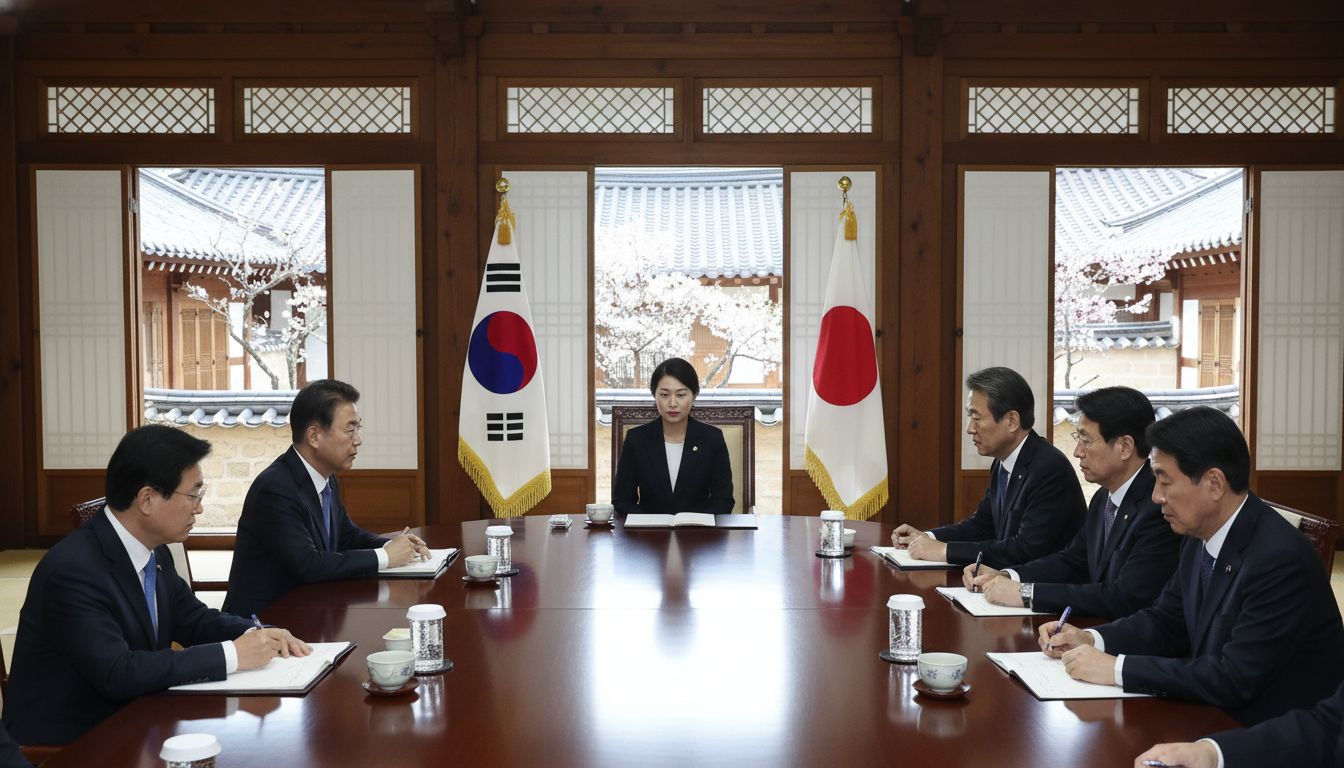
South Korea-Japan summit in Andong seeks to deepen ties despite historical tensions
South Korea-Japan summit in Andong brings President Lee Jae Myung and Japan’s Prime Minister Sanae Takaichi together to discuss security, trade and cultural diplomacy amid longstanding disputes.
Leaders Meet Again in Andong
President Lee Jae Myung and Prime Minister Sanae Takaichi held their third summit since October with a meeting in Andong, underscoring a deliberate effort to stabilise bilateral relations. The South Korea-Japan summit places the two U.S. allies in direct talks over shared security concerns and economic cooperation. Officials described the encounter as a chance to build personal rapport while addressing practical challenges that have strained ties.
Historic Frictions Underlying Bilateral Ties
Relations between Seoul and Tokyo remain shaped by the legacy of Japan’s colonial rule of Korea from 1910 to 1945 and disputes that followed, including the contentious issue of so‑called comfort women. These historical grievances have periodically disrupted diplomatic engagement and complicated cooperation on regional security. Despite that backdrop, both governments have signalled a pragmatic willingness to compartmentalise history and pursue coordination on immediate strategic priorities.
From Drumbeats to Diplomacy
The personal chemistry between the two leaders has been an unexpected driver of recent rapprochement. Ms. Takaichi and Mr. Lee have met several times, exchanging visits that included symbolic gestures such as joining a light‑hearted drumming session to K‑pop songs, which aides say helped thaw formal distances. South Korean and Japanese officials view such informal exchanges as useful for cultivating the trust needed to tackle thorny policy issues.
Agenda: North Korea, Iran and Supply Chains
The summit agenda focused on a short list of urgent topics, notably North Korea’s nuclear and missile programmes and the security implications of instability in the Middle East. Delegations also discussed ways to stabilise critical supply chains and reduce bureaucratic barriers to joint exercises and contingency planning. Analysts say coordination on maritime security, including operations near the Strait of Hormuz, was a practical priority given recent disruptions to global trade routes.
State‑level Protocol and Local Hospitality
Seoul announced that the Japanese prime minister would receive ceremonial honours equivalent to a state visit, signalling the formal importance attached to the talks. The leaders shared a dinner featuring Andong‑style braised chicken accompanied by local Andong soju and Nara sake from Japan, underscoring cultural diplomacy as part of the itinerary. They also toured Hahoe Folk Village, a UNESCO World Heritage site, where traditional performances and a fire art display were presented to highlight shared interest in cultural exchange.
Expectations and Practical Limits
Officials caution that while the summit can advance goodwill, major breakthroughs on historical disputes are unlikely to be resolved in a single meeting. The immediate gains are expected to be operational: easing logistics for defence cooperation, enhancing contingency planning and exploring limited industrial and supply‑chain coordination. Observers say sustained progress will depend on follow‑through by bureaucracies in both capitals and on managing public sensitivities at home.
The South Korea-Japan summit in Andong illustrated a pragmatic approach to diplomacy in a region facing rising strategic competition, where personal rapport between leaders can open room for cooperation even as deep historical issues remain unresolved.
