
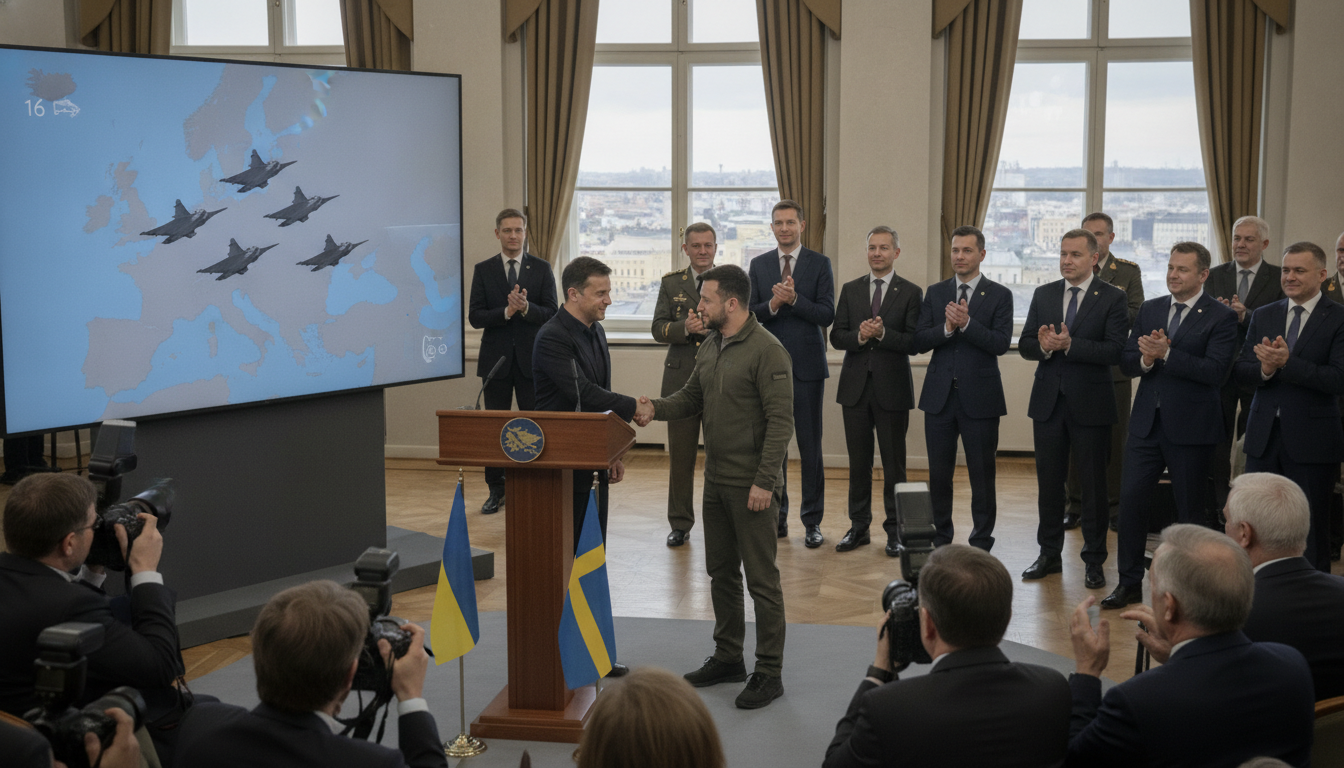
Sweden’s planned transfer of 16 Gripen fighters signals deeper Ukraine–Nordic alignment
Sweden’s transfer of 16 Gripen fighters to Ukraine signals a strategic shift toward Nordic partners, boosting Kyiv’s air defence and regional security.
Sweden’s announcement that it will send 16 Gripen fighters to Ukraine has been interpreted by analysts as more than a single weapons transfer; it is being read as a marker of a broader strategic realignment between Kyiv and Nordic states. The planned delivery, discussed in analyses by David Kiritchenko of the Henry Jackson Society and raised publicly by Ukrainian officials, places “Gripen fighters” at the center of debate about how Ukraine is redefining its security and diplomatic orientation. Ukrainian voices, including former foreign minister Dmytro Kuleba, have framed the move as evidence that Kyiv’s center of political gravity is shifting northward toward countries that have become steadfast backers since 2022.
Sweden Plans Transfer of 16 Gripen Fighters
Sweden’s decision to provide 16 JAS 39 Gripen aircraft to Ukraine has been described by observers as a concrete step with both symbolic and practical consequences, with some analysts suggesting deliveries could occur by early 2027. The package, widely reported in commentary by Kiritchenko, is not merely a standard arms shipment but a signal of sustained, deepening defence cooperation between Kyiv and Scandinavian capitals. Beyond the aircraft themselves, the arrangement implies long-term training, logistics and maintenance commitments that would further knit Ukraine into Northern European defence networks.
Military Impact and Meteor missile integration
A central element of the military calculus is the potential pairing of Gripen fighters with MBDA’s Meteor long‑range air‑to‑air missiles, which have a reported range in excess of 200 kilometres, according to assessments cited by Ukrainian officials. President Volodymyr Zelensky and analysts argue that Gripen fighters equipped with Meteor missiles could push Russian combat aircraft well beyond current standoff distances, reducing the effectiveness of guided glide bombs and other precision munitions used against Ukrainian forces. If Meteor integration proceeds alongside pilot training and support infrastructure, Kyiv would gain a higher-end aerial deterrent that complicates Russian operational planning and expands Ukraine’s options for airspace control.
Ukraine’s political realignment toward Nordic partners
The Gripen announcement has reignited debate over Ukraine’s geopolitical trajectory, with Dmytro Kuleba posing the question of whether Ukraine is becoming a member in practice of a broader Northern European security community. Observers note that since 2022, several Nordic and Baltic states have emerged as among the most consistent military and political backers of Kyiv, providing advanced systems, sustained funding and diplomatic advocacy. Academics such as Maria Popova have argued that the commitment from Nordic states goes beyond narrow geographical interest, representing a shared mission that ties values, security needs and regional stability to collective action.
Scholars debate Ukraine’s northern tilt and regional identity
Historians and regional specialists caution against viewing Ukraine’s alignment through a single regional lens, noting the country’s historical and cultural ties to multiple European spheres. Ukrainian historian Yaroslav Hrytsak has observed that Ukraine “belongs to multiple worlds,” and that which orientation predominates depends on present circumstances. Others are more skeptical of any long-term label of “Nordic” for Ukraine; scholars such as Serhii Plokhy point to limited historical connections to the far North beyond early medieval Viking links and episodic episodes like the Swedish campaign of the early 18th century. This academic debate underscores that military and diplomatic ties do not automatically rewrite centuries of regional identity but that contemporary alliances can reshape practical alignments.
Regional security implications and operational challenges
The transfer of Gripen fighters would carry immediate signaling value for Russia and reassurance value for European partners, but it also presents technical and logistical challenges that will determine its ultimate impact. Successful integration requires pilot conversion training, maintenance facilities, secure supply lines for parts and the political will to sustain long-term operational costs. Political leaders in Kyiv and Stockholm, together with allied partners, will need to coordinate on the timing of deliveries, the procurement of long‑range missiles such as Meteor and the establishment of ground support to ensure the fighters are mission‑capable. How Moscow interprets the move could shape escalation dynamics, but for Kyiv the priority is clear: to strengthen air defences and limit the reach of Russian aerial strikes.
The planned transfer of Gripen fighters to Ukraine thus represents both an immediate enhancement of Kyiv’s aerial capabilities and a larger geopolitical signal of deepening ties with Nordic states; whether this develops into a lasting strategic orientation will depend on timely deliveries, effective integration of missile systems and the broader political and military cooperation that follows.
