
Strait of Hormuz Reopening Faces Mine-Clearance Hurdles Before Oil Shipments Resume
Deal to reopen the Strait of Hormuz promises oil flows, but uncertainty over naval mines and the pace of mine-clearing operations could slow commercial traffic.
Deal Opens Path to Reopen Strait of Hormuz
A negotiated agreement to reopen the Strait of Hormuz has raised expectations that crude and tanker traffic can resume through the narrow waterway. The Strait of Hormuz is the central keyword in this report because the pace and safety of reopening depend on whether naval mines were deployed during the conflict.
U.S. and allied officials say parts of the channel are already being assessed, but they caution that reopening shipping lanes will hinge on the results of detailed mine-clearance operations. Political leaders have urged international cooperation to accelerate work and reassure global energy markets.
Uncertainty Over Whether Mines Were Emplaced
It remains unclear whether Iranian forces actually laid mines in the strait during the hostilities, officials say, and a number of vessels have transited the area without incident. Intelligence and on-site inspections will be needed to establish the presence, types and locations of any underwater ordnance.
U.S. Central Command previously reported strikes against vessels suspected of mine-laying, but the effect of those actions on the overall mine threat is uncertain. That uncertainty complicates planning for commercial operators and military clearance units alike.
Range of Mines Presents Technical Challenges
Before the recent war, assessments suggested Iran possessed thousands of mines of various types, from simple moored contact mines to sophisticated bottom influence mines. Bottom mines lie on the seabed and can be triggered by combinations of acoustic, magnetic, pressure and seismic signatures, making them difficult to detect and neutralize.
Modern influence mines may react to mine-hunting activity and employ counters that detonate only after a set number of vessels pass, creating the potential for delayed and selective attacks. These attributes increase the time and technical complexity of safe-clearance efforts in congested shipping lanes.
Unmanned Systems to Lead Initial Search Effort
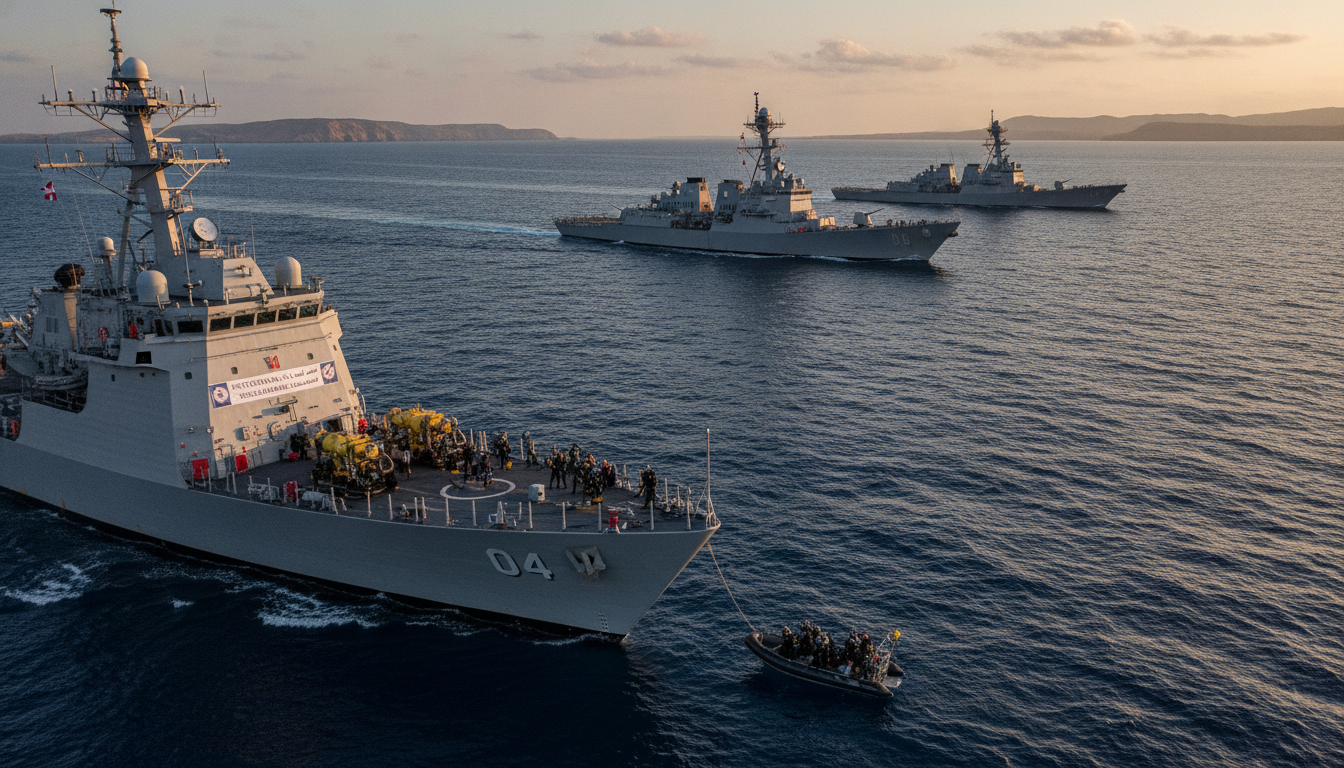
Naval planners intend to rely heavily on unmanned surface and underwater vehicles to survey and map the seafloor before any manned vessels enter suspected minefields. Systems such as unmanned surface craft equipped with side-scan sonar and autonomous underwater vehicles will be used to generate high-resolution images and identify anomalies.
The U.S. Navy has shifted away from older wooden-hulled minesweepers toward littoral combat ships and airborne or remotely operated platforms that can operate at standoff distances. Nations including the United Kingdom and France have signalled readiness to deploy mine-hunting drones and specialist vessels to support multinational clearance operations.
Diver and Explosive Ordnance Teams Face High Risk
When unmanned systems flag suspicious objects, explosive ordnance disposal teams and remotely operated vehicles will be used to confirm and neutralize threats. In cases where bottom influence mines are confirmed, specially trained divers may be required to conduct hazardous interventions or place demolition charges.
These diver-led operations are among the most dangerous in naval warfare because the devices can be triggered by small disturbances in the water. Historical clearance campaigns demonstrate that such work demands painstaking procedures, exacting equipment and acceptance of significant risk to personnel.
U.S. Forces to Maintain Readiness During Clearance
Pentagon officials say thousands of U.S. troops and multiple carrier and air assets will remain in nearby regions while clearance continues and the initial peace framework is tested. The presence is intended to deter a recurrence of hostilities and to provide rapid support should security conditions deteriorate.
If the reopening holds, U.S. command planners anticipate a phased redeployment of forces. Conversely, a renewal of fighting would likely prolong high readiness levels and maintain substantial naval and air presence in the area.
The reopening of the Strait of Hormuz is a critical step for global energy supplies, but officials and experts stress that physical clearance of any mines — and verification of long-term safety — will determine how quickly oil and commercial shipping can return to normal operations.
