
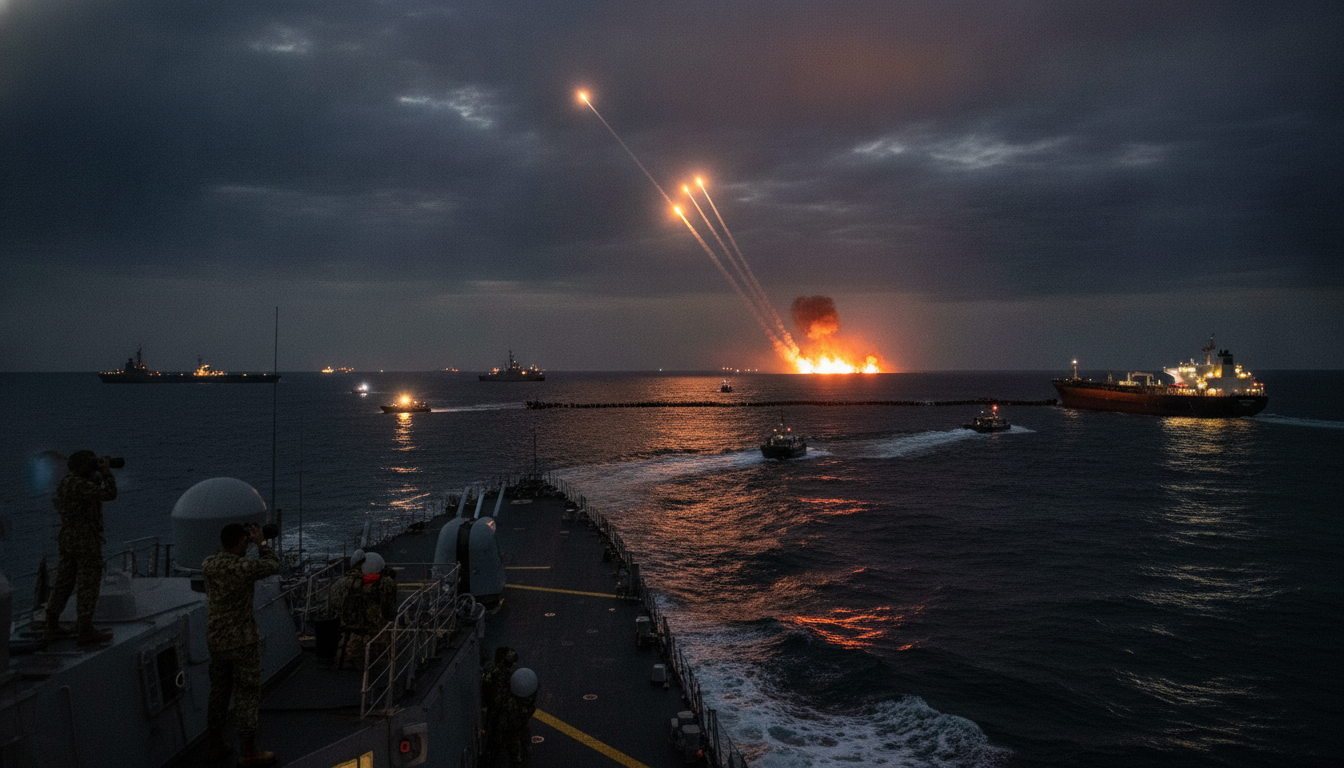
U.S.-Iran strikes escalate after overnight attacks on Tehran and Gulf targets
U.S.-Iran strikes intensified early Thursday as American jets struck sites in and around Tehran while Iran reported retaliatory strikes on U.S. bases and announced the Strait of Hormuz closed, raising regional alarm.
The United States and Iran exchanged a new round of strikes in the early hours of Thursday, drawing both parties closer to a broader military confrontation. U.S. Central Command said American aircraft carried out strikes shortly after midnight local time, while Iranian state outlets reported explosions in Qeshm and several southern cities bordering the Strait of Hormuz. Tehran described subsequent strikes against U.S. positions in the Gulf and declared the vital shipping lane closed to all vessels, a claim the U.S. military denied.
Timeline of the overnight attacks
U.S. forces reported operations began shortly after midnight and had concluded by the early morning, according to Central Command statements. Iranian media and local witnesses described detonations in Qeshm, Bandar Abbas, Minab and Sirik, towns that sit close to key maritime routes.
The exchange followed a separate wave of U.S. strikes about 24 hours earlier, which Washington said targeted Iranian facilities after the downing of an American Apache helicopter near the Strait. Iranian officials reported their own retaliatory launches at U.S. bases in the region later on Wednesday, setting the stage for the latest confrontation.
Targets and reported damage in southern Iran
Satellite imagery analysts and local officials reported damage to infrastructure in southern Hormozgan Province, with early assessments indicating precision strikes hit water facilities and other utilities. Local authorities told reporters that areas experienced interruptions to essential services, and heat in the region compounded concerns for affected residents.
U.S. Central Command did not publicly confirm specific civilian impacts but said its operations were aimed at degrading Iran’s ability to project force in the Gulf. Independent verification of damage remained limited in the immediate aftermath, with on-the-ground reporting constrained by security and communications disruptions.
Contested claims over the Strait of Hormuz
Iran announced that the Strait of Hormuz had been closed to all maritime traffic following its retaliatory operations, a declaration that would carry serious implications for global shipping and energy markets. The U.S. military, however, rejected the assertion and continued to describe the route as open, underscoring the competing narratives between the two sides.
Maritime authorities and shipping firms operating in the Gulf moved cautiously, with some commercial operators altering routes or delaying transits as a precaution. The competing claims heightened anxiety among Gulf states and international traders who rely on the narrow strait for a substantial share of global seaborne oil movements.
Regional military and civil aviation responses
Gulf states reacted quickly as warning systems were activated and airspace procedures adjusted. Kuwait’s military said it was engaging hostile aerial targets and the country briefly closed its airspace citing risks to civilian aircraft, while Bahrain reported activation of warning sirens without specifying a trigger.
The swift military posture across the region reflected the potential for miscalculation, with smaller states caught between the two larger adversaries. Naval and air assets from multiple countries were placed on heightened alert, and regional coordination centers increased monitoring of maritime and aerial traffic.
U.S. leadership messaging and strategic aims
Washington framed the strikes as part of a campaign to pressure Tehran to accept terms for a negotiated end to the conflict, rather than as direct retaliation for single incidents. Senior U.S. officials said the pressure campaign would continue until Iran agreed to conditions set by U.S. leadership, signaling a strategy that mixes military action with diplomatic leverage.
Those statements undercut earlier U.S. assurances that a lasting peace was imminent, and they underscored an administration posture that public officials described as blending coercion with diplomacy. Analysts warned that framing strikes as negotiation tools risks entrenching positions and making a de-escalatory outcome harder to achieve.
International responses and questions over the cease-fire
The recent exchanges further eroded the fragile cease-fire declared two months ago, which had already proved porous as both sides traded sporadic attacks and competing claims. United Nations officials described the situation as worrying, noting that the so-called lull in fighting had become increasingly untenable amid renewed kinetic activity.
Diplomatic actors in the region and beyond urged restraint while calling for clearer channels to resume substantive talks. Some governments pressed for immediate verification of the status of critical infrastructure and reopened multilateral discussions to prevent further escalation.
The renewed strikes mark a dangerous intensification in a conflict that has spread unevenly across the Gulf and threatens to disrupt civilian life and commerce well beyond the immediate battlefields. The competing claims over the Strait of Hormuz and the activation of military defenses across Gulf states underscore the high stakes for regional stability and global markets.
International observers and governments will be watching for responses in the coming days as both sides weigh further action against diplomatic options.
