
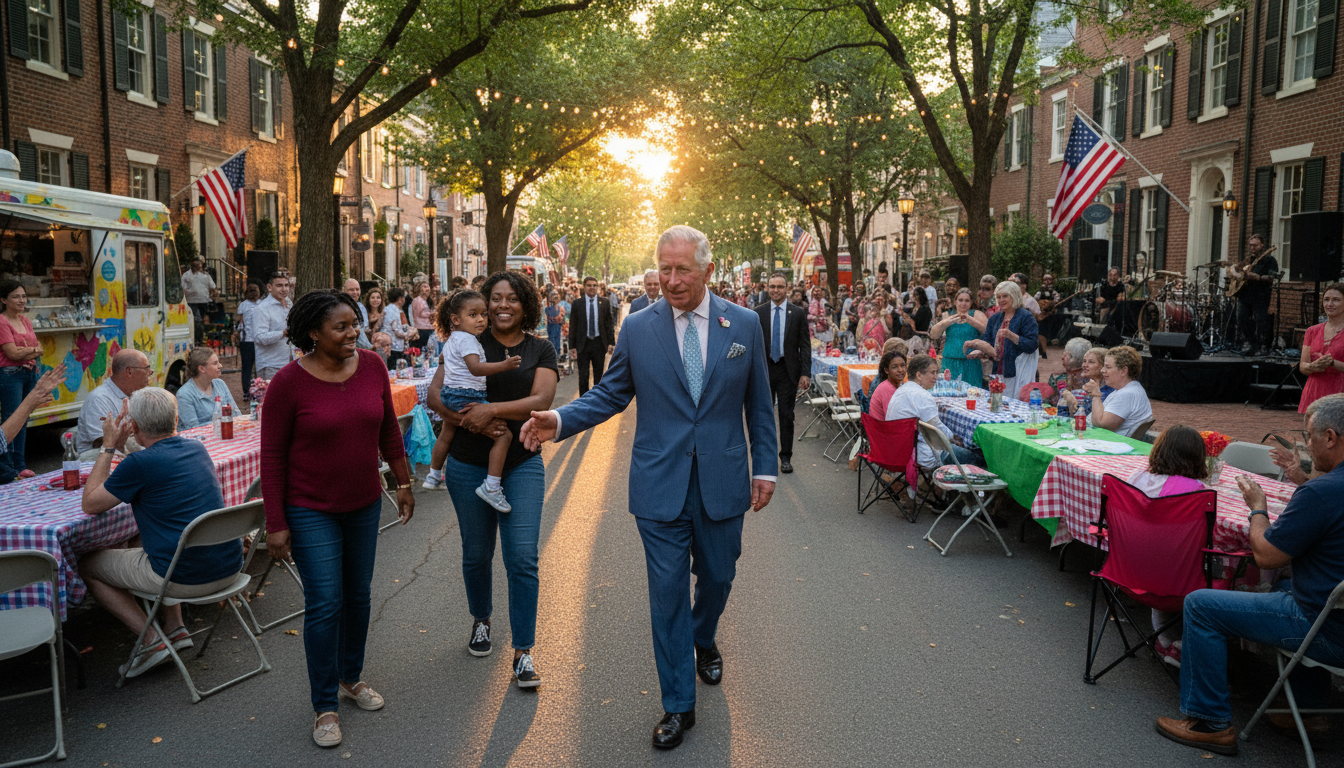
King Charles III state visit to the United States includes Virginia block party during April 27–30, 2026 trip
King Charles III state visit to the United States is scheduled for April 27–30, 2026 and will include events in Washington, New York and a community “block party” in Virginia tied to the nation’s 250th anniversary. The monarch’s four-day itinerary will spotlight diplomatic engagements, public events and conservation meetings with Indigenous and local leaders. The visit reconnects a long history of royal encounters with American civic life stretching back to Charles’s first U.S. trip in 1970.
Itinerary for April 27–30, 2026
The state visit begins in Washington, D.C., where King Charles III and Queen Camilla will be received at the White House and take part in formal state ceremonies. Their programme then moves to New York for memorial events and civic engagements before concluding with scheduled appearances in Virginia. Organisers say the Virginia stop includes public-facing celebrations linked to the 250th anniversary of American independence and meetings on environmental conservation.
Camp David and a 1970 introduction to America
Charles’s first prolonged encounter with the United States occurred in the summer of 1970 when, at age 21, he travelled as a young royal guest of President Richard Nixon’s family. He and his sister, Princess Anne, were invited to Camp David where they shared informal meals and took part in relaxed outdoor activities. Those early moments established a pattern of combining ceremonial duties with ordinary American pastimes during subsequent visits.
1977 cross-country tour and American sports
In 1977, an official tour took the then-Prince of Wales across Chicago, Cleveland, St. Louis and Atlanta, where he became the first British royal to attend a collegiate American football game. That visit also included high-profile urban stops, a cable car ride in San Francisco and encounters with both enthusiastic crowds and street protests. The trip illustrated how royal visits often mix pomp with spontaneous popular moments that capture public attention.
New York stopovers and public disruptions
Charles has made several notable overnight visits to New York, including a June 1981 arrival on the Concorde and a high-profile cruise around the Statue of Liberty. On other occasions, cultural outings such as ballet performances were disrupted by demonstrators protesting British policy in Northern Ireland, underscoring the security and sensitivity that have long accompanied royal travel. Those episodes have shaped modern planning for large-scale public engagements during state visits.
Visits with Diana and shifts in royal diplomacy
The 1980s saw the Prince and Princess of Wales draw mass public interest, notably during the 1985 visit when Diana’s appearances, including a dance with John Travolta at a White House event, dominated coverage. Later solo visits by Charles addressed geopolitical concerns, including meetings in Washington on NATO and the changing Soviet landscape. The couple’s public and private dynamics during those years also influenced how the monarchy was perceived on U.S. soil.
Environmental advocacy and recent policy remarks
Environmental stewardship has been a consistent focus of Charles’s public life, and it re-emerged during his more recent U.S. engagements. In Louisville, Kentucky in 2013 he delivered a forceful speech linking environmental decline to broader human welfare, language he has reiterated in private and public forums since. During the April 27–30, 2026 visit he is expected to hold conservation talks with Indigenous leaders in Virginia, aligning ceremonial appearances with longstanding policy priorities.
King Charles III’s presence in the United States on this state visit combines ceremonial duties with outreach to communities and partners, reflecting a decades-long pattern of mixing formal diplomacy with everyday American experiences. From Camp David barbecues in 1970 to collegiate stadiums, cable cars and contemporary conservation meetings, the royal itinerary shows an intent to balance statecraft with public engagement. The April 27–30, 2026 visit will test that approach anew as officials manage security, protocol and opportunities for high-profile, locally resonant moments.
