
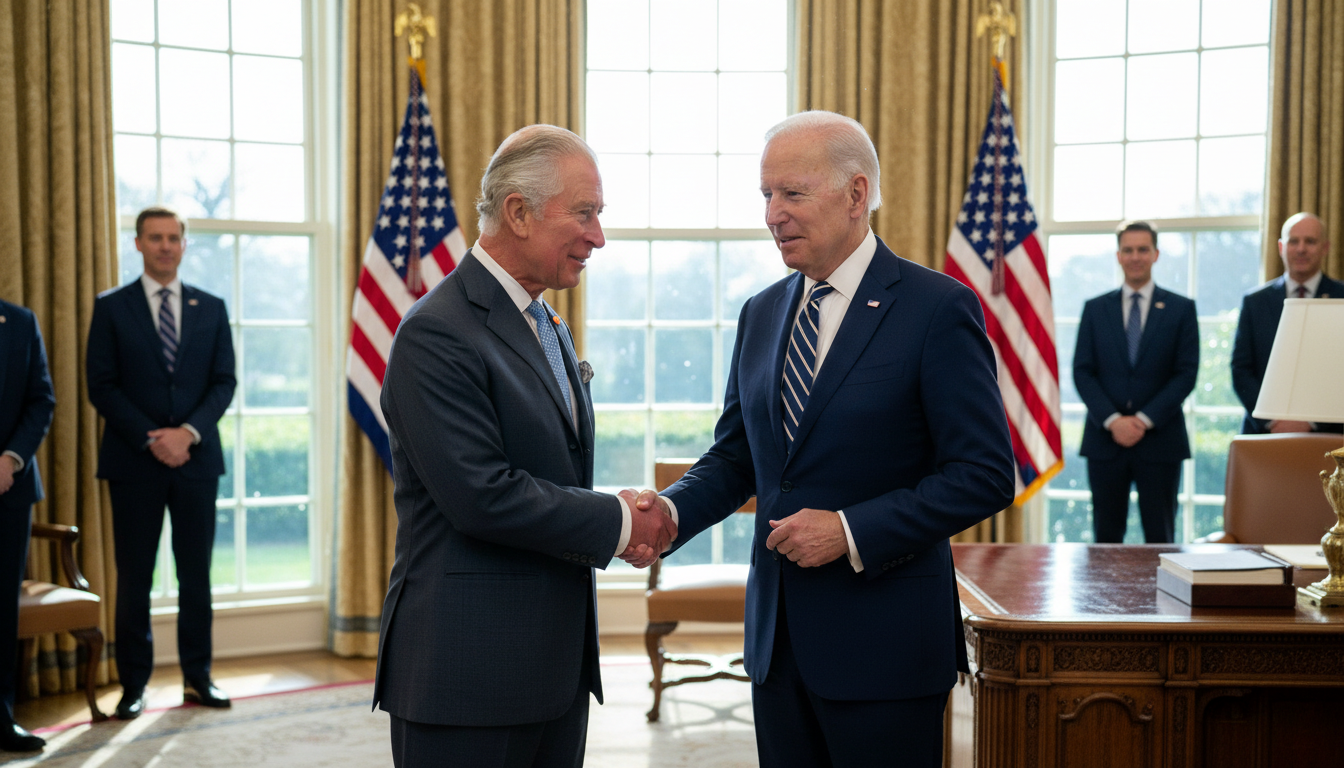
King Charles III US visit highlighted by White House state dinner and rare address to Congress
King Charles III’s US visit featured a White House state dinner and a rare address to a joint session of Congress on April 29, 2026, underscoring deep US-UK ties while occurring amid diplomatic strains over the war on Iran.
Royal address to a joint session of Congress
King Charles III delivered a rare speech to a joint session of the United States Congress on April 29, 2026, a moment framed by decades of shared history and strategic partnership.
The address emphasized long-standing ties and mutual values, drawing bipartisan attention in a typically ceremonial but symbolically significant appearance.
Lawmakers and officials greeted the monarch with customary applause and formal recognition of the two nations’ cooperative history.
White House state dinner affirms US-UK relationship
A state dinner at the White House followed the congressional appearance, where the president hosted King Charles III and his delegation in a display of diplomatic pageantry.
The evening combined ceremony with substantive meetings, as senior officials from both capitals used the gathering to reinforce bilateral commitments.
Table conversations ranged from trade and climate to defence collaboration, reflecting a broad agenda beyond the ceremonial optics.
Visit framed by 250 years since American independence
The timing of the King Charles III US visit coincides with the 250th anniversary of American independence, giving the trip added historical resonance.
Officials in both countries framed the visit as an opportunity to reflect on shared democratic traditions while acknowledging the evolution of the two nations’ relationship.
Commemorative remarks and references to the quarter-millennium milestone featured in speeches and official statements throughout the visit.
Diplomatic strain tied to the war on Iran shadowed proceedings
Despite ceremonial warmth, the visit unfolded against a backdrop of heightened tensions over the war on Iran, testing diplomatic navigation on sensitive security issues.
Officials acknowledged differences in policy approaches while stressing the importance of sustained communication between London and Washington.
Those conversations were reported to have been candid, with both sides seeking to manage disagreements without allowing them to overwhelm broader cooperation.
Security and defence discussions dominate private meetings
Beyond public events, defence and intelligence figures held private talks to coordinate responses to regional instability and to review security commitments.
Discussions included contingency planning, intelligence-sharing priorities, and the implications of the Iran conflict for global maritime routes and regional partners.
Both capitals reiterated commitments to collective security while exploring avenues to reduce escalation and protect shared interests.
Economic and climate cooperation outlined in follow-up sessions
Trade and climate cooperation also featured in ministerial sessions held in Washington alongside the ceremonial program, reflecting longer-term partnership goals.
Leaders highlighted joint investment opportunities, clean energy initiatives, and research collaborations intended to bolster economic resilience on both sides.
Officials described these agendas as central to cementing a modernized US-UK relationship that extends beyond defence and diplomacy.
Next steps and public messaging after the state visit
Officials on both sides said follow-up working groups and ministerial exchanges would sustain momentum from the King Charles III US visit in the coming months.
Teams were scheduled to translate high-level commitments into concrete plans on trade facilitation, climate projects, and security cooperation.
Public messaging stressed continuity: ceremonial grandeur accompanied by practical steps intended to address shared challenges.
The King Charles III US visit on April 29, 2026 combined ceremonial recognition of a long partnership with sober diplomatic engagement over contemporary security concerns, leaving leaders to balance history, policy differences, and plans for deeper cooperation in the months ahead.
