
US Keeps Ceasefire as ‘Project Freedom’ Seeks to Reopen Strait of Hormuz
Pentagon: ceasefire remains as US launches Project Freedom to reopen the Strait of Hormuz amid renewed attacks, shipping disruption and rising oil prices.
Ceasefire in Place as US Launches ‘Project Freedom’
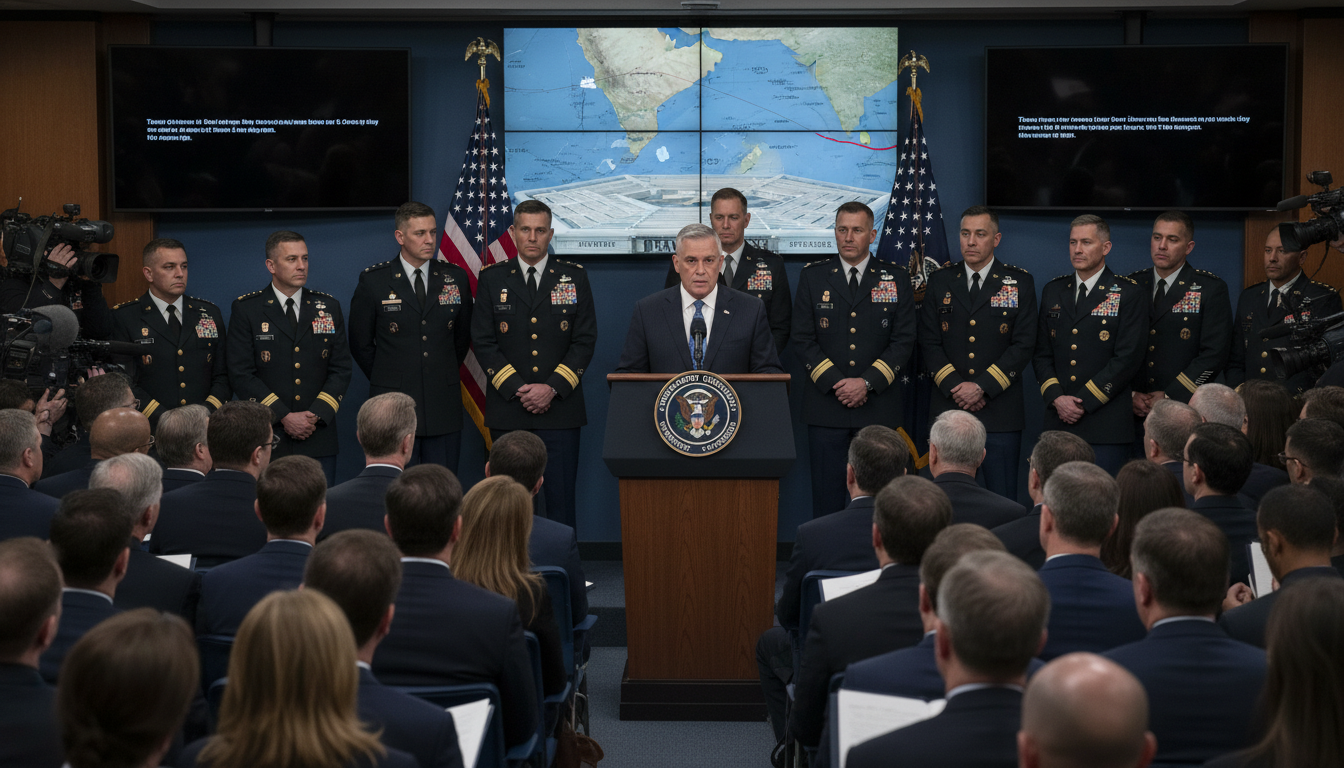
The United States says the ceasefire with Iran remains in effect as Washington pursues a campaign to reopen the Strait of Hormuz. Pentagon chief Pete Hegseth described the operation, called “Project Freedom,” as distinct from other US-led military efforts and said the move aims to restore commercial passage through the vital waterway.
Hegseth told reporters the United States expected early frictions as the effort began, but insisted the truce had not been formally terminated and that any decision to end it would rest with the president. He framed the operation as a limited, temporary push to allow shipping to resume while maintaining overall restraint.
Pentagon Says President Will Decide End of Truce
The defence secretary emphasised that Washington would defend commercial vessels and that the ultimate call on whether the ceasefire holds rests with the president. Hegseth’s remarks signalled that US policymakers may tolerate some Iranian strikes short of a formal ceasefire breach while attempting to reopen Hormuz.
Officials made clear the operation is separate from the broader US-Israeli campaign against Iran, and Hegseth repeatedly warned Tehran that aggressive actions would be met with forceful responses. The Pentagon publicly left operational details, including escort numbers, to regional commands and declined to disclose comprehensive figures.
Clashes Around Hormuz Intensify Since April 8, 2026 Truce
Since the ceasefire that came into effect on April 8, 2026, the waters around the Strait of Hormuz have seen intermittent but sharp flare-ups. Monday saw the highest level of fighting since the truce began, with both sides reporting attacks and countermeasures in the narrow shipping lane.
US officials said they shot down several small Iranian vessels during confrontations, while Tehran reported it had fired on US Navy ships. The incidents coincided with a spike in drone and missile launches directed at the United Arab Emirates, deepening regional tensions despite the formal truce.
Casualties and Incidents Reported in the Gulf
The recent exchanges produced civilian and military casualties and damage across the Gulf. Iranian strikes on facilities in the UAE’s Fujairah Petroleum Industries Zone injured three people, according to UAE reports, while Tehran claimed a US strike on a civilian passenger boat caused five fatalities.
A South Korean commercial vessel operating near Hormuz was also struck in an incident that US officials attributed to Iran, further illustrating the risks facing neutral shipping. International insurers and ship operators have described the area as highly dangerous, contributing to an effective halt in maritime traffic.
US Naval Posture: Escorts, Overwatch and a ‘Dome’
Hegseth said American warships and aircraft have created a protective posture over the strait, describing it as a “red, white and blue dome” intended to shield peaceful commercial passage. He noted that destroyers, fighter jets, helicopters and surveillance platforms are providing continuous overwatch for vessels willing to transit.
The Pentagon reported that two US-flagged commercial ships were escorted through the route as part of the initial effort, while Central Command was tasked with liaising with commercial shippers on passage arrangements. Hegseth added that Iran would be restricted from transiting in areas where US forces are providing protection, underscoring a continuing naval squeeze on Iranian ports.
Shipping Standstill, Oil Market Reaction and International Response
Ship-tracking records show traffic through the Strait of Hormuz has largely stalled since the blockade and the subsequent US push to reopen the lanes. US officials say roughly 1,550 commercial vessels were left unable to transit at the height of the disruption, which has compounded global supply concerns.
Oil markets reacted with volatility: retail pump prices in the United States rose sharply, reaching an average of $4.48 per gallon, a marked increase that US officials say adds political pressure ahead of domestic elections. Global crude benchmarks spiked before easing slightly as the latest rounds of military activity subsided.
Allies have so far declined formal invitations to join the US military escort mission, and Pentagon officials said Project Freedom is intended to be temporary before responsibility is transferred to other partners. Hegseth urged the international community to assume a greater role in securing commerce through Hormuz once the immediate phase of US-led enforcement concludes.
The situation in the Strait of Hormuz remains fluid, with both sides signaling readiness to continue operations and diplomatic channels yet to produce a durable resolution. Continued monitoring by naval forces, commercial operators and regional governments will determine whether the corridor can be reopened safely and sustainably.
