
Sidon School Hosts Displaced Families as Returns Blocked Across Southern Lebanon
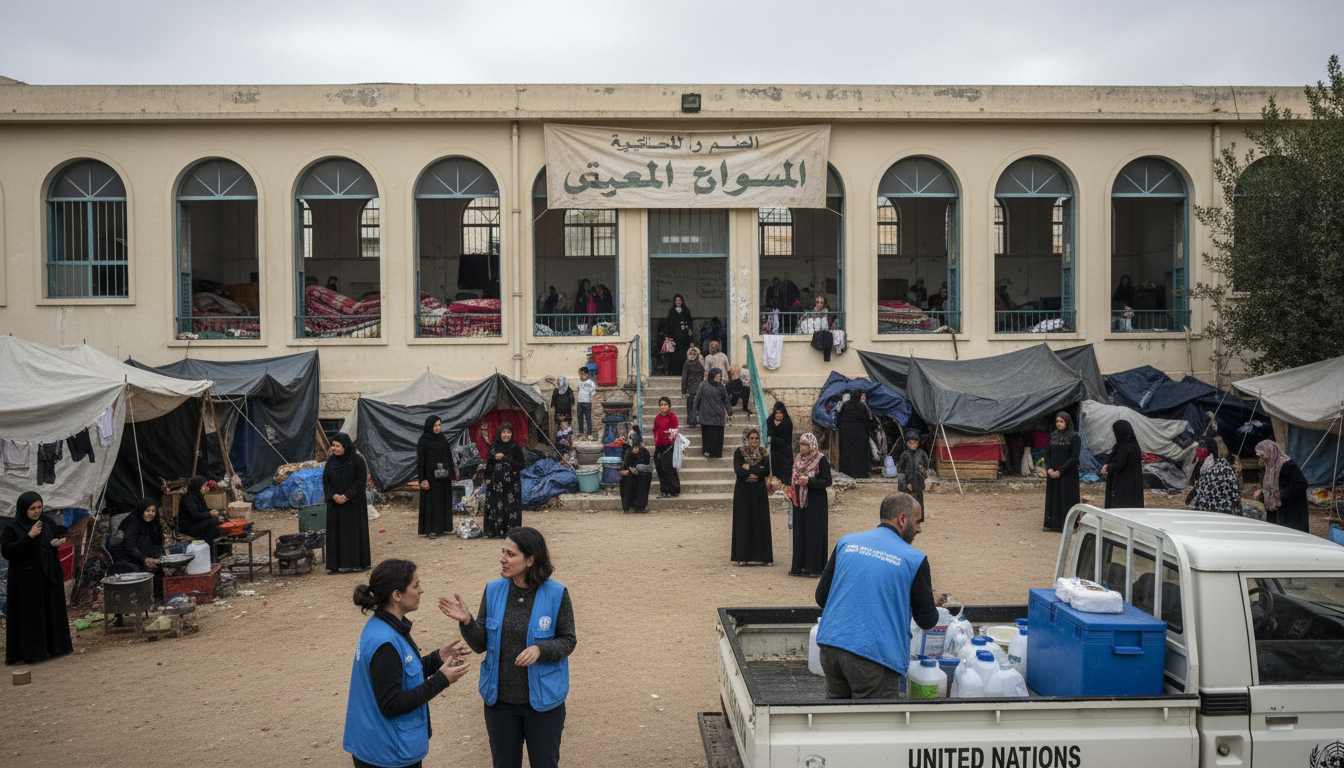
Sidon school hosts displaced families while classes continue in shared spaces, highlighting the persistence of a mass internal displacement crisis. As of 9 May 2026, more than 1.5 million people remain uprooted across Lebanon, the United Nations reports, with insecurity and shortages of basic services cited as the main barriers to return.
Sidon School Converted into Shelter for Displaced Families
A public school in Sidon has been partially converted into temporary accommodation for families fleeing fighting in southern Lebanon. Tents and mattresses occupy corridors and some classrooms, while other rooms are adapted as communal kitchens and child-friendly spaces. School officials said the arrangement is intended to be temporary, but they acknowledged that many families may remain for weeks or months given current conditions.
Classes Continue in Makeshift Conditions
Despite the influx of displaced people, lessons are still taking place in the facility, with teachers and administrators juggling education and humanitarian needs. Class sizes have been reduced and schedules staggered to free space for families, school staff reported. Students and evacuees share facilities, and authorities are trying to keep education services running to limit disruption to children’s routines.
More Than 1.5 Million Displaced, UN Says
The United Nations estimates that over 1.5 million people inside Lebanon remain displaced as of 9 May 2026, marking one of the largest internal displacement situations in the region in recent years. UN agencies warn that the scale of displacement strains shelter, health and sanitation systems across host communities. Humanitarian actors have repeatedly called for expanded access and resources to meet urgent needs.
Insecurity and Service Shortages Block Returns
UN statements cite insecurity and a lack of basic services — including water, electricity and medical care — as the principal reasons preventing displaced residents from returning home. Many areas in the south remain without reliable infrastructure, and unexploded ordnance and damaged roads are further complicating safe return. Aid agencies say that rehabilitation of services and clearance operations must precede large-scale returns.
Israeli Orders Prevent Returns to Around 80 Towns
Israeli authorities have issued directives advising residents of roughly 80 towns in southern Lebanon not to return, according to statements from regional officials. Those orders, coupled with continued military concerns on both sides of the border, have left thousands unable to assess damage or reoccupy properties. Local leaders say the lack of clear, coordinated guidance has added to the uncertainty faced by displaced families.
Humanitarian Response and Local Challenges
Relief organisations and municipal authorities in Sidon and surrounding districts are coordinating emergency shelter, food distribution and medical support for those housed in schools and other public buildings. However, funding shortfalls and logistical hurdles mean that assistance remains uneven, with some families reporting long waits for aid. Municipalities report rising pressures on sanitation and waste management systems where displaced populations have congregated.
Humanitarian groups are prioritising child protection, psychosocial support and school continuity to reduce long-term harm to children affected by displacement. Vaccination campaigns and mobile clinics have been deployed in several locations, but health providers caution that needs outpace capacity. Local charities and volunteer networks have also mobilised to provide blankets, cooking equipment and cash assistance.
Authorities and aid agencies say a durable return plan will require security guarantees, rapid repairs to housing and infrastructure, clearance of unexploded ordnance, and predictable humanitarian corridors. Officials in Beirut have called for international support to accelerate reconstruction and to ensure that host communities receive resources to absorb displaced populations. Donor appeals remain open as organisations seek to scale up shelter and service delivery.
The situation in Sidon reflects a broader national challenge: balancing the continuity of public services, such as education, with emergency humanitarian response. School administrators say they are coordinating with education and relief agencies to maintain learning while protecting the dignity and safety of displaced families. For parents and children housed in the school, the arrangement offers immediate shelter but little certainty about when, or if, they will be able to return to their homes.
Families currently sheltering in Sidon express fear about returning amid unclear security conditions and insufficient services in their towns of origin. Many say they will wait for official clearance and the restoration of essential utilities before attempting to go back. Aid organisations emphasise that safe and voluntary return must be the guiding principle of any relocation effort and that returns should happen only when conditions permit.
