
Trump on Iran: Tehran ‘in bad shape’, vows to block nuclear capability and praises sanctions
President Trump said on April 30, 2026 that Iran is “in bad shape,” lauded U.S. sanctions for crippling Tehran’s oil sales, and pledged to prevent Iran from obtaining nuclear weapons while urging that Iran’s elected football team be allowed to compete at the 2026 World Cup.
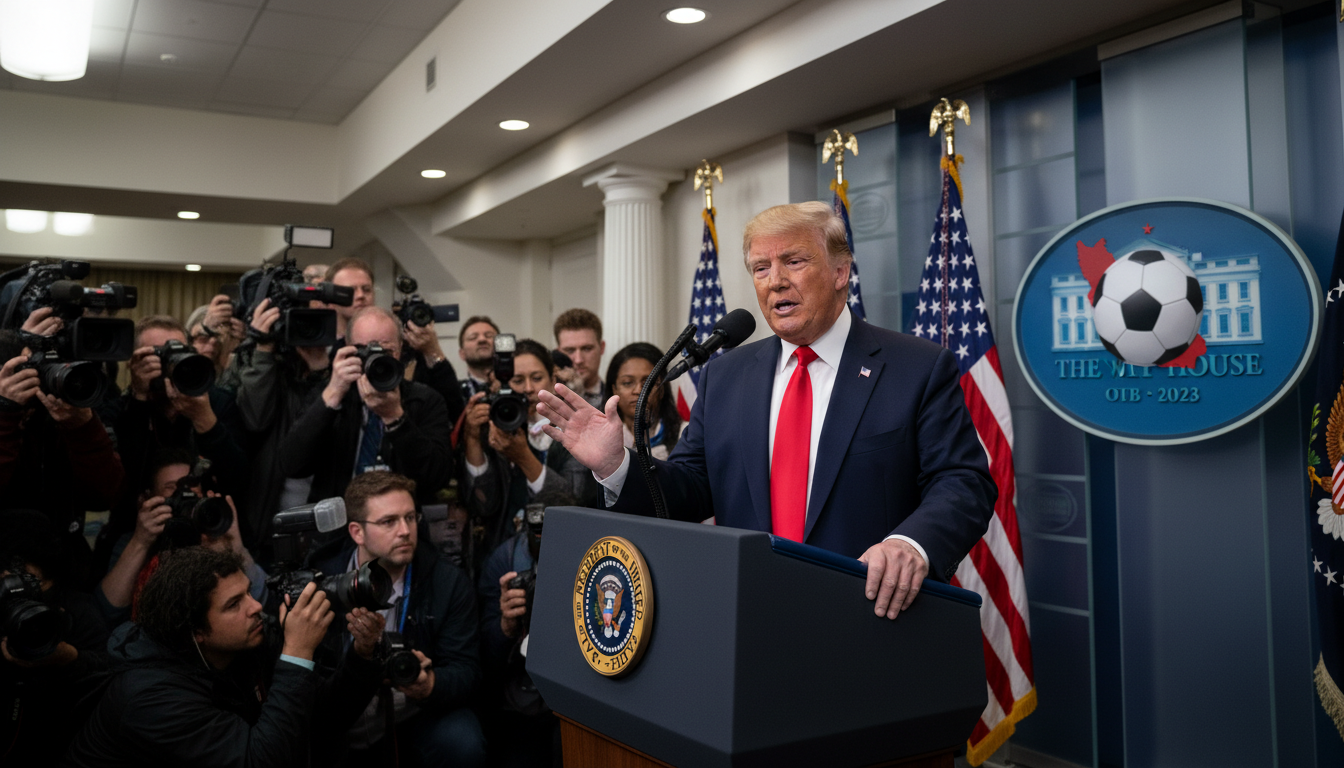
Former President Donald Trump made the comments on Thursday, April 30, 2026 as he signed a slate of executive orders, framing his remarks around pressure tactics on Tehran and recent U.S. military operations. Trump described Iran’s leadership as weakened, said U.S. forces had degraded Iranian missile production, and reiterated a hardline non-proliferation stance. He also suggested that Iranian athletes chosen by voters should be permitted to participate in the 2026 World Cup hosted by the United States, Mexico and Canada.
Remarks at executive order signing
Trump used the ceremonial signing event to underscore what he called the effectiveness of U.S. pressure on Iran. He told reporters that Tehran “wants a deal,” but added that Washington faces difficulty because it is unclear who is actually in charge in Iran. The president framed his approach as a mix of punitive measures and diplomatic openings, asserting that maximum pressure had brought Tehran to a weakened position.
His comments were presented as both political messaging and policy rationale ahead of further actions on sanctions and defense. Trump emphasized accomplishments attributed to his administration and military partners, using the platform to connect those claims to broader U.S. security goals. Observers noted the timing of the remarks alongside the signature of new directives, which the president described as bolstering U.S. leverage.
Claims on U.S. strikes and missile production
In his address, Trump said U.S. forces had destroyed “90% of Iran’s missile factories,” presenting the assessment as evidence of tangible military results. He described those operations as a blow to Tehran’s strategic capabilities and a reason why Iran could no longer press the same regional threats. Trump’s assertion was delivered as a factual claim about the state of Iran’s military infrastructure.
Analysts and regional officials have historically treated battlefield assessments with caution, and independent verification of such figures typically requires detailed intelligence or on-the-ground reporting. The president’s statement adds to a pattern of high-level claims about military successes that are likely to be scrutinized by both international observers and rival governments.
Sanctions, oil exports and economic pressure
A central thrust of Trump’s remarks was that sanctions had effectively cut off Iran’s ability to sell oil on global markets. He said economic isolation remained a key lever for compelling Tehran to alter its behavior, and described the sanctions as “successful” in denying Iran revenue flows. The president framed sanctions as complementary to military and diplomatic measures.
Sanctions regimes often have complex effects, and their efficacy depends on enforcement by third-party states and the resilience of targeted economies. Trump’s public emphasis on oil export restrictions signals continued reliance on economic tools alongside military deterrence in U.S. strategy toward Iran.
Non‑proliferation vow and regional security
Trump reiterated a firm pledge that he would not allow Iran to obtain a nuclear weapon, framing non‑proliferation as non‑negotiable. He linked the alleged degradation of missile production to broader efforts to limit Tehran’s capacity to deliver or develop strategic weapons. The president positioned this stance as protecting U.S. and regional security interests.
Such declarations are likely to resonate with U.S. allies and adversaries alike, but they also raise questions about the diplomatic and operational pathways the administration intends to pursue. Non‑proliferation commitments typically involve a mix of intelligence, sanctions, arms control efforts and alliance coordination to be effective over time.
World Cup comment and political messaging
In an unexpected turn, Trump urged that Iran’s elected football team be permitted to participate in the 2026 World Cup co-hosted by the United States, Mexico and Canada. He framed the suggestion as support for ordinary Iranians and as a symbolic separation between Tehran’s governing authorities and the popular will expressed through elections. The remark fused sports diplomacy with a broader call for engagement with Iranian citizens.
Comments linking international sporting events to political positions carry symbolic weight and can trigger debate over sanctions, travel restrictions and the role of sport in diplomacy. Trump’s mention of the World Cup introduced a lighter, human‑interest element into an otherwise security‑dominated address, while underscoring his stated desire to see elected Iranians treated differently from Iran’s ruling elite.
Reactions, uncertainty over Tehran’s leadership
Trump also said the United States does not always know “who rules” in Tehran, highlighting ambiguity over Iran’s power structures and the influence of unelected institutions. That observation reflects longstanding Western questions about the balance between Iran’s elected officials and the Islamic Revolutionary Guard Corps, religious leadership, and other centers of power. The comment serves to justify Washington’s caution in negotiating directly with Iran’s government.
Regional capitals and international partners will be watching for follow-up actions and clarifying statements from U.S. officials. The mix of military claims, economic pressure, and selective outreach in Trump’s remarks creates a multi‑track posture that could prompt renewed diplomatic activity as well as critical responses from Tehran.
The president’s statements on April 30, 2026 combined assertive security claims with political and symbolic overtures, underscoring a continuing U.S. focus on constraining Iran’s military and nuclear ambitions while signaling a willingness to separate the Iranian people from their leaders in select diplomatic and cultural arenas.
