
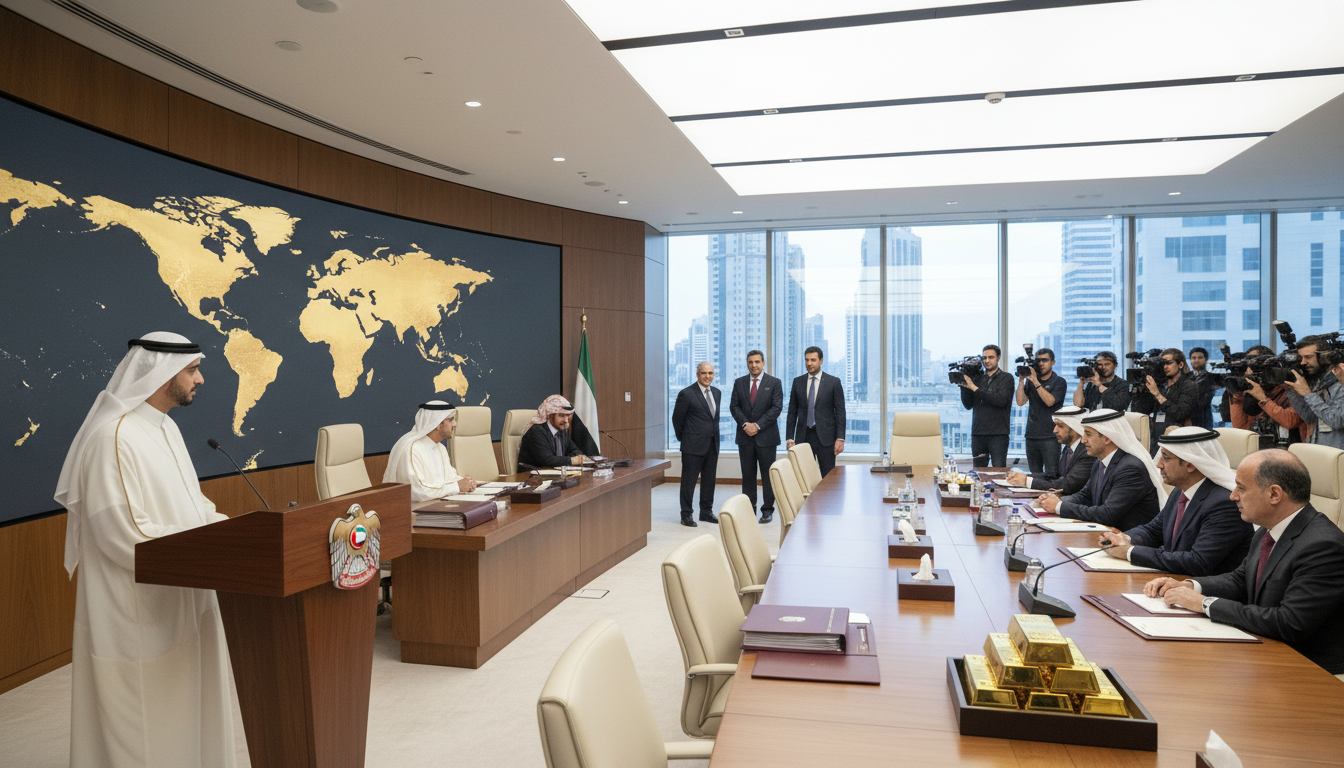
UAE gold trading strengthened as minister inspects Dubai Gold Souk and unveils regulatory measures
Minister Abdullah bin Touq Al Marri inspects Dubai Gold Souk as UAE gold trading cements its status with 6,213 firms, 53 refineries and DH683bn traded in 2024.
Abdullah bin Touq Al Marri, Minister of Economy and Tourism, carried out a wide-ranging inspection of Dubai’s Gold Souk to review compliance and reaffirm the UAE’s standing in UAE gold trading.
The minister met with representatives of the Dubai Jewellery Group and major firms in the precious metals and gemstones sector during the visit.
The inspection focused on regulatory adherence, anti‑money‑laundering controls and operational measures designed to sustain market integrity and investor confidence.
Minister inspects Dubai Gold Souk
During the on‑site tour, the minister assessed merchants’ implementation of laws and policies governing the sale and trade of gold.
Officials reviewed shop-level practices tied to record‑keeping, reporting and customer due diligence as part of a wider supervisory mandate over designated non‑financial businesses and professions.
The visit aimed to ensure transparency and to close operational gaps that could affect market resilience.
Federal policy and new standards
The Ministry has rolled out a series of regulatory initiatives, including a federal gold sector policy and the launch of the Emirates Good Delivery Standard for gold.
Authorities also established a committee for the UAE bullion market and are developing a federal trading platform to streamline transactions.
These measures are designed to harmonize domestic rules with international benchmarks and to provide a clear framework for producers, traders and refiners.
Anti‑money‑laundering and FATF alignment
A central element of the review was alignment with anti‑money‑laundering and counter‑terrorist financing (AML/CFT) obligations, including standards set by the Financial Action Task Force (FATF).
The ministry emphasised issuance of due diligence rules for responsible sourcing to ensure traceability across supply chains and reduce illicit flows.
Officials said sustained compliance will reinforce international trust in UAE gold trading and protect the sector from reputational and regulatory risk.
Industry scale: companies and licensed refineries
The UAE’s precious metals and gemstones sector now counts 6,213 registered companies operating across trading, manufacturing and retail.
The country also hosts 53 licensed gold refineries that process and certify bullion for local and international markets.
This infrastructure underpins the UAE’s capacity to serve as a major node in global gold value chains.
Market data: DH683 billion traded in 2024
Authorities reported that the total value of gold traded through UAE markets reached approximately DH683 billion in 2024, underscoring the sector’s economic weight.
Officials framed that figure as evidence of deep liquidity and broad participation by wholesalers, retailers and institutional buyers.
Ministry sources said maintaining accurate transaction records and a central trader database remain priorities to support oversight and market statistics.
Industry engagement and operational priorities
The minister held meetings with the Dubai Jewellery Group and leading gold and gemstone firms to discuss operational challenges and coordination across regulators.
Discussions covered streamlining compliance burdens for traders while ensuring robust safeguards against financial crime.
The ministry signalled ongoing efforts to support market efficiency through unified action plans and improved digital tools for trade reporting.
The UAE will continue to deepen its regulatory and operational framework for gold trading while working with industry to address practical challenges, with the aim of preserving its role as a leading global centre for the precious metals market.
