
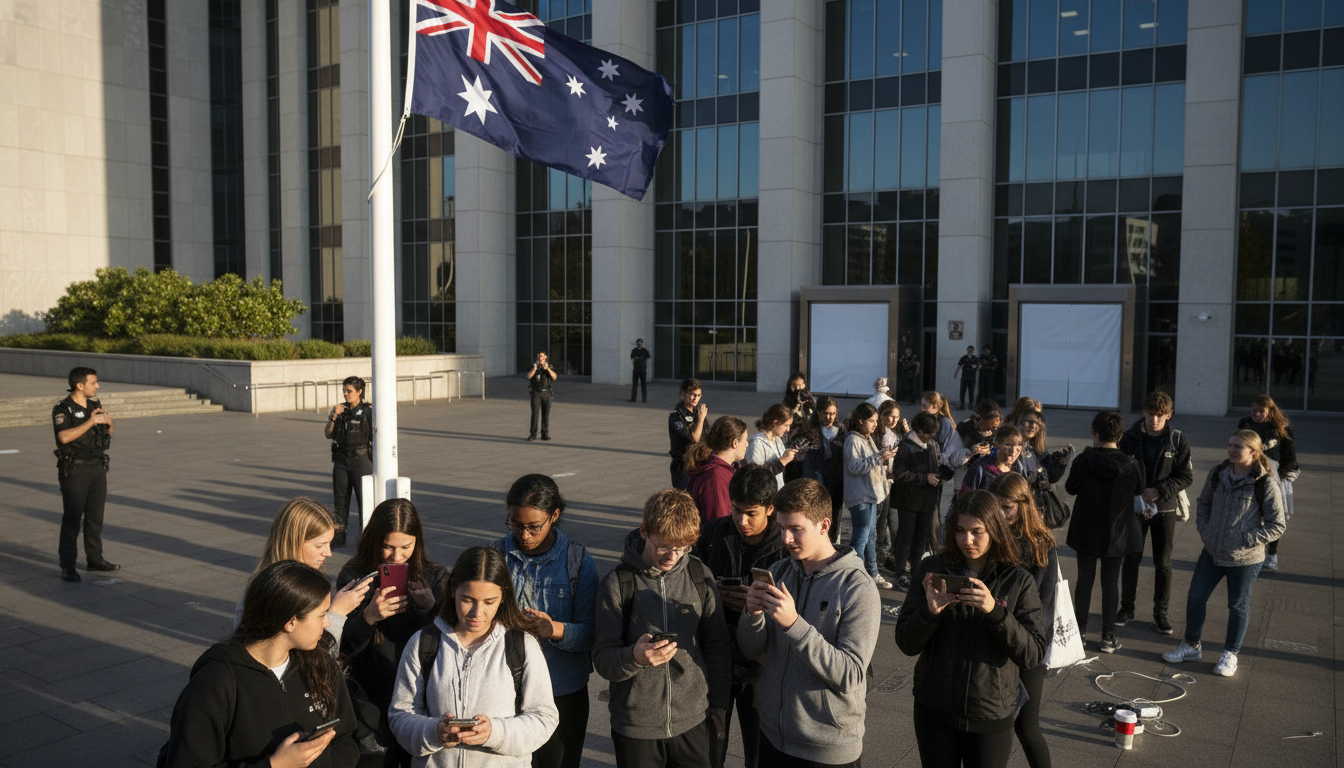
Australia social media ban shows early enforcement gaps as parents and communities adapt
Six months after Australia’s nationwide social media ban for under-16s, enforcement gaps persist while parents and communities adapt to curb youth platform use.
Australia’s social media ban for under-16s, introduced late last year, has produced mixed results six months after coming into force, with regulators reporting high levels of continued access and parents reporting both frustration and a new tool for restricting apps at home. The law, intended to keep younger teens off major platforms, has spurred public debate about enforcement, household choices and the long-term cultural impact on how children engage with technology.
Early Impact Shows Enforcement Gaps
Six months after the ban took effect, surveys and regulator statements indicate many children under the age threshold still have active accounts on age-restricted services. Parents and teens alike describe little immediate change for established users, and preliminary assessments by the eSafety regulator suggest widespread noncompliance among some major platforms.
Officials have acknowledged investigations are underway into several major services, but evidence from families suggests automated age checks and account reviews have so far failed to remove large numbers of underage accounts. That mismatch between regulatory intent and on-the-ground reality has become a central point of contention as authorities consider next steps.
How Young People Sidestep Restrictions
Teenagers and preteens have adopted straightforward workarounds to remain on apps, according to parents and young users interviewed since the ban began. Tactics include creating accounts with false birthdates, using credentials of older family members, or exploiting machine-learning age checks by altering profile photos or metadata.
These techniques mean many underage accounts remain active with minimal interruption, reinforcing perceptions among young people that the rule is easy to circumvent. Parents report that when enforcement is visible or credible, it strengthens household limits, but in its absence peer pressure and the ubiquity of apps continue to drive uptake.
Regulator Actions and Penalties
The law places primary enforcement responsibility on technology firms, exposing platforms to substantial fines if they fail to comply. Penalties for noncompliance can reach tens of millions of dollars, and regulators have publicly flagged multiple platforms for investigation as they gather evidence for potential enforcement actions.
Authorities have indicated decisions on formal penalties will be announced after completing inquiries, and the pace of those investigations will be watched closely by other governments considering similar rules. The effectiveness of penalties will likely hinge on regulators’ ability to prove systemic failures and compel platform changes to age verification and account management.
Parents Report a Cultural Shift
For many families, the ban has offered a clear legal justification to refuse early access to social apps and phones, strengthening parental resolve in day-to-day negotiations. Some parents say the law has helped normalize delaying social media for younger children and has provoked conversations among caregivers about consistent limits.
Mothers and fathers interviewed described new social dynamics at school gates and sports fields, where groups of parents now coordinate to delay smartphone handovers. Even when enforcement is imperfect, the ban appears to be influencing norms around when children typically receive devices and accounts.
Community Initiatives to Keep Kids Offline
Grassroots efforts and parent groups have stepped in to reinforce the ban through mutual support and alternative activities for children. Community organisers and family networks are promoting tech-free pursuits, educational materials, and practical incentives—ranging from hobby programs to financial rewards—to discourage early social media use.
Those who lead parent coalitions say a sustained cultural movement within households will be essential to reduce long-term harms, and that government action is only one piece of a broader strategy. Local programmes aimed at strengthening offline interests and peer networks are evolving as complements to regulatory measures.
International Attention and What Comes Next
Australia’s approach has drawn attention from overseas regulators and policymakers who are studying the practical lessons of implementation. Delegations from other countries have sought briefings on enforcement challenges, and the law’s early outcomes are likely to shape international debates about youth online safety.
Looking ahead, the trajectory of the policy will depend on the regulator’s capacity to enforce rules against major platforms, the willingness of companies to upgrade age verification, and whether parents sustain coordinated practices at scale. The next phase may see legal actions, technological fixes from platforms, and expanded community campaigns to solidify behavioural change.
For many families, the law has already changed daily negotiations over screens, even as gaps in enforcement leave older teens largely connected. Parents who have resisted early access say they hope the combination of legal pressure, community norms and household strategies will reduce social media’s grip on the next generation of children.
